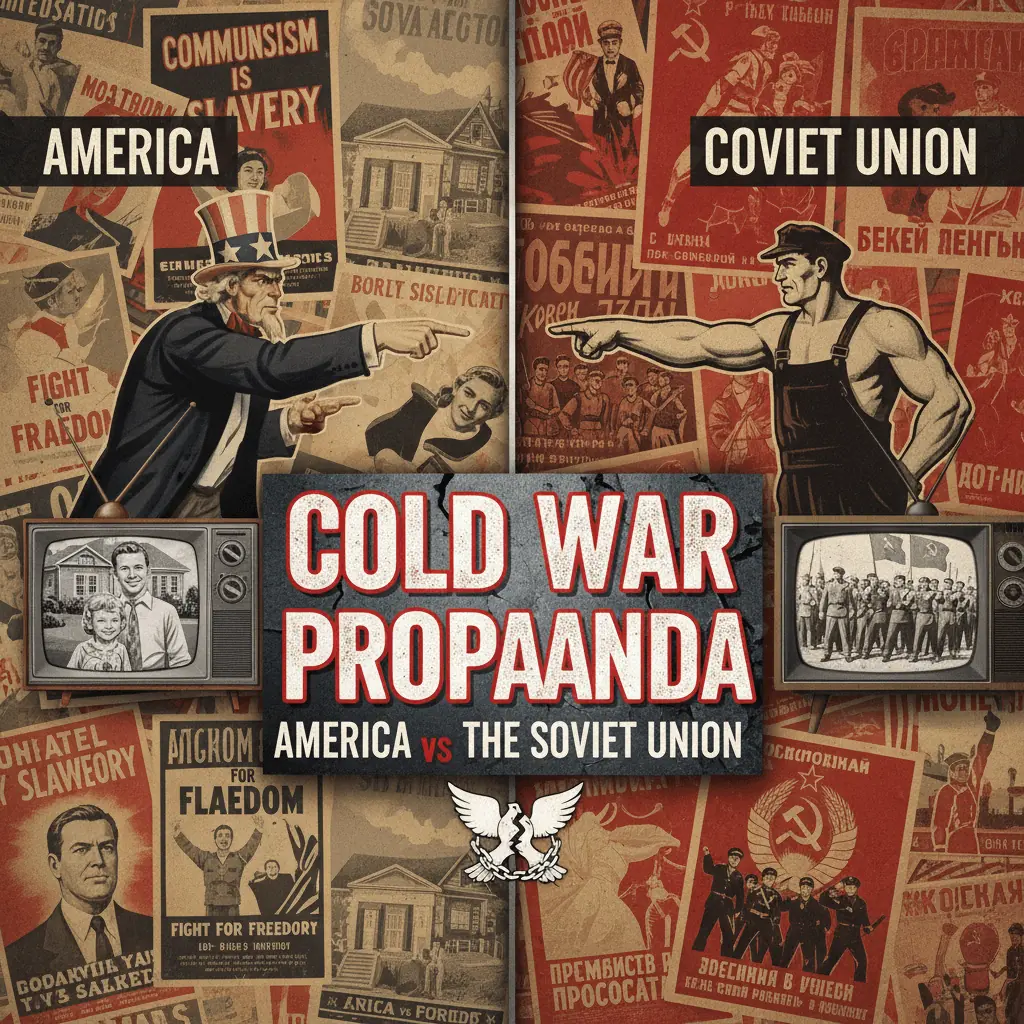
Cold War propaganda: America vs the Soviet Union
For more than four decades, Washington and Moscow competed for global opinion through radio, culture, education and covert influence. The methods they developed still shape information warfare today.

False stories succeed less through technical sophistication than by telling people what they already believe. Countering them means addressing the demand for disinformation, not just its supply.
Reciprocity, commitment, social proof, authority, liking and scarcity were described to explain persuasion. Social engineers use them as an operational playbook, and defense has to come from process, not willpower.
Platforms rarely radicalize people on their own. They work as infrastructure that accelerates and organizes radicalization already under way, and that distinction should shape the response.
Most of our judgments are made quickly and intuitively, and deliberate reasoning often justifies them rather than checking them. That predictable pattern is what influence operations exploit at scale.
In 1983 the KGB planted a story that the US Army had created AIDS. The claim was false and its Soviet origin was later admitted, yet it still circulates four decades on.
The Mueller report documented two parallel Russian operations in 2016: GRU hacking and leaking, and the Internet Research Agency's social media campaign. Their effectiveness came less from technical sophistication than from exploiting the US…
Cyberspace is now treated as a warfighting domain alongside land, sea, air and space. Its lack of borders, slow attribution and constant intrusions make conflict there hard to deter or contain.
Synthetic media does not need to fool everyone to cause damage. Once convincing fakes are possible, authentic evidence becomes easier to dismiss, and that "liar's dividend" may be the bigger risk.