System 1 and System 2: fast and slow thinking
Most of our judgments are made quickly and intuitively, and deliberate reasoning often justifies them rather than checking them. That predictable pattern is what influence operations exploit at scale.


Key judgments
- Fast, intuitive judgment governs most everyday decisions, and deliberate reasoning often rationalizes those first impressions instead of scrutinizing them. Under information overload and time pressure, people rely even more on intuitive judgment, including on complex political questions. Correcting facts is poorly suited to influence that works through emotion and association rather than explicit claims. Effective countermeasures must work with intuitive processing, through prebunking and decision environments that prompt reflection, rather than assume that people will reason their way out.
In October 2016, Russian operatives designed social media advertisements with surgical precision, targeting swing voters in Pennsylvania with content that appeared to support both sides of divisive issues. The operation succeeded not through sophisticated technology, but by exploiting a fundamental asymmetry in human cognition: our tendency to process emotionally charged information through fast, automatic responses rather than deliberate analysis. This exploitation of what cognitive scientists call System 1 and System 2 thinking represents one of the most significant vulnerabilities in contemporary information environments.
The dual-process theory of cognition, popularized by psychologist Daniel Kahneman, describes two distinct modes of mental processing that shape how we interpret information and make decisions. Understanding this cognitive architecture has become essential for defense professionals and analysts, as state and non-state actors increasingly design influence operations around these predictable patterns of human judgment. What makes this framework particularly relevant today is not just its explanatory power, but the growing sophistication with which adversaries model and exploit these cognitive constraints at population scale.
Dual-Process Theory: The Foundation of Cognitive Vulnerability
System 1: Fast, Automatic, and Emotionally Driven
System 1 thinking operates as our brain’s default mode for rapid information processing. This cognitive system evolved to help humans make quick survival decisions—distinguishing friend from foe, identifying immediate threats, and responding to social cues within milliseconds. System 1 processes are automatic, effortless, and heavily influenced by emotion, familiarity, and social context.
From an operational perspective, System 1’s characteristics make it both essential and exploitable. It enables rapid pattern recognition and intuitive decision-making that often proves remarkably accurate. However, this same system relies on heuristics—mental shortcuts that can be systematically manipulated. The availability heuristic, for instance, leads people to judge the probability of events based on how easily examples come to mind, making populations vulnerable to campaigns that flood information spaces with specific narratives or imagery.
System 2: Slow, Deliberate, and Analytical
System 2 thinking represents our capacity for conscious, effortful reasoning. This system handles complex calculations, logical analysis, and the kind of deliberate consideration that characterizes careful decision-making. Unlike System 1, System 2 processing is slow, requires mental resources, and can be consciously controlled and directed.
The critical limitation of System 2 is that it requires significant cognitive effort and motivation to engage. Research by psychologist Keith Stanovich demonstrates that even highly intelligent individuals often fail to activate System 2 processing when confronted with problems that require it. This creates what researchers call cognitive miserliness—a tendency to rely on System 1 shortcuts even when more careful analysis would yield better outcomes.
The Interaction Between Systems: Where Vulnerabilities Emerge
The relationship between System 1 and System 2 processing creates predictable vulnerabilities that sophisticated influence operations exploit. System 1 often generates initial impressions and emotional responses that System 2 then works to rationalize rather than critically evaluate. This dynamic means that first impressions, emotional framings, and contextual cues can effectively “capture” the analytical process before deliberate reasoning even begins.
Recent neuroscientific research by Antonio Damasio and others reveals that emotion and reason are more intertwined than classical models suggested. Emotional responses processed by System 1 don’t merely influence reasoning—they often provide the foundational data that System 2 uses for analysis. This integration explains why purely logical counter-messaging often fails against emotionally compelling disinformation.
How Do State Actors Exploit Dual-Process Cognition?
Targeting System 1: Emotional Priming and Associative Networks
State-sponsored influence operations increasingly demonstrate sophisticated understanding of System 1 vulnerabilities. The Internet Research Agency’s 2016 operations provide a documented case study in System 1 exploitation. Rather than promoting specific candidates or policies directly, operatives created content designed to trigger automatic emotional responses—fear, anger, disgust, and tribal identification.
The technique works by activating what cognitive psychologists call associative networks—clusters of related concepts, emotions, and memories that System 1 processes as unified packages. By repeatedly pairing political figures with specific emotional triggers, influence operations can effectively “program” automatic responses that bypass deliberate evaluation. Once these associations are established, even neutral information about targeted subjects triggers the embedded emotional response.
Overwhelming System 2: Information Saturation and Cognitive Load
Equally important is how sophisticated actors overwhelm System 2’s capacity for deliberate analysis. The strategy involves flooding information environments with high volumes of emotionally charged content across multiple platforms simultaneously. This creates what researchers term cognitive load—a state where the mental resources required for careful analysis are exhausted by the sheer volume of information requiring processing.
Under cognitive load, individuals increasingly default to System 1 processing even for complex political and social issues that would normally trigger more careful consideration. The result is a population-level shift toward more emotional, less analytical decision-making during critical periods. Russian operations during Brexit and the 2016 U.S. election both demonstrated this approach, timing peak information operations to coincide with decision points when cognitive load would naturally be highest.
Exploiting the Confirmation Bias Bridge
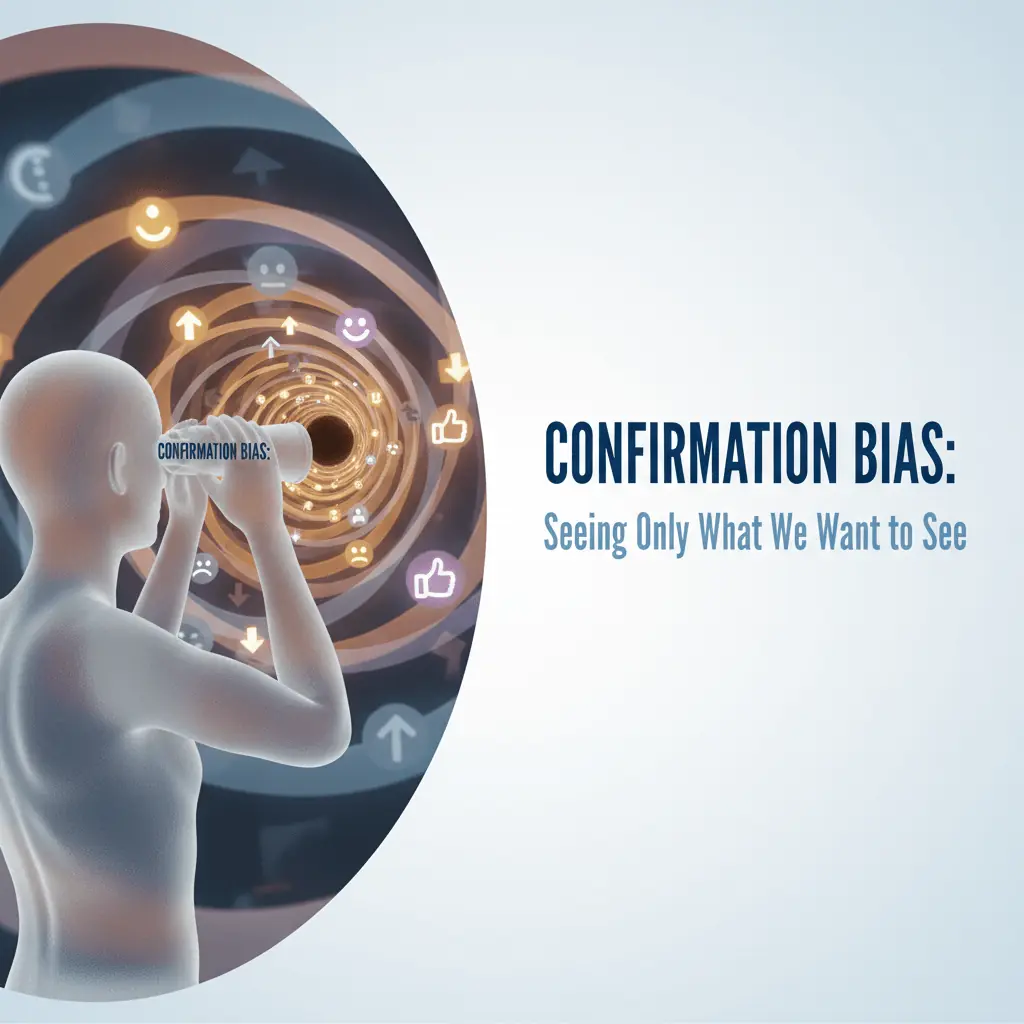
Perhaps most sophisticated is the exploitation of how System 1 and System 2 interact through confirmation bias. When System 1 generates an initial emotional response to information, System 2 often engages not in genuine analysis but in motivated reasoning—selectively gathering evidence that supports the initial impression while avoiding contradictory data.
Advanced influence operations exploit this dynamic by providing audiences with seemingly analytical content that actually serves to rationalize emotionally driven System 1 responses. The content appears to engage System 2—it includes statistics, expert quotes, and logical arguments—but it’s carefully designed to confirm rather than challenge existing emotional commitments. This creates the subjective experience of careful analysis while actually reinforcing automatic responses.
Population-Level Implications: When Individual Biases Become Strategic Vulnerabilities
The Aggregation Problem in Democratic Systems
While individual susceptibility to System 1 exploitation represents a personal vulnerability, the aggregation of these individual biases creates strategic threats to democratic institutions. Democratic systems assume that collective decision-making will, over time, approximate rational analysis as individual errors cancel out. However, when large populations are simultaneously subjected to coordinated System 1 exploitation, these individual biases align rather than cancel.
Research by political scientists Jennifer Jerit and Jason Barabas demonstrates that this dynamic can effectively “capture” public opinion formation on complex policy issues. When System 1 responses are coordinated across populations through influence operations, the resulting public opinion reflects not collective wisdom but coordinated emotional manipulation. This represents a fundamental challenge to the epistemological foundations of democratic governance.
Institutional Blindness to Cognitive Vulnerabilities
Many democratic institutions remain poorly adapted to recognize or counter dual-process exploitation. Traditional approaches to disinformation focus on factual accuracy—correcting false claims with true information. However, this approach fails when the primary mechanism of influence operates through System 1 emotional and associative processing rather than System 2 logical analysis.
Intelligence agencies and policy institutions often compound this problem by staffing analytical roles with individuals selected for strong System 2 capabilities. While this creates expertise in careful reasoning, it can also create institutional blind spots about how normal populations actually process information. The result is countermeasures designed by System 2 thinkers to counter System 1 exploitation—a fundamental mismatch in cognitive approach.
Research Limitations and Contested Terrain
Cultural and Individual Variation in Dual-Process Function
While dual-process theory provides a valuable framework, recent research reveals significant limitations in its universal applicability. Cross-cultural studies by psychologist Richard Nisbett and others demonstrate that the balance between System 1 and System 2 processing varies across cultural contexts. Populations from different cultural backgrounds show different baseline preferences for holistic versus analytical thinking, different susceptibility to specific cognitive biases, and different responsiveness to emotional versus logical appeals.
This variation has important implications for influence operations targeting multinational audiences. Techniques that effectively exploit System 1 processing in one cultural context may prove ineffective or counterproductive in others. However, the research base for understanding these cultural variations remains limited, particularly for populations that are primary targets of contemporary influence operations.
The Ecological Validity Challenge
Much of the foundational research on dual-process theory comes from laboratory studies that may not accurately represent how people process information in real-world environments. The controlled conditions necessary for experimental research eliminate many of the contextual factors—social pressure, time constraints, emotional stress—that influence how System 1 and System 2 processing operate in actual information environments.
Recent studies attempting to bridge this gap suggest that the neat division between automatic and controlled processing may be more complex in natural settings. People appear to engage in what researchers call “satisficing”—a hybrid approach that combines elements of both systems in ways that laboratory studies struggle to capture. This creates uncertainty about how directly experimental findings about dual-process cognition translate to real-world influence operations.
A Framework for Assessing Dual-Process Exploitation
Indicators of System 1 Targeting
Identifying when influence operations specifically target System 1 processing requires analyzing both content characteristics and distribution patterns. Content indicators include high emotional arousal, personal rather than policy-focused messaging, heavy use of imagery and video rather than text, and appeals to group identity rather than individual analysis.
Distribution indicators are equally important: content designed for System 1 exploitation typically appears across multiple platforms simultaneously, targets periods of high stress or cognitive load, and uses rapid dissemination patterns that prioritize emotional impact over sustained engagement. Analyzing the temporal patterns of information operations can reveal whether campaigns are designed to overwhelm deliberate processing or enhance it.
Assessment Criteria for Institutional Vulnerability
Organizations can assess their vulnerability to dual-process exploitation through several key indicators:
- Decision-making speed pressures: Organizations that prioritize rapid response over deliberate analysis create environments where System 1 processing dominates
- Information environment characteristics: High-volume, emotionally charged information flows overwhelm System 2 capacity
- Cultural homogeneity: Lack of cognitive diversity reduces the organization’s ability to recognize when System 1 responses are being manipulated
- Feedback loop quality: Poor feedback mechanisms prevent organizations from recognizing when emotional processing has led to analytical errors
Countermeasure Design Principles
Effective countermeasures against dual-process exploitation must address both systems rather than focusing exclusively on logical analysis. This requires what researchers call “cognitive immunization”—building awareness of how System 1 processing can be manipulated while simultaneously strengthening System 2 capabilities.
Successful approaches combine emotional awareness training with analytical skill development. Rather than dismissing emotional responses as irrelevant to good decision-making, effective countermeasures help individuals recognize when emotional reactions might be the result of deliberate manipulation and develop tools for engaging System 2 processing when stakes are high.
Forward Assessment: The Evolution of Cognitive Targeting
The sophistication of dual-process exploitation will likely increase as adversaries integrate insights from behavioral economics, neuroscience, and artificial intelligence. Machine learning systems can already identify individual susceptibility patterns and customize influence approaches accordingly. Future operations may move beyond population-level System 1 exploitation toward personalized cognitive targeting that adapts to individual dual-process characteristics.
This trajectory requires defense institutions to develop more nuanced understanding of cognitive vulnerability as both an individual and systemic phenomenon. The challenge is not eliminating System 1 processing—which would be neither possible nor desirable—but building institutional and individual capacity to recognize when automatic responses are being systematically exploited for strategic advantage.
What concerns me most in this evolution is the potential for cognitive targeting to become so sophisticated that it operates below the threshold of conscious detection, even among trained analysts. The future of cognitive security may depend less on our ability to think perfectly rationally than on our capacity to recognize when our rationality itself is being compromised.