In the arsenal of modern military power, few weapons are as potent — and as misunderstood — as psychological warfare. Unlike conventional weapons that destroy physical targets, psychological warfare targets the human mind: the beliefs, emotions, perceptions, and will of adversaries, friendly forces, and civilian populations. It is warfare conducted through information, symbols, narratives, and actions designed to influence, demoralize, confuse, or persuade.
Psychological operations (PSYOPS), as they are formally known in military doctrine, are not optional supplements to conventional warfare. They are integral components of modern conflict, operating alongside kinetic operations to achieve strategic objectives with reduced bloodshed, lower costs, and often, greater lasting effect. Understanding psychological warfare is essential for defense professionals, policymakers, and citizens who wish to comprehend how wars are won — and lost — in the information age.
What Is Psychological Warfare?
Psychological warfare is the planned use of communications, actions, and symbols to influence the attitudes, emotions, reasoning, and behavior of target audiences in support of military objectives. It is a form of information warfare that operates in the cognitive domain — the space where human perceptions, decisions, and will reside.
The goals of psychological warfare include:
Demoralizing enemy forces to reduce their combat effectiveness
Persuading enemy forces to surrender or defect
Reassuring and mobilizing friendly populations to support military operations
Neutralizing or winning over neutral populations to deny enemy support
Influencing adversary leadership to make poor strategic decisions
Shaping the information environment to create conditions favorable to friendly operations
Psychological warfare is not propaganda in the pejorative sense of “lying to the public.” While deception can be a component, legitimate psychological operations are based on truthful information when possible, because credibility is essential for long-term influence. However, in the context of cognitive warfare, adversaries may not share this ethical constraint.
The Strategic Importance of PSYOPS
In modern military doctrine, psychological operations are recognized as a core capability, alongside firepower, maneuver, and intelligence. Their strategic importance derives from several realities of contemporary conflict:
1. The Information Environment Is a Battlespace
Adversaries, neutral parties, and friendly populations are constantly consuming information. Whoever controls the narrative shapes perceptions of legitimacy, victory, defeat, and morality. PSYOPS is the mechanism for contesting that narrative space.
2. Wars Are Won in the Minds of Populations
The Viet Cong and North Vietnamese did not defeat the United States militarily on the battlefield. They won in the minds of the American public and the international community. Psychological warfare targets exactly that domain.
3. Non-Kinetic Effects Are Often More Durable
A bomb destroys a target for a moment. A well-crafted psychological operation can influence behavior for years — shaping alliances, deterring aggression, or preventing insurgencies.
4. Collateral Damage Is Reduced
Persuading enemy forces to surrender or desert achieves military objectives without casualties. In counterinsurgency, winning civilian hearts and minds is often more effective than killing insurgents.
Core PSYOPS Tactics and Techniques
Leaflet Drops and Broadcasts
The classic PSYOPS tactic. Leaflets, radio broadcasts, television transmissions, and social media posts deliver tailored messages to target audiences.
Example: During the Gulf War, coalition forces dropped leaflets showing Iraqi soldiers the safe route to surrender, along with instructions in Arabic. Thousands surrendered after receiving these messages.
Loudspeaker Operations
Military PSYOPS units use vehicle-mounted or handheld loudspeakers to broadcast messages directly to enemy forces or civilians. Messages may include surrender instructions, warnings of impending attacks, or reassurance of safe passage.
Deception Operations
Military deception (MILDEC) is a form of psychological warfare that misleads adversaries about friendly intentions, capabilities, or operations. Deception creates false beliefs that cause the enemy to act in ways advantageous to friendly forces.
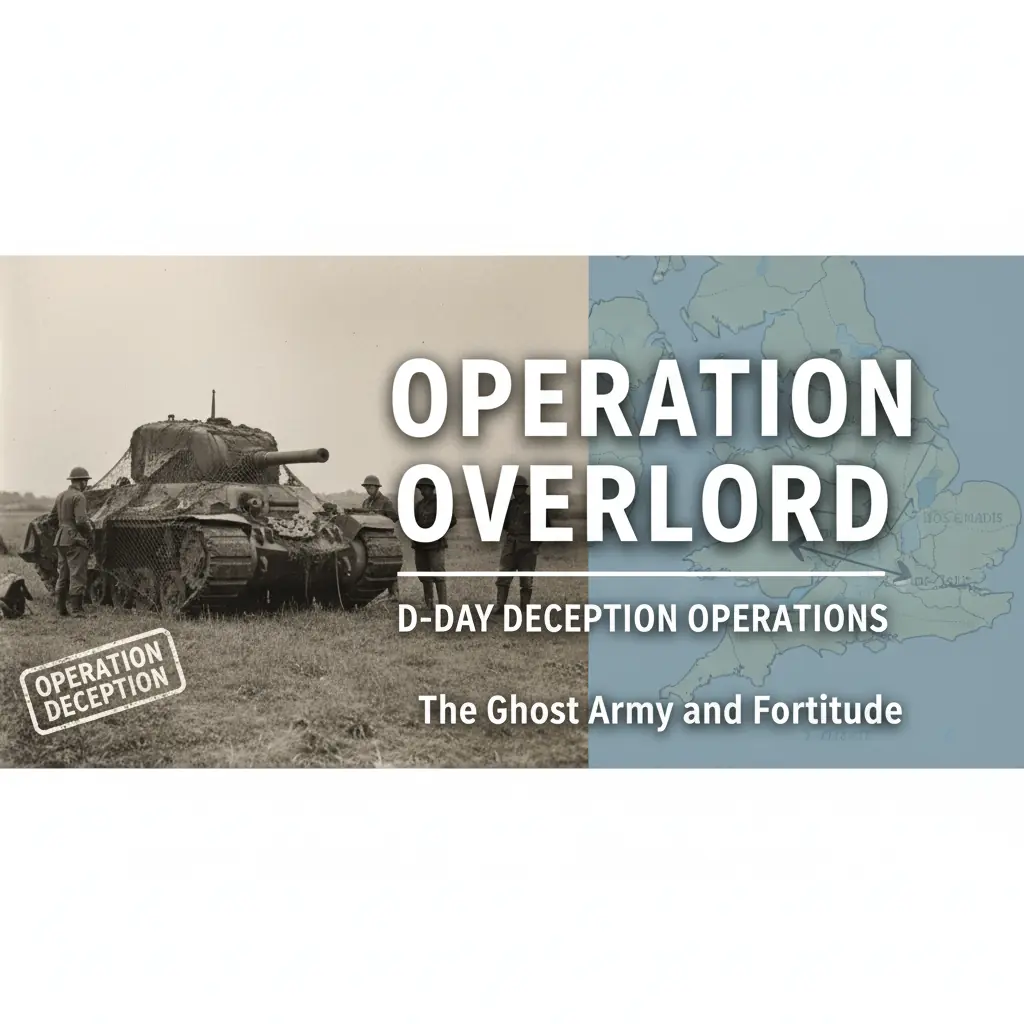
Example: Prior to the D-Day landings in World War II, Allied forces conducted Operation Fortitude — a massive deception suggesting the invasion would occur at Pas-de-Calais rather than Normandy. The deception included fake radio traffic, inflatable tanks, and a fictional army group commanded by General Patton.
Demoralization Campaigns
Targeting enemy morale through messages highlighting their disadvantages, leadership failures, or the hopelessness of their situation. This may include false rumors, exaggerated casualty reports, or comparisons of relative military strength.
Appeals to Surrender and Defection
Specifically crafted messages offering safe passage, fair treatment, and rewards for desertion or surrender. These messages exploit the enemy soldier’s natural fear of death and desire for survival.
Influence on Civilian Populations
In counterinsurgency and stability operations, PSYOPS targets civilian populations to reduce support for insurgents, encourage cooperation with friendly forces, and promote stability. Tactics include public service announcements, community engagement, and strategic communication campaigns.
PSYOPS in Cognitive Warfare: The Modern Evolution
Traditional PSYOPS involved leaflets, loudspeakers, and radio broadcasts. Contemporary psychological warfare operates in the digital domain — and at machine speed.
Social Media PSYOPS
Adversary and friendly forces use social media platforms to reach target audiences directly, bypassing traditional media gatekeepers. Tactics include:
Targeted advertising to specific demographics, regions, or psychological profiles
Influencer engagement to amplify messages through trusted third parties
Bot networks to create the appearance of consensus or popularity
Memetic warfare — using culturally resonant images, symbols, and humor to spread messages organically
Cognitive Hacking
Beyond influencing what people believe, modern PSYOPS can influence how they think. By flooding the information space with contradictory narratives, adversaries induce confusion, paralysis, and distrust of all information sources — a state known as “cognitive fog.”
Perception Management
The strategic shaping of the information environment to influence how events are interpreted. This may involve highlighting friendly successes, minimizing or explaining away failures, and framing adversary actions in the worst possible light.
White, Grey, and Black PSYOPS
Military doctrine distinguishes three categories of psychological operations based on attribution:
Grey and black PSYOPS carry significant legal, ethical, and operational risks, including blowback if exposed. Many nations restrict or prohibit these categories.
Historical Examples of Psychological Warfare
World War II: “Tokyo Rose” and “Axis Sally”
Japanese and German broadcasters (often American or British nationals coerced into service) broadcast demoralizing propaganda to Allied forces, suggesting their wives were unfaithful, their cause was lost, and their leaders were corrupt.
Vietnam War: The Tet Offensive Narrative
Though a military defeat for North Vietnamese forces, the Tet Offensive was framed as a strategic victory through psychological warfare. The contrast between official U.S. claims of progress and vivid images of fighting in Saigon eroded American public support irreparably.
Cold War: Radio Free Europe / Radio Liberty
The United States and allies broadcast uncensored news and information to populations behind the Iron Curtain, undermining the legitimacy of communist regimes and supporting dissident movements.
Iraq and Afghanistan: PSYOPS in Counterinsurgency
U.S. and coalition forces conducted extensive psychological operations, including radio broadcasts, leaflet drops, and social media campaigns, to encourage insurgent defections, warn civilians of impending operations, and build support for local governments.
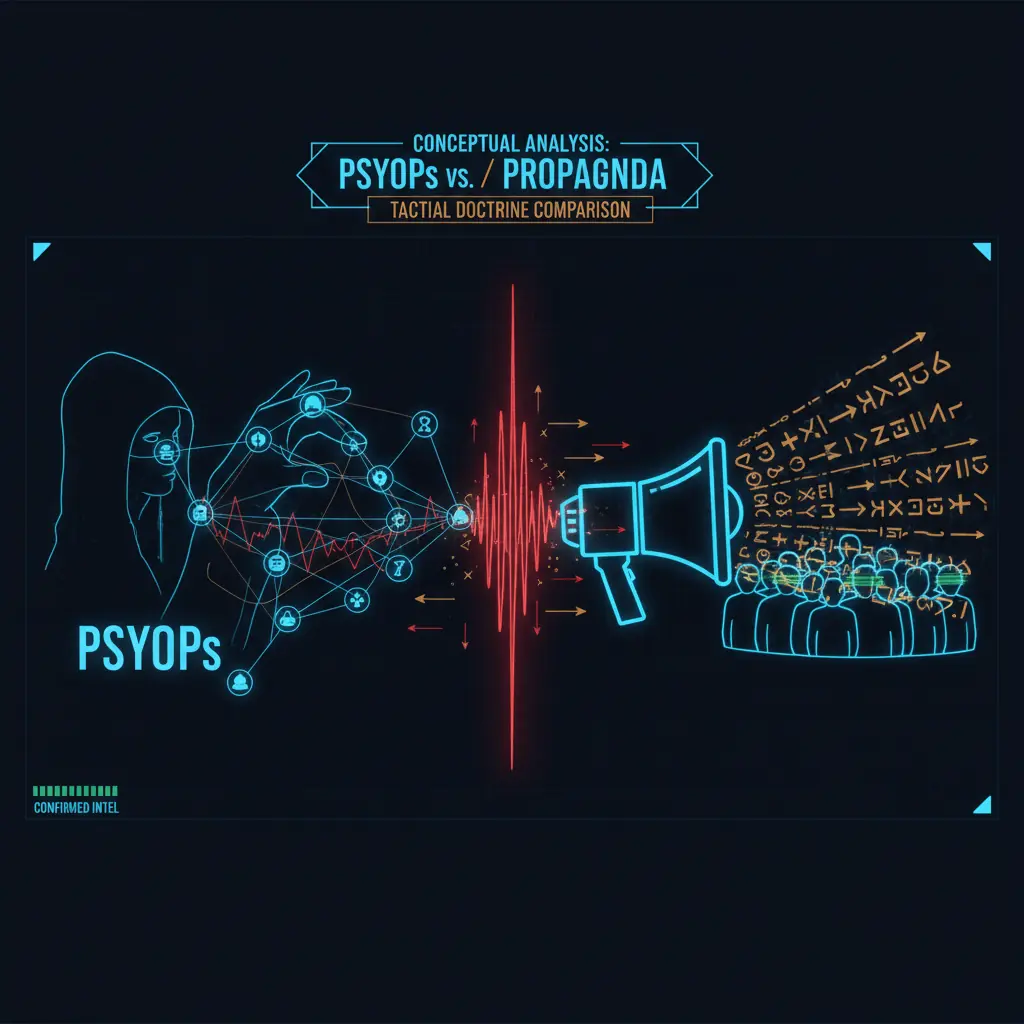
PSYOPS vs. Disinformation: The Critical Distinction
From a defense perspective, it is essential to distinguish legitimate psychological operations from adversary disinformation:
Defending Against Adversary PSYOPS
For military personnel, government officials, and citizens, recognizing and resisting adversary psychological warfare is essential.
Individual-Level Defenses
Source verification: Who is the source of this information? What is their interest in my belief or action?
Emotional awareness: PSYOPS often targets emotions — fear, anger, outrage, hope. Recognize when you are being emotionally manipulated.
Slowing down: Psychological warfare creates urgency. Pause. Seek alternative information sources.
Seeking official guidance: In military contexts, follow chain-of-command communications, not rumors or social media.
Organizational Defenses
Counter-PSYOPS: Active measures to expose adversary psychological operations, including rapid debunking of false narratives and pre-emptive inoculation of target audiences.
Resilience training: Preparing military and civilian personnel to recognize and resist psychological manipulation.
Information operations integration: Coordinating PSYOPS with public affairs, intelligence, and operations to ensure consistent messaging.
Conclusion
Psychological warfare is not a niche capability or an afterthought to conventional combat. It is central to how wars are fought and won in the 21st century. Adversaries understand that influencing what soldiers, populations, and leaders believe is often more decisive than controlling territory or destroying forces.
For defense professionals, mastering psychological warfare means understanding human cognition as a battlespace, recognizing the tactics adversaries use to influence it, and developing the capabilities to operate effectively within it. For citizens in democratic societies, understanding PSYOPS is essential for distinguishing legitimate military information operations from adversary disinformation designed to divide and destabilize.
The battle for minds precedes, accompanies, and outlasts the battle for bodies. In cognitive warfare, psychological operations are the main effort — not the supporting one.