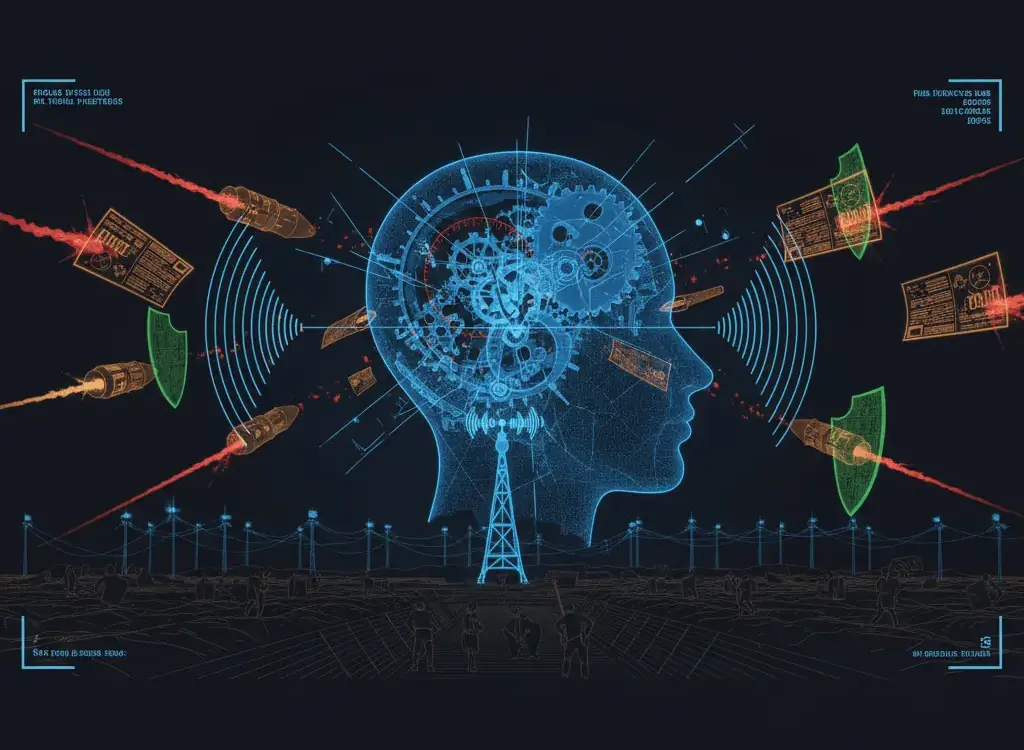
The Evolution of Mind as Battlefield: Understanding Psychological Warfare in World War I
In October 1917, British intelligence officers dropped millions of leaflets over German trenches, not promising victory through firepower, but through surrender. The message was simple: «Your government has lied to you about American involvement.» This wasn’t conventional warfare—it was psychological warfare in World War I, marking humanity’s first systematic attempt to weaponize information at industrial scale. What began as crude propaganda evolved into sophisticated doctrine that would fundamentally reshape how nations understand conflict itself.
The Great War transformed psychological operations from isolated incidents into integral military functions. By 1918, every major power had established dedicated propaganda bureaus, developed target audience analysis frameworks, and begun measuring psychological effects alongside traditional battlefield metrics. This evolution from improvised messaging to doctrinal psychological warfare established foundational concepts that NATO forces still employ today.
From Leaflets to Doctrine: The Birth of Modern PSYOP
World War I marked the first systematic application of psychological warfare principles that would later codify into formal military doctrine. Unlike previous conflicts where psychological tactics remained ad hoc, the Great War saw the establishment of dedicated propaganda organizations with defined objectives and measurable outcomes.
Institutional Development and Early Frameworks
The British established the Department of Information in 1917, followed by the Ministry of Information in 1918—creating the first government entity specifically designed for psychological influence operations. According to available records, these organizations employed over 300 personnel by war’s end, indicating the scale of institutional investment in what we now recognize as Military Information Support Operations (MISO).
The German response proved equally systematic. The Oberste Heeresleitung created the Abteilung für Feindesnachrichten (Enemy Intelligence Department), focusing on counter-propaganda and demoralization campaigns targeting Allied forces. This marked an early recognition of what current US Army Field Manual 3-53 defines as «defensive PSYOP»—operations designed to neutralize enemy psychological influence.
Target Audience Analysis: The Foundation Emerges
World War I saw the first documented attempts at systematic target audience analysis. British operators identified distinct psychological vulnerabilities among German forces: homefront concerns among married soldiers, food shortages affecting morale, and growing skepticism about military leadership. This approach prefigured contemporary PSYOP doctrine, which emphasizes detailed audience segmentation and tailored messaging.
American forces, entering the war in 1917, brought industrial-scale production capabilities to psychological operations. The Committee on Public Information produced over 75 million pieces of propaganda material, demonstrating early understanding of what modern doctrine terms «message saturation»—achieving psychological effect through volume and repetition.
How Did Technological Innovation Shape Psychological Warfare Effectiveness?
The technological landscape of World War I created unprecedented opportunities for psychological influence operations. For the first time in history, militaries could deliver targeted messages directly to enemy forces and civilian populations at scale.
Delivery Mechanisms and Distribution Networks
Aircraft-delivered leaflets represented the most significant technological advancement for psychological operations. British forces developed specialized leaflet bombs capable of distributing 10,000 individual messages over German positions. This delivery method overcame traditional limitations of psychological warfare—namely, the difficulty of reaching enemy audiences without compromising operational security.
Radio technology, though primitive, enabled real-time psychological messaging. German forces operated several radio stations targeting Allied audiences, broadcasting in English and French. These operations demonstrated early understanding of what contemporary PSYOP doctrine calls «dynamic targeting»—adjusting psychological messages based on changing battlefield conditions.
Production Scale and Message Sophistication
Industrial production capabilities allowed unprecedented scale in psychological operations. German facilities produced approximately 60 million propaganda leaflets between 1917 and 1918, according to documented Wehrmacht archives. This volume enabled what modern analysts term «message persistence»—maintaining psychological pressure over extended periods.
Content sophistication improved dramatically throughout the conflict. Early leaflets featured crude messaging and obvious propaganda techniques. By 1918, psychological warfare materials incorporated detailed intelligence about local conditions, personal appeals based on regional identity, and sophisticated visual design elements. This evolution reflects growing understanding of psychological influence principles that modern PSYOP doctrine formalizes.
Myth vs. Reality: Effectiveness and Limitations
Popular narratives often exaggerate the effectiveness of psychological warfare in World War I. The reality, based on documented operational assessments, reveals significant limitations alongside genuine tactical successes.
Documented Successes and Measurable Impact
British psychological operations achieved demonstrable success in specific contexts. Intelligence reports from 1918 indicate increased German desertion rates in sectors where leaflet campaigns targeted homefront concerns. American psychological warfare contributed to civilian morale degradation in German-occupied territories, according to post-war Allied intelligence assessments.
The most successful psychological operations combined accurate information with appeals to pre-existing concerns. Leaflets describing actual food shortages in Germany proved more effective than exaggerated claims about military defeats. This principle—truth as the foundation of effective psychological influence—remains central to contemporary PSYOP doctrine.
Operational Limitations and Failure Points
However, psychological warfare failed to achieve strategic objectives in most documented cases. German morale remained largely intact despite intensive Allied psychological operations. Similarly, German counter-propaganda failed to significantly undermine Allied resolve, particularly among American forces who possessed strong logistical support and clear strategic objectives.
The fundamental limitation involved attribution and credibility. Audiences recognized propaganda sources, reducing message effectiveness. Modern PSYOP doctrine addresses this challenge through «gray» and «black» attribution techniques, but World War I operators lacked sophisticated methodologies for concealing message origins.
Transition to World War II: Doctrinal Sophistication
The interwar period saw systematic analysis of World War I psychological operations, leading to significant doctrinal developments that would shape World War II psychological warfare.
American Doctrinal Development
The US Army established the Psychological Warfare Branch in 1943, representing formal recognition of psychological operations as a distinct military capability. This organization developed systematic training programs, standardized operational procedures, and effectiveness measurement frameworks. These developments directly influenced post-war PSYOP doctrine codified in contemporary field manuals.
American psychological warfare in World War II demonstrated significant sophistication compared to World War I operations. The Office of Strategic Services (OSS) employed detailed sociological analysis of target populations, coordinated messaging across multiple delivery platforms, and integrated psychological operations with conventional military planning. This integration model influenced modern joint doctrine emphasizing PSYOP coordination with conventional forces.
Technological Integration and Global Scale
World War II psychological operations leveraged radio broadcasting, film production, and sophisticated printing capabilities. American forces operated over 40 radio stations targeting Axis audiences, broadcasting in 23 languages. This scale represented exponential growth from World War I capabilities and established precedents for contemporary information operations.
The integration of psychological warfare with strategic bombing campaigns demonstrated early understanding of «multi-domain operations»—concepts now central to NATO doctrine. Leaflets dropped alongside conventional munitions created psychological effects that amplified physical destruction, suggesting force multiplication effects that modern PSYOP doctrine formalizes.
A Framework for Analyzing Historical PSYOP Evolution
Understanding the development from World War I improvisation to World War II doctrine requires systematic analytical frameworks that assess institutional development, operational sophistication, and strategic integration.
Institutional Maturity Indicators
Several key indicators reveal institutional development in psychological warfare capabilities:
- Dedicated organizational structures: Evolution from ad hoc committees to formal military branches
- Professional training programs: Development of standardized education for psychological warfare personnel
- Resource allocation: Budget and personnel commitments indicating institutional priority
- Integration with conventional planning: Incorporation of psychological objectives into overall military strategy
Operational Sophistication Assessment
Operational sophistication can be measured through several analytical dimensions:
- Target audience analysis depth: Progression from general messaging to segmented, culturally-specific appeals
- Message attribution techniques: Development of white, gray, and black propaganda methodologies
- Multi-platform integration: Coordination across print, broadcast, and interpersonal influence channels
- Effectiveness measurement: Evolution from anecdotal assessment to systematic evaluation frameworks
Strategic Integration Evaluation
The most significant development involved integrating psychological warfare with broader strategic objectives. World War I psychological operations remained largely tactical. By World War II, psychological warfare supported strategic goals including civilian morale degradation, resistance movement support, and post-conflict stability operations. This integration model influenced contemporary joint doctrine emphasizing psychological operations as part of comprehensive national power.
Forward Assessment: Legacy and Contemporary Implications
The evolution of psychological warfare from World War I experimentation to World War II doctrine established foundational principles that continue shaping contemporary information operations. Modern PSYOP capabilities—codified in documents like US Army FM 3-53—directly trace their intellectual lineage to innovations developed during these conflicts.
Current great power competition reflects similar dynamics to early 20th-century psychological warfare development. State and non-state actors employ increasingly sophisticated information influence techniques, leveraging digital technologies to achieve unprecedented scale and precision. The fundamental principles established during the World Wars—target audience analysis, message attribution, effectiveness measurement—remain central to contemporary cognitive warfare doctrine.
What emerges from this historical analysis is recognition that psychological warfare represents not merely tactical innovation, but fundamental evolution in how nations understand conflict itself. The mind as battlefield—first systematically explored during World War I—has become the dominant terrain of 21st-century strategic competition.
Sources
Headquarters, Department of the Army. (2013). Psychological Operations (FM 3-53). Washington, DC: Government Printing Office.
Jowett, G. & O’Donnell, V. (2019). Propaganda & Persuasion. 7th Edition. Thousand Oaks: SAGE Publications.
Paddock, A. (2017). «Psychological Warfare and Military Strategy.» Parameters, 47(2), 15-29.
RAND Corporation. (2018). Information Operations: Doctrine and Practice. Santa Monica: RAND Corporation.
Taylor, P.M. (2003). Munitions of the Mind: A History of Propaganda from the Ancient World to the Present Era. 3rd Edition. Manchester: Manchester University Press.
NATO Strategic Communications Centre of Excellence. (2020). Cognitive Warfare: An Attack on Truth and Thought. Riga: NATO StratCom COE.