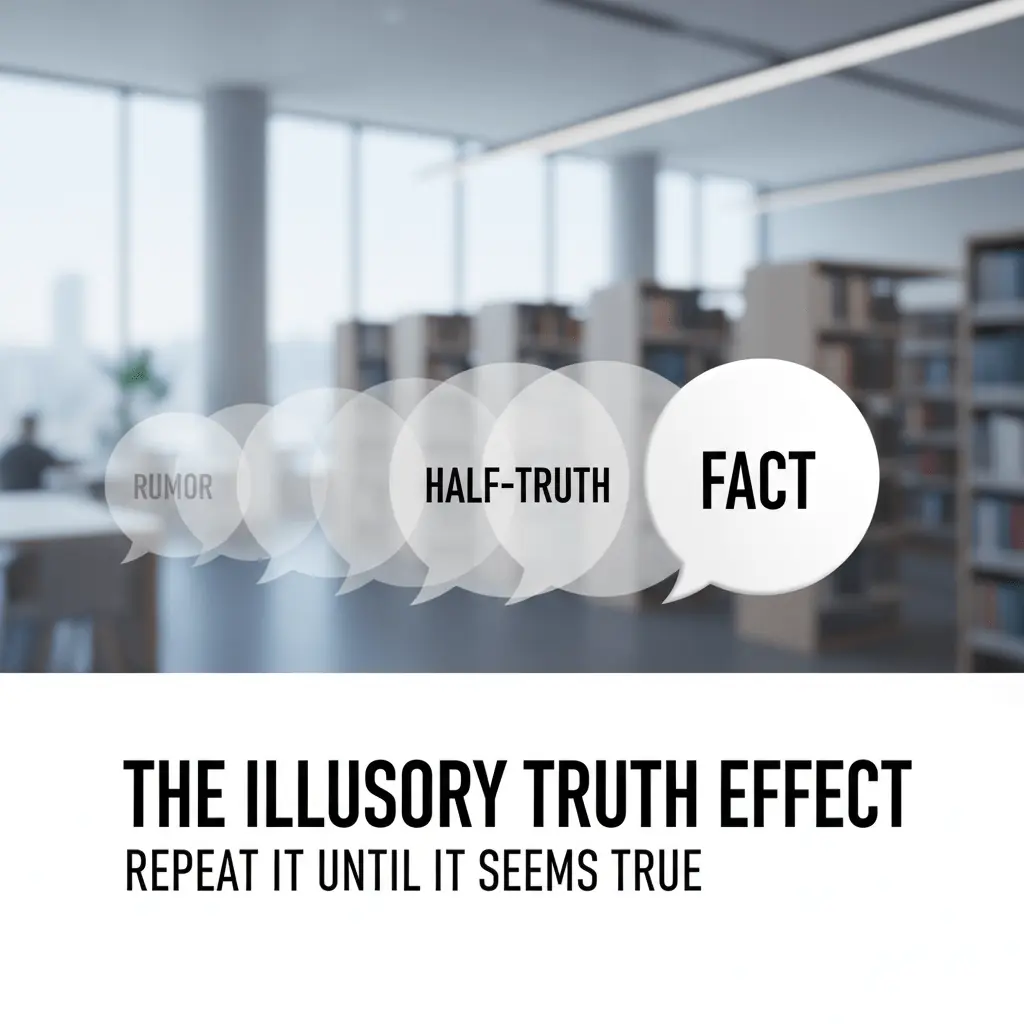
In the information age, knowledge is power. But so is the appearance of knowledge. Disinformation — the deliberate creation and dissemination of false information with the intent to deceive — has become a primary weapon of cognitive warfare. Unlike misinformation, which is false information shared without harmful intent, disinformation is strategic. It is designed, produced, and distributed by adversaries who understand that controlling what a population believes is often more effective than controlling its territory.
“Fake news” — a term that has itself been weaponized — refers specifically to fabricated information presented as legitimate journalism. Whether produced by state-sponsored troll farms, opportunistic propagandists, or cynical political operatives, fake news exploits the trust that audiences place in traditional media formats. Understanding disinformation and fake news is not a matter of media literacy alone. It is a national security imperative.
What Is Disinformation?
Disinformation is false, inaccurate, or misleading information deliberately created, presented, and disseminated to cause public harm or for political, military, or economic advantage. The term originates from the Russian dezinformatsiya, a KGB department dedicated to active measures — covert operations designed to influence events and perceptions.
Key characteristics of disinformation:
Intentional: Unlike errors or satire, disinformation is created with deceptive purpose
Strategic: Disinformation serves specific objectives (electoral interference, social division, trust erosion)
Systematic: Disinformation campaigns are coordinated, not isolated incidents
Exploitative: Disinformation leverages existing biases, fears, and identities
Deniable: Adversaries structure operations to avoid attribution
Disinformation is distinct from:
The Disinformation Ecosystem
Disinformation does not exist in isolation. It operates within a complex ecosystem of producers, amplifiers, platforms, and vulnerable audiences.
Producers
State-sponsored troll farms: Government-funded facilities employing operators to create and disseminate disinformation (e.g., Russian Internet Research Agency, Chinese “Spamouflage” networks, Iranian “Endless Mayfly”)
Political operatives: Domestic political actors who create disinformation targeting opponents
Mercenary propagandists: Freelance operators selling disinformation services to highest bidders
Opportunistic entrepreneurs: Individuals who create sensational false content for advertising revenue (“clickbait farms”)
Amplifiers
Bot networks: Automated accounts that like, share, and retweet disinformation to inflate apparent popularity
Sockpuppet accounts: Fake personas that comment, post, and engage as seemingly authentic users
Influencers and unwitting sharers: Real users who share disinformation believing it is true
Alternative media sites: Platforms that present disinformation as legitimate journalism
Mainstream media (unwitting) : Legitimate journalists who report on disinformation as “controversy,” laundering it into credible discourse
Platforms
Social media: Facebook, X (Twitter), Instagram, TikTok, YouTube, Reddit
Messaging apps: Telegram, WhatsApp, Signal, WeChat
Alternative platforms: Gab, Parler, 4chan, 8kun (less moderation, higher concentration of disinformation)
Traditional media: State-controlled broadcasters (RT, Sputnik, CGTN, Xinhua)
Vulnerable Audiences
Identity-based communities: Groups with strong shared identities (ethnic, religious, political) vulnerable to in-group/out-group framing
Low-trust populations: Individuals with low trust in institutions, more receptive to alternative narratives
High-engagement users: Those who spend extensive time online, consuming more content — including disinformation
Algorithmically isolated users: Individuals whose feeds have been narrowed through algorithmic personalization
The Disinformation Lifecycle
Disinformation follows a predictable pattern that defenders can recognize and disrupt.
Phase 1: Creation
Disinformation is manufactured. This may involve:
Fabricated documents: Forged memos, emails, or official communications
Manipulated media: Edited videos, out-of-context photos, AI-generated deepfakes
Fake personas: Fabricated experts, witnesses, or victims
Conspiracy frameworks: Elaborate false narratives that explain events as secret plots
Phase 2: Seeding
Initial placement in spaces where it will be discovered:
Obscure websites, forums, or Telegram channels
Fake news sites designed to resemble legitimate journalism
State-controlled media (RT, Sputnik, Xinhua)
Social media accounts of fake personas
Phase 3: Amplification
Coordinated efforts to increase visibility:
Bot networks like, share, and retweet
Sockpuppet accounts comment and engage
Paid advertising (platforms’ ad networks)
Cross-posting across multiple platforms
Phase 4: Laundering
Disinformation is laundered through seemingly legitimate intermediaries:
Alternative news sites repackage the content
“Independent researchers” cite the disinformation
Unwitting journalists report on the “controversy”
Mainstream media coverage legitimizes the narrative
Phase 5: Normalization
The disinformation narrative becomes part of accepted discourse:
Political figures reference the narrative
The narrative appears in search results
Fact-checks, paradoxically, may spread the narrative further
The disinformation becomes “something people are talking about”
Phase 6: Weaponization
The narrative is used to achieve strategic objectives:
Voter suppression or mobilization
Undermining trust in election integrity
Eroding support for alliances or military action
Exacerbating social divisions
Common Disinformation Techniques
1. Fabricated Content
Entirely false content presented as genuine: fake news articles, forged documents, manipulated images, fabricated quotes.
Example: A fabricated video purporting to show a politician making racist remarks, created using AI voice synthesis.
2. Manipulated Content
Genuine content altered to deceive: selectively edited videos, photoshopped images, out-of-context quotes.
Example: A video of a politician edited to remove pauses or context, making a reasonable statement appear extreme.
3. Imposter Content
Fake personas or organizations impersonating real ones: fake news sites mimicking legitimate outlets, social media accounts impersonating officials.
Example: A website with a URL nearly identical to a legitimate newspaper (e.g., “washingtonpost.co” instead of “washingtonpost.com“).
4. Misleading Content
Genuine content presented misleadingly: true facts arranged to imply false conclusions, statistical cherry-picking, false causal claims.
Example: “Crime increased under this administration” — true, but omitting that crime increased globally post-pandemic.
5. False Context
Genuine content removed from its original context and placed in a deceptive framework.
Example: An old photo of a military exercise presented as “current footage of troop movements at the border.”
6. Satire Presented as Fact
Satirical content (The Onion, Babylon Bee) shared as genuine news, either by unwitting users or by bad actors exploiting the format.
Example: A satirical article about a politician endorsing a bizarre policy shared as factual by opposing political accounts.
Case Studies in Disinformation
The “Pizzagate” Conspiracy (2016)
A false conspiracy theory alleging that a Washington, D.C., pizzeria was hosting a child sex trafficking ring linked to Hillary Clinton. The disinformation originated on far-right forums, was amplified by bots and fake accounts, and spread to mainstream social media.
Impact: A believer traveled from North Carolina to the pizzeria with an assault rifle, fired shots inside, and was arrested. The conspiracy theory persists as “QAnon” and continues to influence real-world violence.
Defense lessons: Disinformation narratives do not disappear when debunked; they evolve. Platform moderation of conspiracy content is essential but challenging.
The “Ukrainian Biolab” Disinformation (2022)
In the lead-up to Russia’s full-scale invasion of Ukraine, Russian state media and disinformation networks spread claims that Ukraine operated US-funded bioweapons laboratories. The narrative was laundered through alternative media and, briefly, amplified by some Western politicians.
Impact: The disinformation was used as partial justification for the invasion. It also persists, undermining trust in public health institutions.
Defense lessons: Pre-existing disinformation narratives are weaponized during crises. Pre-bunking (inoculation) before crisis is more effective than debunking during.
COVID-19 Disinformation (2020-Present)
The pandemic generated an unprecedented volume of disinformation: origins (lab leak vs. natural), treatments (hydroxychloroquine, ivermectin), vaccines (microchips, infertility, magnetism), and public health measures (mask efficacy, lockdown purposes).
Actors: State adversaries (Russia, China), domestic political operatives, anti-vaccine entrepreneurs, and unwitting sharers.
Impact: Excess mortality from vaccine hesitancy; erosion of trust in public health institutions; politicization of pandemic response.
Defense lessons: Health disinformation kills. Trusted messengers (doctors, community leaders) are essential. Platform policies on health disinformation are critical.
Detecting Disinformation: Analytical Framework
Source Analysis
Who created this content? Can the source be verified?
Does the domain resemble a legitimate news outlet?
What is the “About Us” page? Who owns the site?
Check domain registration (WHOIS): recent registration suggests potential disinformation
Content Analysis
Does the content evoke strong emotions (outrage, fear, disgust)?
Are claims supported by specific, verifiable evidence?
Check quotes: do they appear in original sources?
Reverse image search: where else does this image appear?
Context Analysis
Is the timing suspicious (pre-election, during crisis)?
Who benefits if this content is believed?
What is missing? What context has been removed?
Verification Habits
Find original sources: trace claims back to origin
Consult multiple independent sources, including international media
Use fact-checking organizations (Snopes, PolitiFact, BBC Verify, Reuters Fact Check)
Check whether professional fact-checkers have addressed the claim
Countering Disinformation: Defense Strategies
Individual-Level Resilience
Pause before sharing: Emotional content designed for rapid sharing
Verify before believing: Check sources, dates, and original context
Diversify information diet: Avoid algorithmically narrowed feeds
Learn disinformation techniques: Recognizing manipulation is protective
Organizational Countermeasures
National-Level Countermeasures
Election integrity frameworks: Laws limiting disinformation in election periods (France model)
Foreign interference task forces: Dedicated government units (DHS Countering Foreign Interference Task Force)
International coordination: Information sharing among allied nations
Public education: Media literacy in schools, adult education programs
Support for independent journalism: Sustainable funding models for quality local and national reporting
The “Fake News” Problem: Term Weaponization
The term “fake news” has itself been weaponized. Initially describing fabricated content presented as journalism, the term has been co-opted by political actors to dismiss legitimate, fact-based reporting that they find unfavorable. When a politician calls accurate negative reporting “fake news,” the term loses its utility for describing actual disinformation.
Defense implication: Avoid using the term “fake news.” Instead, use precise language: “disinformation” (intentionally false), “misinformation” (unintentionally false), “fabricated content,” “manipulated media,” or “false reporting.”
The Future of Disinformation
AI-Generated Disinformation
Generative AI (large language models, image generators, voice synthesis, video generation) will dramatically lower the cost and increase the scale of disinformation. Key threats:
Personalized disinformation at scale: AI models generating individually tailored false content for millions
Interactive disinformation: AI-powered chatbots impersonating real people or organizations
Deepfakes: Synthetic video and audio of officials making false statements
Automated disinformation production: AI writing articles, creating images, and posting to social media without human intervention
Defense challenge: Traditional detection methods (text analysis, image forensics) become less reliable as AI improves. Cryptographic provenance (content authentication) becomes essential.
Synthetic Media and Trust Collapse
As synthetic media becomes indistinguishable from authentic recordings, the very concept of “seeing is believing” collapses. Adversaries need not create convincing deepfakes — only the possibility that any video could be fake creates plausible deniability for authentic compromising footage.
Defense strategy: Cryptographic content authentication (signing media at capture), blockchain provenance, and media literacy training on synthetic media detection.
Conclusion
Disinformation and fake news are not new phenomena, but the digital age has transformed their scale, speed, and sophistication. Adversaries — state and non-state — have integrated disinformation into their core strategic arsenals, recognizing that shaping what populations believe is often more decisive than controlling territory or destroying forces.
Defending against disinformation requires a whole-of-society approach: technical detection, platform moderation, legal frameworks, public education, and individual resilience. No single intervention is sufficient. But combined, they can reduce disinformation’s impact, limit its spread, and build a population that is harder to deceive.
In cognitive warfare, disinformation is the primary weapon. The defense is an informed, critical, and resilient public — one that pauses before sharing, verifies before believing, and understands that in the information age, the most dangerous lie is often the one that feels true.