Cognitive warfare is the modern evolution of propaganda and influence operations. While traditional propaganda targeted beliefs through mass media (radio, newspapers, television), cognitive warfare targets the deeper architecture of human cognition: attention, memory, reasoning, and identity.
Key Features of Modern Cognitive Warfare
Pervasive Targeting: Adversaries target not only military personnel but also civilian populations, diaspora communities, journalists, academics, and political leaders.
Platform Diversity: Influence operations now span social media, messaging apps, podcasts, streaming video, gaming platforms, and traditional media.
Microtargeting: Using data analytics, adversaries deliver tailored messages to specific psychological profiles, exploiting individual vulnerabilities.
Synthetic Media: AI-generated text, images, audio, and video (deepfakes) enable propaganda at unprecedented scale and realism.
Information Laundering: Disinformation originates on obscure platforms, is amplified by bots, repackaged by “alternative news” sites, and eventually reported by legitimate media as “controversial.”
Weaponized Authenticity: Adversaries create fake grassroots movements (astroturfing), fake influencers, and fake communities to generate seemingly organic support.
Historical Examples of Propaganda and Influence Operations
World War I: The First Modern Propaganda War
All belligerents established dedicated propaganda agencies. The British used the infamous “Belgian atrocities” narratives (some fabricated, some exaggerated) to justify war entry. German propaganda depicted the British as decadent merchants and the Russians as barbarians.
World War II: Axis and Allied Propaganda
Goebbels’ Nazi propaganda apparatus was highly effective in maintaining German morale despite catastrophic losses. Allied propaganda included leaflet drops over German cities, “news” broadcasts from fake German radio stations, and psychological warfare against Japanese forces emphasizing hopelessness.
Cold War: The Competition for Hearts and Minds
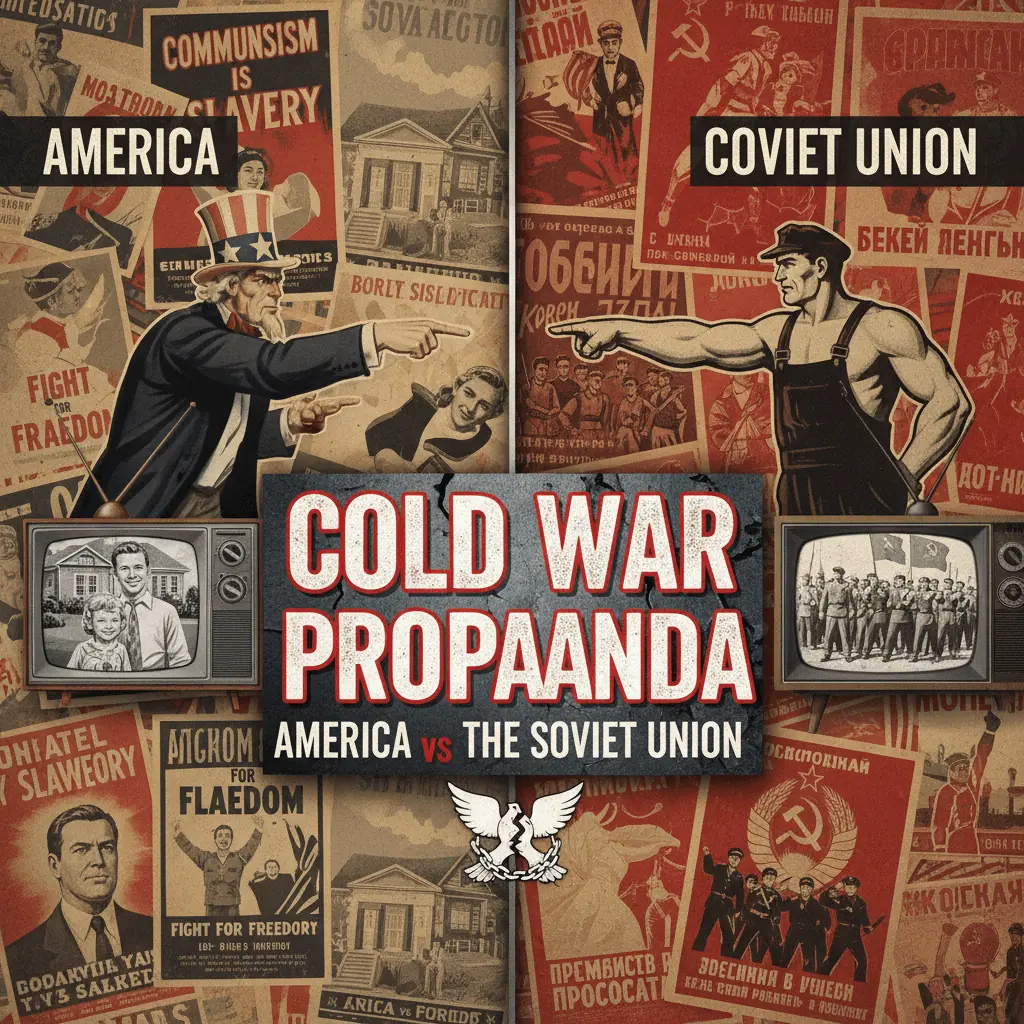
Both superpowers engaged in continuous influence operations. The U.S. funded Radio Free Europe, Radio Liberty, and the Congress for Cultural Freedom. The Soviet Union ran active measures (aktivnyye meropriyatiya), including forgeries (e.g., the “Zinoviev Letter”), disinformation about AIDS being a U.S. biological weapon, and influence over Western peace movements.
Russia-Ukraine (2014-Present): The Social Media War
Russian influence operations before and during the Ukraine conflict have included: massive bot networks amplifying separatist narratives, fake “reports” of Ukrainian atrocities, deepfakes of Ukrainian leaders, and coordinated harassment of journalists. Ukrainian and Western counter-propaganda has included rapid debunking, pre-bunking campaigns, and transparency initiatives exposing Russian disinformation networks.
Detecting Propaganda and Influence Operations
For defense personnel, intelligence analysts, and informed citizens, recognizing propaganda is the first line of defense.
Red Flags
Emotional language disproportionate to the topic
Binary framing (“with us or against us,” “good vs. evil”)
Absence of sourcing or reliance on anonymous “experts”
Rapid narrative shifts across multiple accounts or platforms
Inconsistent terminology (adversaries rebranding defeat as “strategic withdrawal”)
Appeals to identity (nationality, religion, ethnicity) over evidence
Isolation from alternative information (messages that discourage seeking other sources)
Analytical Questions
Who benefits if I believe this?
What evidence would change my mind?
Who is not speaking? What perspectives are missing?
Is this message designed to make me feel or think?
Could this be a fabrication? What is the chain of custody for this information?
Countermeasures: Defending Against Propaganda
Individual Resilience
Media literacy: Training citizens to recognize propaganda techniques, verify sources, and seek diverse perspectives.
Emotional regulation: Recognizing when content is designed to provoke fear, anger, or outrage — and pausing before sharing or acting.
Source diversification: Consuming news from multiple, ideologically diverse, and internationally varied sources.
Verification habits: Reverse image searching, checking original sources, consulting fact-checking organizations.
Organizational and National Countermeasures
The Ethical Boundaries of Military Propaganda
Legitimate military propaganda operates within legal and ethical constraints, including:
Compliance with international law: The Geneva Conventions prohibit certain forms of psychological warfare (e.g., pretending to surrender).
Respect for civilian populations: Propaganda should not incite violence, hatred, or human rights violations.
Attribution norms: White propaganda should be clearly attributable to its source. Grey and black propaganda carry significant risks.
Protection of non-combatants: Influence operations should not target civilians for coercion or intimidation.
Adversary propaganda often ignores these constraints. Recognizing the difference is essential for maintaining both strategic credibility and moral authority.
Conclusion
Propaganda and influence operations are not peripheral to modern conflict — they are central to it. Adversaries have learned that shaping what populations believe, fear, and hope is often more decisive than controlling territory or destroying forces. From leaflet drops over World War II battlefields to deepfakes circulating on social media, the tools have evolved but the objective remains: the systematic shaping of beliefs.
For defense professionals, understanding propaganda means recognizing it as a weapons system — one that targets the cognitive domain. For citizens in democratic societies, understanding propaganda means reclaiming the ability to think independently, verify sources, and resist manipulation. In cognitive warfare, the defense is not a wall or a missile. It is an informed, critical, and resilient public.