Generative adversarial networks: The technology reshaping why people believe conspiracies
In October 2020, a deepfake video of Belgian Prime Minister Sophie Wilmès appeared to show her announcing a fabricated COVID-19 policy reversal. The synthetic media was crude by technical standards—facial mapping artifacts were visible to trained observers—yet it circulated widely on social platforms before fact-checkers identified it as artificial. What made this incident strategically significant was not the video’s technical sophistication, but its timing during heightened political polarization and public health uncertainty. This case illustrates a fundamental shift: generative adversarial networks (GANs) are not merely creating better synthetic media, but fundamentally altering why people believe conspiracies in the digital information environment.
The strategic risk extends beyond individual deepfakes to what researchers term the «liar’s dividend»—the broader epistemological uncertainty that synthetic media capabilities introduce into public discourse. When audiences believe that any inconvenient video could be artificially generated, authentic evidence loses probative value regardless of whether specific content is actually synthetic. This analysis examines how GAN-powered synthetic media is reshaping conspiracy belief patterns through documented operational deployments, detection asymmetries, and institutional response gaps.
The documented threat landscape of synthetic media operations
Unlike speculative assessments of AI capabilities, the operational deployment of synthetic media in influence campaigns follows identifiable patterns across state and non-state actors. Available evidence suggests that current GAN applications in disinformation operations prioritize speed and plausible deniability over technical perfection.
State actor deployments and strategic objectives
According to Carnegie Endowment research, state actors have deployed synthetic media primarily for three operational objectives: discrediting political opponents through fabricated compromising content, creating false evidence of atrocities or policy statements, and generating plausible deniability around authentic leaked materials. The 2019 Gabon coup attempt featured what appeared to be a deepfake video of President Ali Bongo, though technical analysis remained inconclusive—itself demonstrating how uncertainty about authenticity can destabilize political processes.
Russian information operations have integrated synthetic media more systematically than documented deployments by other state actors. The Internet Research Agency’s experimental use of AI-generated profile images for sock puppet accounts represents an early adoption of GAN technology for scalable persona creation, though these applications remain relatively unsophisticated compared to state-of-the-art technical capabilities.
Commercial and criminal exploitation patterns
Non-consensual intimate imagery represents the most documented harmful application of synthetic media technology, with platforms reporting exponential growth in AI-generated explicit content. This deployment pattern reveals how GAN technology amplifies existing harassment vectors rather than creating entirely novel threat categories. The psychological impact on targets often exceeds the technical quality of the synthetic content, suggesting that belief in authenticity matters more than actual technical sophistication.
Commercial disinformation actors have adopted synthetic media for creating false testimonials and fabricating crisis events to manipulate financial markets. These applications exploit the speed-detection asymmetry that characterizes current technological capabilities—synthetic content can circulate widely before detection systems identify it as artificial.
Platform detection and removal patterns
YouTube’s transparency reports indicate that synthetic media detection remains heavily dependent on user reporting rather than automated identification. Meta’s quarterly enforcement reports show similar patterns, with most deepfake removals occurring after content has already achieved significant reach. This detection lag creates operational windows that sophisticated actors can exploit for maximum impact before removal.
How does synthetic media reshape conspiracy belief formation?
The relationship between GAN capabilities and conspiracy belief patterns operates through multiple psychological and technological vectors that extend far beyond individual exposure to synthetic content.
The liar’s dividend as cognitive warfare
Legal scholars Bobby Chesney and Danielle Citron identified the «liar’s dividend» as the strategic benefit that malicious actors derive from widespread awareness of synthetic media capabilities. When audiences become convinced that sophisticated deepfakes are ubiquitous, they may dismiss authentic evidence as potentially fabricated. This dynamic creates what intelligence analysts recognize as a cognitive warfare advantage for actors seeking to undermine evidential standards in public discourse.
In my assessment, this represents a more significant strategic risk than individual deepfake deployments. The psychological effect requires no actual synthetic media deployment—merely the perception that such capabilities exist and are widely accessible. This perception gap between actual technical deployments and public understanding of capabilities creates exploitable cognitive vulnerabilities.
Epistemic security and information verification
Traditional conspiracy theories relied on challenging official narratives through alternative interpretations of authentic evidence. Synthetic media capabilities introduce a different dynamic: the possibility of fabricated evidence that appears authentic. This shift changes the epistemological landscape from «what does this evidence mean?» to «is this evidence real?»
Research by the Reuters Institute suggests that audiences increasingly express uncertainty about media authenticity even when viewing genuine content. This baseline skepticism creates fertile conditions for conspiracy theories that exploit distrust in institutional verification mechanisms. When people doubt their ability to distinguish authentic from synthetic media, they may retreat to tribalized information sources that confirm existing beliefs rather than engage with potentially challenging evidence.
Technological literacy and verification behavior
Counter-intuitively, higher awareness of deepfake capabilities does not necessarily correlate with improved detection accuracy among general audiences. MIT research indicates that brief educational interventions about synthetic media may actually increase false positive rates—audiences become more likely to incorrectly identify authentic content as artificially generated. This finding suggests that technological literacy campaigns without corresponding improvements in verification infrastructure may inadvertently amplify conspiracy-conducive skepticism.
Detection architecture limitations and failure modes
The technical arms race between synthetic media generation and detection reveals structural asymmetries that favor malicious actors and create exploitable windows for influence operations.
Speed-detection asymmetry in operational environments
Current detection architectures exhibit fundamental timing disadvantages that advantage rapid deployment of synthetic content. While state-of-the-art detection models can identify many synthetic media artifacts with reasonable accuracy in controlled laboratory conditions, real-world deployment faces significant latency challenges. Content can achieve viral distribution within hours, while forensic analysis may require days or weeks for definitive conclusions.
The Defense Advanced Research Projects Agency’s (DARPA) SemaFor program has documented this asymmetry extensively. Even when detection systems correctly identify synthetic content, the temporal lag between creation and identification creates operational windows that sophisticated actors can exploit. What concerns me here is that this asymmetry appears to be structural rather than merely a temporary technological limitation.
Platform-scale detection challenges
Scale presents additional complications for automated detection systems. Platforms process billions of videos daily, requiring detection algorithms that can operate with minimal computational overhead while maintaining acceptable accuracy rates. This constraint forces platforms to prioritize speed over precision, resulting in detection systems optimized for obvious synthetic artifacts rather than sophisticated deepfakes.
Meta’s AI research division has published extensively on these trade-offs. Their detection models achieve high accuracy on controlled datasets but exhibit significantly degraded performance when deployed at platform scale with real-time requirements. The gap between laboratory performance and operational deployment suggests that current detection approaches may be fundamentally mismatched to the operational environment they must defend.
Adversarial adaptation and detection evasion
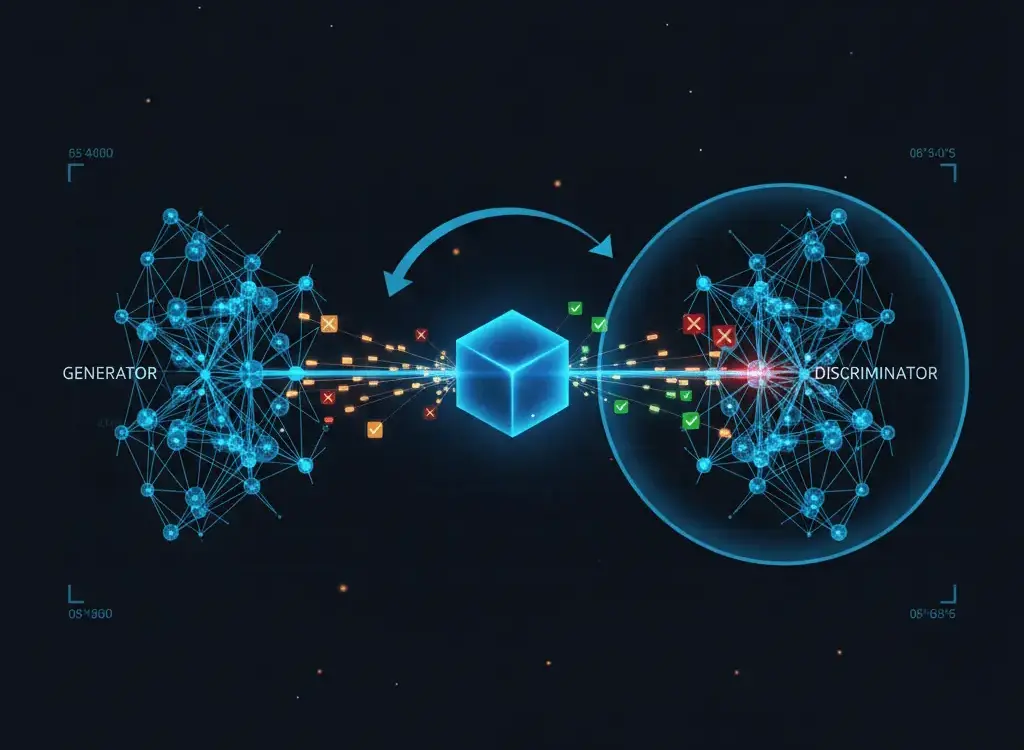
Generative adversarial networks are specifically designed to defeat detection mechanisms through adversarial training processes. As detection capabilities improve, generation techniques adapt to exploit new vulnerabilities. This creates an inherent advantage for attackers who can iterate rapidly against known detection methods.
Academic research consistently demonstrates that detection models suffer from generalization problems when confronted with synthetic media created using different GAN architectures than their training data. This brittleness suggests that detection approaches based on identifying specific technical artifacts may be inherently vulnerable to evasion by adaptive adversaries.
Institutional response gaps and platform accountability
The regulatory and institutional response to synthetic media capabilities reveals significant coordination gaps that limit effective countermeasures against disinformation operations.
Legal frameworks and evidentiary standards
Existing legal frameworks struggle to address synthetic media in both criminal and civil contexts. Courts lack standardized procedures for authenticating digital media in an environment where sophisticated forgeries are technologically feasible. This uncertainty creates strategic advantages for actors who can introduce reasonable doubt about authentic evidence by claiming it could be synthetically generated.
The Department of Justice has acknowledged these challenges in recent guidance documents but has not yet established clear precedents for synthetic media authentication in federal proceedings. State courts exhibit even greater variability in their approaches to digital evidence authentication, creating a patchwork of standards that sophisticated actors can exploit through venue shopping.
Platform liability and verification obligations
Section 230 of the Communications Decency Act provides platforms with broad immunity from liability for third-party content, including synthetic media created by users. This framework creates limited incentives for platforms to invest heavily in detection and removal capabilities beyond what is necessary to maintain advertiser confidence and user engagement.
Congressional hearings have highlighted this accountability gap repeatedly, but legislative proposals for synthetic media-specific liability remain stalled in committee. Without clear legal obligations, platforms are likely to continue treating synthetic media as a reputational rather than legal risk, limiting the resources dedicated to detection and removal systems.
International coordination and attribution challenges
Synthetic media operations often cross national boundaries, complicating law enforcement response and creating safe havens for malicious actors. The technical infrastructure required for sophisticated deepfake creation can be distributed across multiple jurisdictions, making attribution and prosecution extremely difficult.
NATO’s Cooperative Cyber Defence Centre of Excellence has identified synthetic media as a hybrid threat requiring enhanced alliance coordination, but operational frameworks for cross-border response remain underdeveloped. This coordination gap creates strategic advantages for state actors operating from non-allied territories.
A framework for assessing synthetic media influence risk
Effective risk assessment requires distinguishing between technical capabilities and operational deployment patterns while accounting for the psychological effects of perceived threats.
Operational indicators of synthetic media deployment
Security professionals and analysts should focus on specific indicators that suggest intentional deployment of synthetic media in influence operations rather than attempting to assess all potentially synthetic content:
- Timing coordination: Synthetic content released to coincide with specific political events, crises, or decision points
- Distribution amplification: Coordinated sharing patterns suggesting orchestrated promotion rather than organic viral spread
- Target specificity: Content designed to exploit known vulnerabilities or prejudices of specific audience segments
- Plausible deniability: Technical quality sufficient to create uncertainty but not necessarily perfect authenticity
- Source obscuration: Difficulty tracing content origins despite technical analysis capabilities
Risk assessment methodology
Analysts should evaluate synthetic media threats through a multi-factor assessment framework that accounts for both direct and indirect effects:
- Technical assessment: Evaluate the sophistication of detected synthetic content against known generation capabilities
- Operational context: Assess the strategic timing and targeting of synthetic media deployment
- Audience vulnerability: Analyze the specific psychological and cultural factors that make target audiences susceptible to conspiracy beliefs
- Amplification networks: Map the distribution mechanisms used to promote synthetic content
- Response capacity: Evaluate institutional and platform capabilities for detection and mitigation
Mitigation priority matrix
Resource allocation should prioritize interventions based on threat likelihood and potential impact rather than technical sophistication alone. High-priority scenarios include synthetic media targeting electoral processes, public health information, or financial markets where rapid viral distribution can cause immediate harm before fact-checking and detection systems respond.
| Threat Type | Detection Priority | Response Urgency | Mitigation Focus |
|---|---|---|---|
| Electoral disinformation | High | Immediate | Platform removal, voter education |
| Crisis event fabrication | High | Immediate | Official source verification, media literacy |
| Celebrity/public figure deepfakes | Medium | Standard | Legal remedies, platform policies |
| Commercial fraud | Medium | Standard | Consumer protection, financial verification |
Forward assessment and strategic implications
The trajectory of GAN development suggests that technical capabilities will continue to outpace detection systems, making the «liar’s dividend» an enduring feature of the information environment rather than a temporary challenge. This reality requires strategic adaptations that account for persistent uncertainty about media authenticity.
The most effective countermeasures will likely focus on institutional verification mechanisms and media literacy rather than purely technical detection solutions. Building public understanding of how to evaluate source credibility and corroborating evidence may prove more durable than arms-race approaches to synthetic media detection.
In my assessment, the primary strategic risk lies not in any individual deepfake deployment, but in the broader erosion of shared evidential standards that synthetic media capabilities enable. Addressing this challenge requires coordinated responses across technological, legal, and educational domains—responses that remain largely absent from current policy frameworks.
Key takeaways for practitioners
- Prioritize source verification: Focus on authenticating content origins and corroborating evidence rather than relying solely on technical detection methods
- Monitor timing patterns: Assess whether synthetic media appears coordinated with specific events or decision points that suggest strategic deployment
- Track amplification networks: Identify coordinated promotion patterns that may indicate orchestrated influence operations rather than organic viral content
- Evaluate audience targeting: Analyze whether content exploits specific cultural or political vulnerabilities that make target populations susceptible to conspiracy beliefs
- Build institutional verification capacity: Develop organizational procedures for rapid authentication that can operate faster than viral distribution cycles