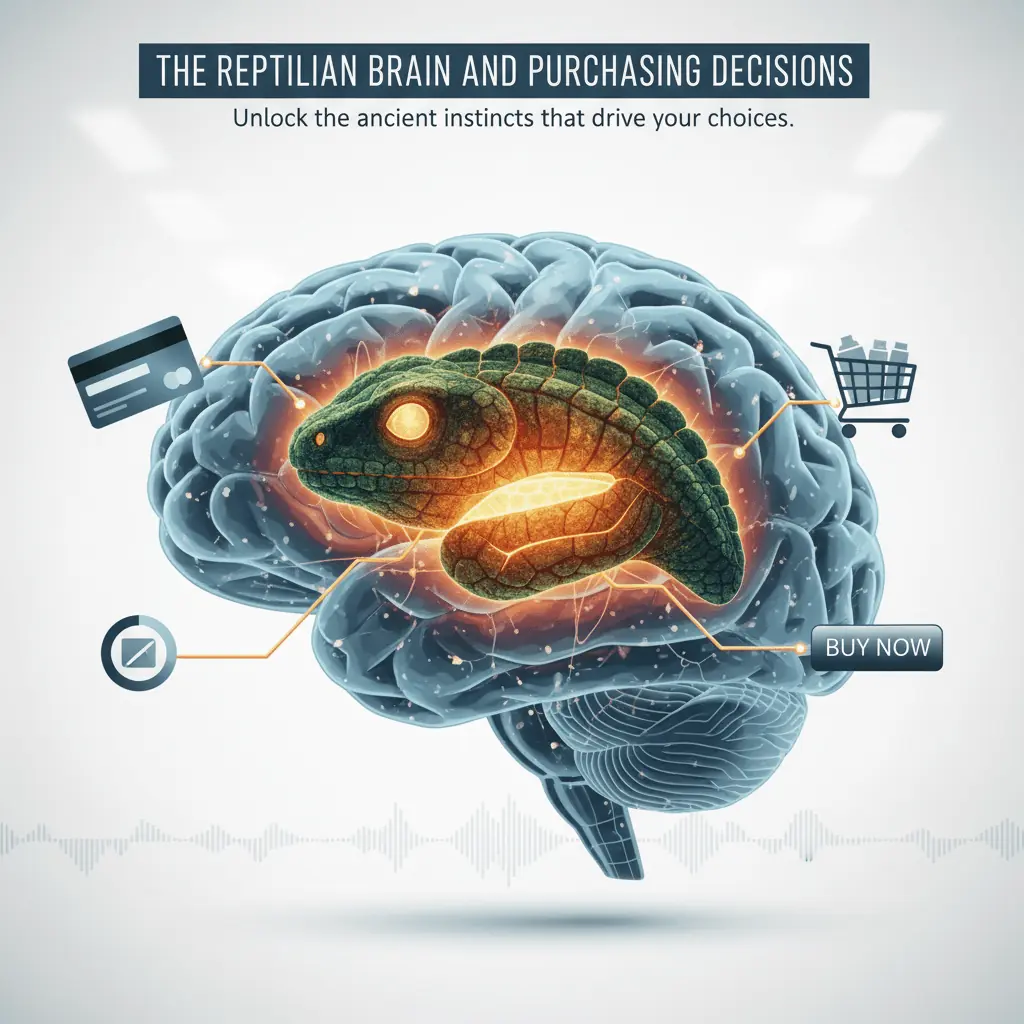
Neuromarketing sits at the intersection of neuroscience, psychology, and marketing. It is the application of neuroimaging, biometric, and physiological measurement techniques to understand consumer decision-making at a subconscious level. While its primary applications are commercial — increasing sales, building brand loyalty, optimizing advertising — the techniques of neuromarketing have profound implications for cognitive warfare, disinformation, and psychological defense.
From a military and defense perspective, understanding neuromarketing is essential because the same mechanisms that sell products can also manipulate beliefs, influence political behavior, and exploit cognitive vulnerabilities. Adversaries already use neuromarketing principles in influence operations, propaganda, and information warfare. Defending against these threats requires understanding how the commercial persuasion industry has already mapped the neural pathways of decision-making.
What Is Neuromarketing?
Neuromarketing is the use of neuroscience tools to measure consumer responses to marketing stimuli — advertisements, product packaging, pricing, brand messaging, and retail environments. Unlike traditional market research, which relies on what consumers say (surveys, focus groups, interviews), neuromarketing measures what consumers feel and attend to at a physiological level, often without their conscious awareness.
Key Measurement Technologies
These technologies bypass the fundamental problem of traditional research: consumers cannot accurately report their own subconscious processes. A person may say they ignore advertisements, but eye tracking may reveal sustained attention to specific brand placements. A focus group participant may claim price is the primary factor, but fMRI may show stronger activation in reward centers for a competitor’s packaging.
Key Findings from Neuromarketing Research
Understanding neuromarketing’s discoveries about human decision-making is essential for defense against cognitive manipulation.
1. Most Decisions Are Subconscious
Neuroscience has confirmed what cognitive psychology long suspected: the vast majority of human decisions occur outside conscious awareness. The brain’s automatic, intuitive System 1 (fast thinking) dominates over deliberate, analytical System 2 (slow thinking). Marketing that targets System 1 — emotions, associations, habits — is far more effective than messaging aimed at rational deliberation.
Defense implication: Adversary influence operations do not need to convince you with evidence. They need only trigger subconscious associations (fear, trust, disgust, belonging) that bypass rational scrutiny.
2. Emotions Drive Decisions; Rationality Justifies Them
fMRI studies consistently demonstrate that emotional brain regions (amygdala, insula, ventral striatum) predict purchasing decisions more accurately than cognitive regions (prefrontal cortex). Consumers feel first and rationalize after. Marketing that evokes positive emotions (trust, aspiration, belonging, relief) or negative emotions (fear of missing out, anxiety about social exclusion) reliably drives behavior.
Defense implication: Disinformation that provokes anger, fear, or outrage will spread further and influence more deeply than neutral, factual content. Emotional manipulation is not a bug of information systems — it is a feature exploited by adversaries.
3. Branding Creates Neural Shortcuts
Strong brands activate brain regions associated with identity, trust, and reward. Once a brand is established, consumers process information about that brand differently — more positively, with less critical scrutiny. This is the “halo effect” measured neurologically.
Defense implication: Adversaries invest in “branding” their narratives, sources, and messengers. A fake news site with a professional design, authoritative name, and consistent messaging can achieve the same neural shortcut as a legitimate brand.
4. Reward Anticipation Drives Engagement
The brain’s reward system (nucleus accumbens, ventral tegmental area) activates more strongly during anticipation of a reward than during its receipt. This is why variable reinforcement (intermittent rewards) is so addictive — the uncertainty amplifies dopamine release.
Defense implication: Social media platforms use variable reinforcement (the “pull to refresh” mechanism, unpredictable notifications, algorithmic content sequencing) to maximize engagement. Adversary propaganda piggybacks on these same reward mechanisms.
5. Cognitive Fluency Increases Persuasion
Information that is easy to process (simple language, familiar concepts, high-contrast visuals, rhyming) is automatically perceived as more truthful, credible, and likable — a phenomenon called cognitive fluency. The brain confuses ease of processing with accuracy of content.
Defense implication: Simple, emotionally resonant lies often defeat complex, nuanced truths. Adversaries deliberately craft disinformation for cognitive fluency: short slogans, memorable imagery, repetitive messaging.
Neuromarketing Techniques and Their Cognitive Warfare Applications
1. Priming
Priming is the unconscious activation of concepts or associations that influence subsequent behavior. A consumer exposed to images of luxury (gold, marble, elegant people) will subsequently perceive a product as higher quality, even if they do not consciously remember the images.
Cognitive warfare application: Adversaries prime target audiences with emotionally charged symbols (flags, religious icons, historical atrocities) before delivering persuasive messages. The emotional response to the prime transfers to the message content.
2. Anchoring
Anchoring is the tendency to rely heavily on the first piece of information encountered when making decisions. Marketers anchor consumers with high initial prices, making subsequent prices seem reasonable.
Cognitive warfare application: Disinformation campaigns establish false “baseline facts” before introducing more extreme claims. The initial falsehood anchors perception, making later distortions seem plausible.
3. Scarcity and Loss Aversion
The brain processes potential losses more intensely than equivalent gains (loss aversion). Neuromarketing studies show that framing a product as “limited quantity” or “ending soon” activates threat-related brain regions, compelling immediate action.
Cognitive warfare application: Adversary propaganda frames political choices as imminent threats (“They will destroy our culture unless we act now”). Loss aversion overrides rational risk assessment.
4. Social Proof and Conformity
Brain imaging studies show that social rejection activates pain-related neural regions. Marketing leverages this by showing that “millions have already purchased” or “five-star ratings from thousands.”
Cognitive warfare application: Bot networks and fake accounts create the illusion of consensus, triggering conformity pressure. Individuals are less likely to question a belief that “everyone” appears to share.
5. The Mere-Exposure Effect
Repeated exposure to a stimulus increases liking, even without conscious recognition. Neuromarketing confirms that familiar brands activate reward circuits even when consumers cannot recall seeing advertisements.
Cognitive warfare application: Repeated exposure to disinformation — even when debunked — increases familiarity, and familiarity is neurologically confusable with truth. This is the “illusory truth effect.”
The Attention Economy: Where Neuromarketing Meets Cognitive Warfare
Neuromarketing operates within the broader context of the attention economy — an economic system in which human attention is a scarce resource that platforms and advertisers compete to capture. Social media, streaming services, news aggregators, and gaming platforms are all designed to maximize user attention, because attention converts to revenue.
From a defense perspective, the attention economy creates structural vulnerabilities:
Attention capture is weaponizable: Adversaries can purchase the same targeting tools as commercial advertisers.
Emotional content captures attention: Platforms’ algorithms amplify outrage, fear, and sensationalism — precisely the emotional states that disinformation exploits.
Engagement metrics optimize for manipulation: Content that triggers strong emotional reactions, regardless of truth, generates higher engagement and thus higher algorithmic promotion.
Defensive Countermeasures: Inoculating Against Neuromarketing Manipulation
Individual-Level Defenses
Organizational and National Countermeasures
Public education campaigns: Teaching citizens about neuromarketing techniques and their cognitive warfare applications.
Transparency regulations: Requiring disclosure of AI-generated content, paid political advertising, and bot accounts.
Algorithmic auditing: Independent assessment of platform algorithms for manipulative or radicalizing amplification.
Research investment: Understanding emerging neuromarketing techniques and developing countermeasures.
The Ethical Boundary: Commercial Persuasion vs. Cognitive Warfare
Neuromarketing, in commercial contexts, operates within regulatory frameworks: truth-in-advertising laws, disclosure requirements, and consumer protection statutes. Consumers voluntarily engage with commercial content, and the goal is product purchase, not political subversion.
Cognitive warfare occupies a different moral and legal domain:
The techniques may be similar. The context, intent, and consequences are fundamentally different.
Conclusion
Neuromarketing has demonstrated what cognitive psychologists long suspected: human decision-making is largely subconscious, emotionally driven, and vulnerable to environmental manipulation. The same neural mechanisms that make advertising effective — priming, anchoring, loss aversion, social proof, mere exposure — are exploited by adversaries in cognitive warfare and disinformation campaigns.
For defense professionals, understanding neuromarketing is not about rejecting commercial persuasion. It is about recognizing that the battle for attention is also a battle for cognition. Adversaries purchase the same targeting tools, study the same neuroscience, and exploit the same vulnerabilities as the world’s largest marketing firms.
The defense begins with awareness. When you understand that your attention is being captured, your emotions primed, and your decisions influenced at a subconscious level, you can begin to resist. Slow down. Label the emotion. Verify the source. And remember: if a message feels designed to provoke an immediate emotional reaction, it is probably designed to bypass your rationality.
In cognitive warfare, the most important defense is an informed, reflective, and resilient mind.