SITUATION ASSESSMENT
In 2016, Cambridge Analytica harvested Facebook data from 87 million users to build psychological profiles for political advertising. Open-source evidence from the Facebook-Cambridge Analytica Files revealed how personality traits extracted from social media behavior were weaponized to influence voting decisions. This incident exposed a critical vulnerability: the convergence of neuroscience, data analytics, and persuasion technology had evolved far beyond traditional advertising into sophisticated cognitive influence operations.
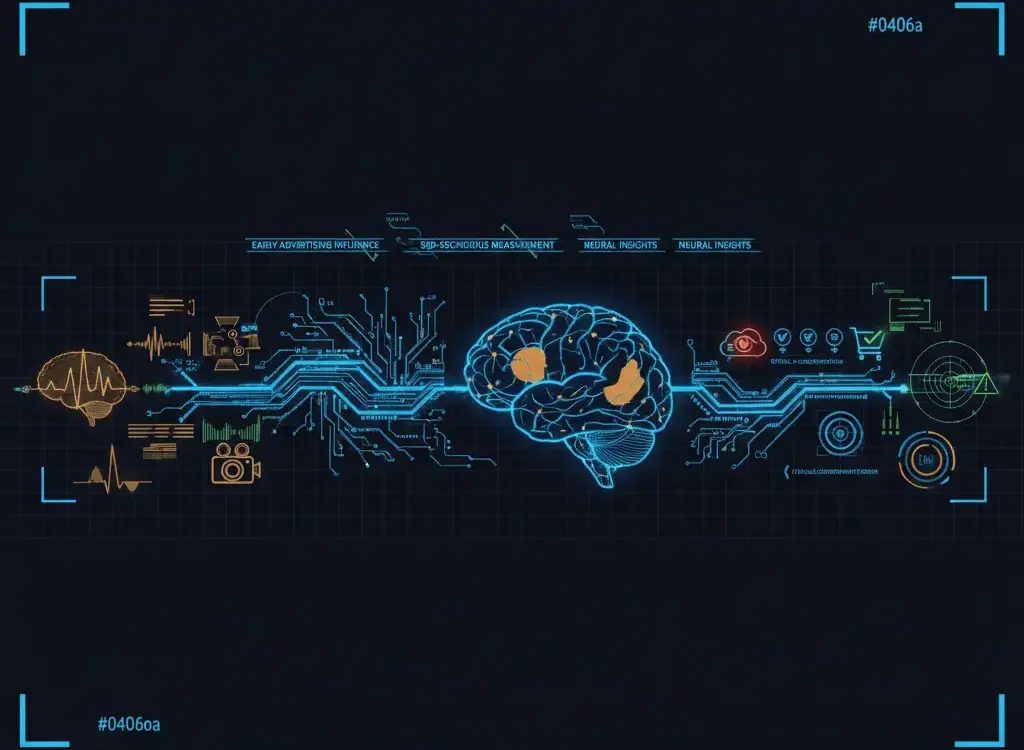
The history of neuromarketing traces a direct line from early advertising psychology to today’s precision influence campaigns. What began as simple consumer research has transformed into a dual-use technology capable of both commercial persuasion and information warfare. Understanding this evolution is essential for recognizing how cognitive vulnerabilities identified in laboratory settings become operational weapons in the digital battlefield.
THREAT VECTOR: From Consumer Psychology to Cognitive Warfare
The operational pattern suggests that neuromarketing’s transformation from benign consumer research to influence weaponry follows three distinct phases. Phase One (1950s-1990s) established the foundational psychology. Researcher Vance Packard documented in «The Hidden Persuaders» (1957) how advertisers exploited subconscious desires. This aligned with documented tactics from Edward Bernays’ «Engineering of Consent,» which applied Freudian psychology to mass persuasion.
Phase Two (1990s-2010s) introduced brain imaging technology. Dr. Ale Smidts coined the term «neuromarketing» in 2002, as researchers began using fMRI and EEG to measure neural responses to advertising stimuli. The Advertising Research Foundation established the NeuroStandards Collaboration in 2011, legitimizing the field within academic and commercial contexts.
Phase Three (2010s-present) weaponized these insights through big data and algorithmic targeting. Research from the Stanford Internet Observatory demonstrates how platforms like Facebook integrated neuromarketing principles into algorithmic content delivery systems, creating what NATO’s cognitive warfare concept document identifies as «influence at scale.»
Critical assessment: The history of neuromarketing reveals how academic research in consumer neuroscience provided the foundational knowledge later exploited in state-sponsored influence operations and commercial manipulation campaigns.
CASE STUDY: Documented Applications in Information Operations
Operation 1: Russian Internet Research Agency Tactics
The Mueller Investigation (2017-2019) revealed how Russian operatives applied neuromarketing principles to social media influence campaigns. Open-source evidence from the Department of Justice indictments shows the Internet Research Agency used emotional priming techniques derived from consumer neuroscience research. Their Facebook advertisements targeted specific psychological profiles using fear-based messaging and tribal identity markers—tactics that mirror neuromarketing’s use of amygdala activation and in-group preference triggers.
Analysis from the Oxford Internet Institute documented how these operations leveraged the same neural pathways that consumer researchers had identified for brand loyalty, repurposing them for political polarization. The operational framework directly paralleled Robert Cialdini’s principles of influence, particularly social proof and authority bias.
Operation 2: Micro-Targeting in Electoral Campaigns
Research from the Digital Forensic Research Lab revealed how the 2016 Trump campaign, working with Cambridge Analytica, deployed psychographic profiling based on the OCEAN personality model (Openness, Conscientiousness, Extraversion, Agreeableness, Neuroticism). This approach, documented in academic papers by Michal Kosinski and David Stillwell at Cambridge University, used Facebook «likes» to predict personality traits with 85% accuracy.
The campaign then customized political advertisements to exploit specific cognitive biases identified through neuromarketing research. High-neuroticism individuals received fear-based messaging about immigration, while low-openness profiles saw tradition-focused content. This precision targeting system represented the operational deployment of decades of consumer neuroscience research.
DETECTION PROTOCOL: Behavioral Signatures and Technical Markers
A critical indicator of neuromarketing-enhanced influence operations is the presence of multiple targeting layers operating simultaneously. Intelligence analysts should monitor for these specific signatures:
- Emotional Escalation Patterns: Content designed to trigger rapid amygdala response before engaging rational processing centers
- Psychographic Clustering: Advertisement delivery that correlates with personality trait profiles rather than demographic categories alone
- Neural Pathway Exploitation: Messaging that deliberately activates specific cognitive biases (availability heuristic, confirmation bias, social proof)
- Engagement Manipulation: Content timing and frequency that exploits dopamine reward cycles documented in neuroscience research
- Subliminal Priming Elements: Visual or auditory cues designed to influence below conscious awareness threshold
- Cognitive Load Attacks: Information volume and complexity designed to overwhelm rational decision-making systems
Technical markers include abnormal engagement patterns that suggest algorithmic amplification based on psychological profiling rather than organic interest, and advertisement spending patterns that indicate micro-targeting beyond standard demographic parameters.
DEFENSE FRAMEWORK: Multi-Level Countermeasures
Assessment: Effective defense against neuromarketing-enhanced influence operations requires coordinated responses across individual, organizational, and systemic levels, based on established cognitive security frameworks.
Individual Level: Cognitive Hygiene Protocols
- Implement Dual-Process Awareness: Recognize when fast, emotional thinking (System 1) is being triggered and deliberately engage analytical thinking (System 2)
- Practice Media Verification Habits: Use established fact-checking protocols before sharing emotionally charged content
- Audit Digital Footprint: Regularly review and limit personal data available for psychographic profiling
- Deploy Cognitive Delays: Institute 24-hour delays before making decisions based on social media content
- Diversify Information Sources: Actively seek contradictory viewpoints to counter confirmation bias exploitation
Organizational Level: Institutional Protocols
The RAND Corporation’s «Truth Decay» framework provides the foundation for organizational defense. Institutions should implement regular training on influence operation recognition, establish clear protocols for information verification before distribution, and create decision-making processes that account for cognitive bias exploitation.
Critical organizational controls include mandatory cooling-off periods for policy decisions triggered by viral content, regular audits of information consumption patterns within the organization, and formal red-team exercises that test vulnerability to neuromarketing-enhanced influence campaigns.
Systemic Level: Platform and Policy Design
Evidence from the EU’s Digital Services Act and similar regulatory frameworks indicates that systemic defense requires platform transparency regarding algorithmic targeting methods, mandatory disclosure of psychographic profiling in political advertising, and international cooperation frameworks for sharing threat intelligence about influence operations.
Intelligence assessment: The most effective countermeasures integrate technical platform modifications with human cognitive training, recognizing that neuromarketing vulnerabilities exist at both the individual neurological level and the systemic information architecture level.
ASSESSMENT: Strategic Implications and Future Threat Evolution
The history of neuromarketing demonstrates how dual-use research in cognitive science becomes weaponized through technological amplification. Current trajectory analysis suggests three critical developments: artificial intelligence will further automate psychological profiling and content customization; virtual and augmented reality platforms will provide new vectors for subconscious influence; and state actors will increasingly integrate neuromarketing techniques into diplomatic and economic influence campaigns.
Forward-looking assessment indicates that defensive preparation must focus on building cognitive resilience at scale, not merely reactive countermeasures. The institutional memory from Cold War psychological operations, combined with contemporary neuroscience research, provides the foundation for developing systematic cognitive security protocols.
KEY TAKEAWAYS
- Historical Pattern Recognition: Neuromarketing evolved from academic consumer research into a dual-use technology capable of both commercial and political influence operations
- Operational Integration: State and commercial actors have successfully integrated neuroscience insights into algorithmic targeting systems, creating precision influence capabilities
- Detection Capability: Neuromarketing-enhanced operations exhibit identifiable technical and behavioral signatures that can be systematically monitored
- Defense Requirements: Effective countermeasures require coordinated responses across individual cognitive training, organizational protocols, and platform regulation
- Future Trajectory: Emerging technologies will expand the attack surface for cognitive influence operations, requiring proactive defensive development rather than reactive responses
The strategic imperative is clear: understanding the history of neuromarketing provides essential intelligence for recognizing and countering contemporary cognitive warfare tactics. The same neural vulnerabilities that advertisers learned to exploit are now being weaponized in information operations designed to influence democratic processes, social stability, and international relations.