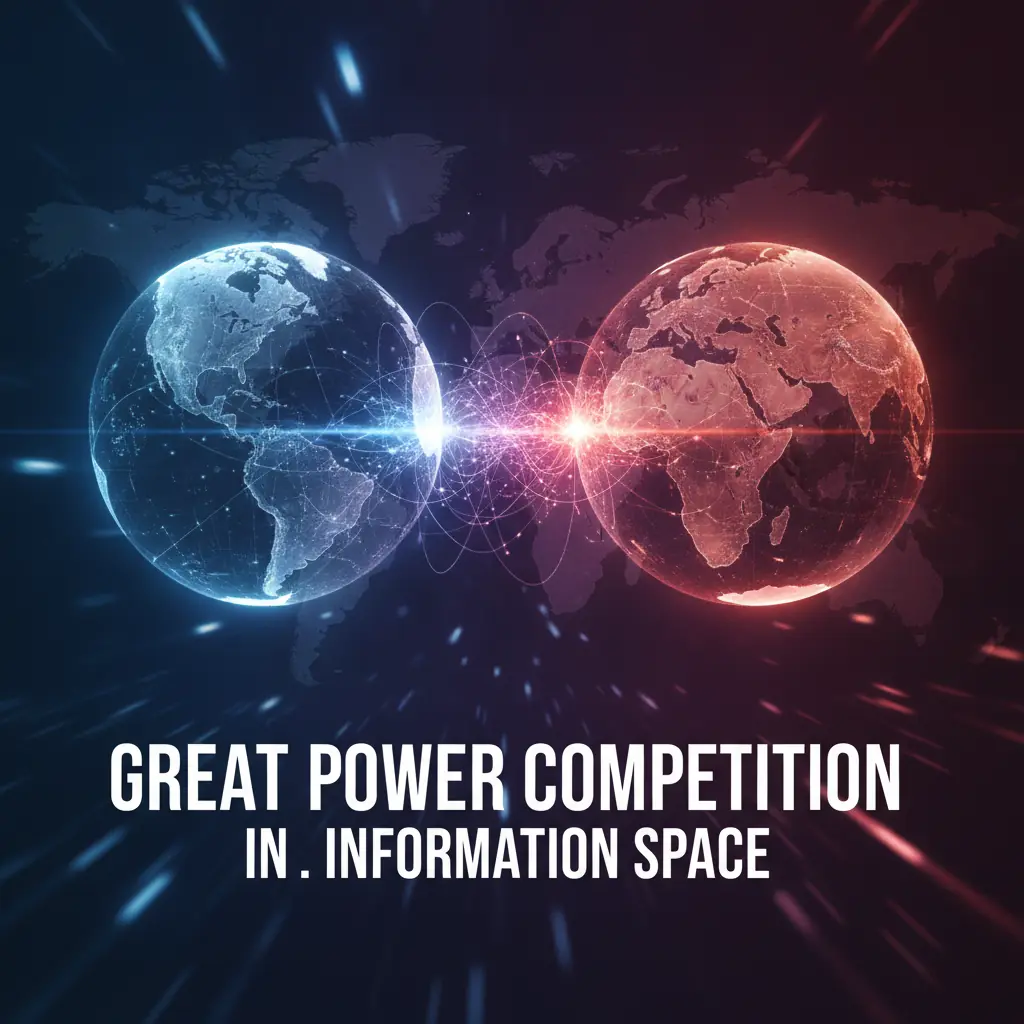
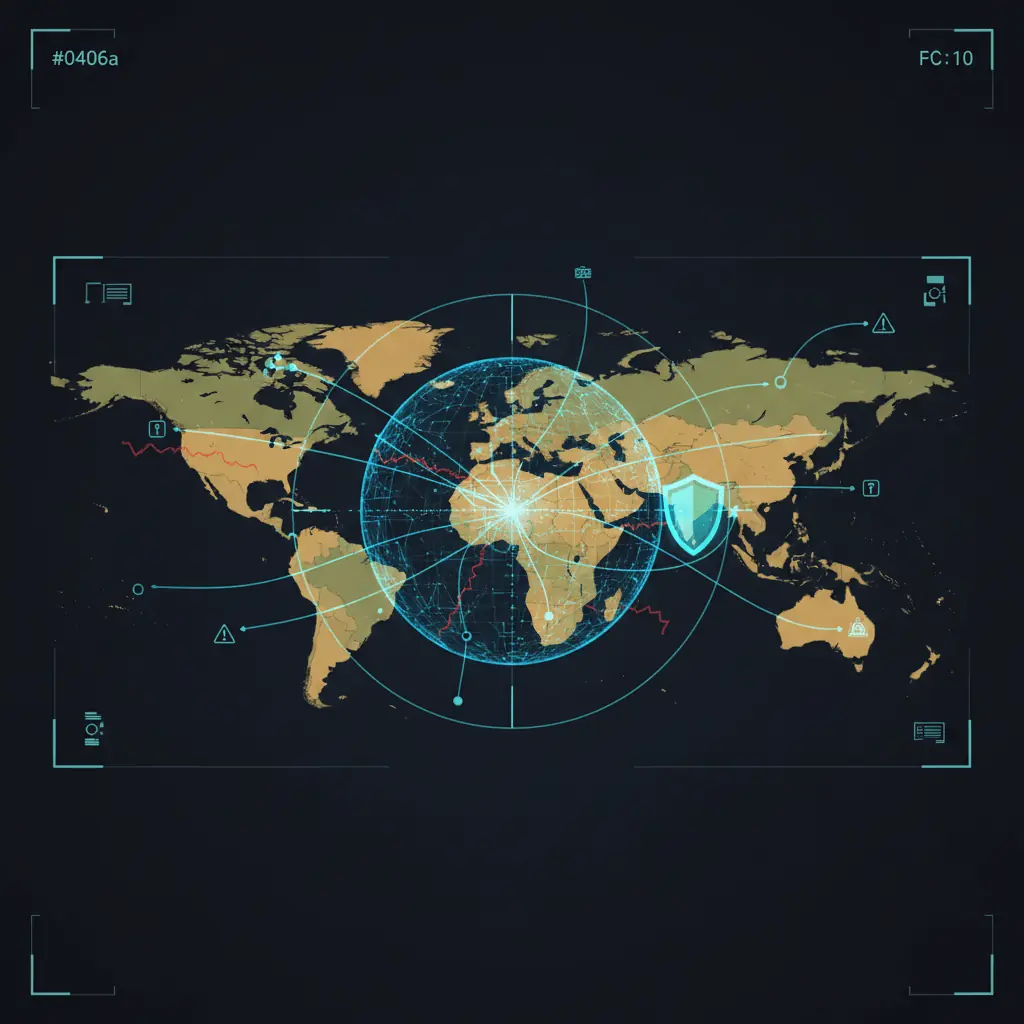
Geopolitics has traditionally been about territory: borders, resources, trade routes, and military basing. But in the 21st century, a new dimension has emerged alongside the physical domain: the information space. Information geopolitics is the study of how nations and non-state actors compete for control over the creation, distribution, and consumption of information — and how that competition shapes global power dynamics, alliances, and conflicts.
Unlike traditional geopolitics, where borders are relatively stable and sovereignty is well-defined, the information space is borderless, fluid, and contested. A disinformation campaign originating from a single building in St. Petersburg can influence an election in the United States, destabilize a democracy in Eastern Europe, and exacerbate tensions between NATO allies — all without crossing a single physical border.
Understanding information geopolitics is essential for defense professionals, policymakers, and analysts who wish to comprehend the new map of global power: not only who controls territory and resources, but who controls what the world believes.
What Is Information Geopolitics?
Information geopolitics is the analysis of how geographic, economic, cultural, and political factors shape the global information environment — and how control over information flows affects international relations, national security, and global power structures.
Key questions in information geopolitics include:
Which nations control the infrastructure of the internet (undersea cables, satellites, data centers, root DNS servers)?
Which nations dominate global media, social media platforms, and search engines?
How do information flows across borders affect sovereignty, democracy, and social cohesion?
How do nations project power through information — and defend against information projection by others?
What alliances and rivalries are forming around information governance?
Information geopolitics recognizes that the information space is not a level playing field. Some nations possess enormous advantages in platform ownership, data storage, content moderation authority, and information warfare capabilities. Others are largely consumers, not producers, of global information — vulnerable to narratives shaped elsewhere.
The Infrastructure of Information Geopolitics
Control of information begins with control of infrastructure. The physical layer of the internet determines who can access, distribute, and block information.
Undersea Cables
Approximately 99% of intercontinental internet traffic travels through undersea fiber-optic cables. These cables are owned by consortia of telecommunications companies, technology firms, and sometimes state-owned entities. Nations with control over cable landing points — the locations where cables come ashore — have significant leverage over information flows.
Geopolitical implications: The United States, the United Kingdom, and other Five Eyes nations have historically dominated cable governance. China’s Belt and Road Initiative includes substantial investment in new undersea cables, potentially shifting control. Russia has invested in cable-intercept capabilities and, in some doctrines, the ability to sever cables during conflict.
Satellites and Space-Based Internet
Low-earth orbit (LEO) satellite constellations — Starlink (US), OneWeb (UK/India), GuoWang (China) — are creating a new layer of internet infrastructure. These systems provide connectivity independent of terrestrial infrastructure, with significant military and geopolitical implications.
Geopolitical implications: Starlink’s role in Ukraine demonstrated how a private company’s satellite network can become a geopolitical asset. China’s GuoWang constellation aims to provide similar capabilities without reliance on Western systems. Control of space-based internet is becoming a dimension of great power competition.
Data Centers and Cloud Computing
The physical location of data matters. Data stored on servers in the United States is subject to US law (the CLOUD Act). Data stored in China is subject to Chinese law and surveillance. The dominance of US-based cloud providers (Amazon Web Services, Microsoft Azure, Google Cloud) gives the United States significant leverage over global data flows.
Geopolitical implications: European efforts to develop “sovereign cloud” capabilities (Gaia-X) reflect concerns about US legal jurisdiction over European data. China’s development of domestic cloud infrastructure supports its “sovereign internet” model.
Root DNS Servers and Domain Governance
The Domain Name System (DNS) root zone — the master directory of the internet — is ultimately controlled by the US-based Internet Corporation for Assigned Names and Numbers (ICANN), under contract with the US National Telecommunications and Information Administration (NTIA). While ICANN is nominally multinational, the United States retains ultimate authority.
Geopolitical implications: Russia and China have long advocated for transferring DNS governance to an intergovernmental body (the International Telecommunication Union), which they dominate. The US and allies resist, preferring the existing multistakeholder model. Control of the DNS root could theoretically allow a nation to block or redirect domains globally — a capability some nations fear could be weaponized.
The Platform Dimension: Who Controls Global Discourse?
Information geopolitics is not only about infrastructure. It is about the platforms where information is consumed.
US Dominance of Global Platforms
The world’s most influential information platforms — Google (Search, YouTube, Android), Meta (Facebook, Instagram, WhatsApp), X (Twitter), Microsoft (LinkedIn, Bing), Apple (App Store, iOS) — are American companies operating under US law. This gives the United States extraordinary power over global information flows:
Content moderation: US platforms determine what speech is permissible globally, based on US legal standards and corporate policies.
Data access: US law enforcement and intelligence agencies can access platform data under legal frameworks (FISA, CLOUD Act).
Algorithmic shaping: Platform algorithms determine what information billions of people see.
Geopolitical implications: European and other allies increasingly resent US platform dominance, leading to regulatory pushback (GDPR, Digital Services Act, Digital Markets Act). Adversary nations (China, Russia, Iran) block or restrict US platforms entirely, creating separate information spheres.
China’s Sovereign Internet Model
China has developed a completely separate information ecosystem: Baidu (search), WeChat (social media/messaging/payments), Weibo (microblogging), Douyin (short video, TikTok’s Chinese version), and Tencent (gaming, streaming). The “Great Firewall” blocks access to foreign platforms.
Geopolitical implications: China’s model demonstrates that a nation can create a fully sovereign information space, insulated from foreign influence. TikTok’s global success (and China’s ownership of it) gives China a platform for influence outside its borders — a capability the US lacks reciprocally.
Russia’s Information Strategy
Russia cannot compete with US platforms or China’s sovereign ecosystem. Instead, Russia’s strategy is weaponized engagement with global platforms: using US platforms to spread disinformation, create bot networks, and amplify divisive content while simultaneously restricting foreign platforms domestically.
Geopolitical implications: Russia demonstrates that a nation need not own platforms to exploit them. Adversaries can use the openness of democratic societies’ information spaces against them.
The Narrative Dimension: Information as a Geopolitical Weapon
Control of infrastructure and platforms enables control of narratives — the stories nations tell about themselves, their adversaries, and the global order.
Narrative Competition
Great powers compete to establish dominant narratives on key issues:
Narratives are not merely rhetoric. They shape alliance decisions, economic sanctions, military interventions, and domestic politics.
Information Blocs and Spheres
The world is fragmenting into competing information blocs:
The US-led West: Open internet (with some restrictions), US platform dominance, shared democratic values, NATO and EU coordination.
The Chinese-led sphere: Sovereign internet, platform nationalism, censorship, digital Silk Road exporting Chinese governance model.
The Russian-aligned space: Limited capacity, weaponized engagement with Western platforms, domestic control.
The Non-Aligned majority: Consumers, not producers, of global information; vulnerable to all major powers’ influence operations; seeking autonomy.
Geopolitical Flashpoints in the Information Space
1. Cross-Border Data Flows
Data localization laws — requiring that data about citizens be stored within national borders — are proliferating. Russia, China, India, Brazil, Vietnam, and the EU (GDPR) have varying data localization requirements. The US opposes broad localization, favoring free data flows.
Geopolitical tension: Data localization fragments the global internet, creating barriers to commerce and information exchange. It also enables surveillance and censorship.
2. Content Moderation as Foreign Policy
When US platforms moderate content — banning Russian state media, labeling Chinese government accounts, removing disinformation — adversarial nations frame these actions as US government censorship, not corporate policy. Platform moderation becomes a foreign policy flashpoint.
3. Election Interference and Information Warfare
Adversary information operations targeting democratic elections are now a permanent feature of international relations. Attribution, response, and deterrence remain unresolved challenges.
4. The Global South and Information Dependence
Most of the world’s population consumes information produced elsewhere — by US platforms, Western news media, Chinese state media, or Russian disinformation networks. Information dependence creates vulnerability: nations that do not produce their own narratives cannot control how they are perceived globally.
5. Algorithmic Sovereignty
Who controls the algorithms that determine what information people see? Currently, US corporations. The EU’s Digital Services Act requires algorithmic transparency. China’s algorithms are state-controlled. The future of algorithmic governance is contested.
Defensive and Offensive Postures in Information Geopolitics
For Nations Seeking to Protect Their Information Space
Infrastructure diversification: Multiple undersea cables, domestic data centers, satellite internet backup.
Platform regulation: Transparency requirements, content moderation standards, data localization where appropriate.
Media development: Strong independent journalism, public broadcasting, diverse media ownership.
Resilience building: Media literacy education, disinformation detection capabilities, trusted messenger networks.
International alliances: Information-sharing agreements, coordinated counter-disinformation responses.
For Nations Seeking to Project Information Power
Platform development: Competing with US platforms globally (China) or regionally (India, Brazil, Russia).
Global media reach: State-funded international broadcasters (BBC, Voice of America, CGTN, RT, Sputnik).
Influence operations: Disinformation, bot networks, covert influence, agent recruitment.
Infrastructure investment: Undersea cables, satellite constellations, data centers in allied nations.
The Future of Information Geopolitics
Several trends will shape information geopolitics in the coming decade:
Fragmentation
The single, global internet is fragmenting into multiple, interconnected but distinct information spaces: the US-led open internet, China’s sovereign internet, Russia’s controlled space, and regional variations (India, Brazil, EU). The “splinternet” is already emerging.
AI-Generated Content
Generative AI (large language models, image generators, video synthesis) will flood the information space with synthetic content. Distinguishing human from machine-generated information will become impossible at scale. Nations that control the most advanced AI models will have significant information advantages.
Quantum Computing
Quantum computers will eventually break current encryption standards, threatening the security of all digital communications. The nation that achieves quantum supremacy first will have extraordinary information access — and vulnerability to others achieving it.
Cyber-Physical Convergence
Information operations will increasingly target physical systems: autonomous vehicles, power grids, medical devices, industrial control systems. Cognitive warfare will merge with cyber-physical attack.
Conclusion
Information geopolitics is not a niche academic concern. It is the new map of global power. The nation that controls infrastructure controls access. The nation that controls platforms controls discourse. The nation that controls narratives controls what is believed, feared, and desired.
The United States currently dominates infrastructure and platforms. China is building a sovereign alternative. Russia weaponizes engagement with Western platforms while restricting them at home. The rest of the world navigates between these poles, seeking autonomy and resilience.
For defense professionals and policymakers, understanding information geopolitics is essential for developing national strategies, allocating resources, building alliances, and protecting democratic societies from information warfare. The battle for territory continues — but the battle for minds may be even more decisive.
The information space has no borders. But the nations competing within it have very real interests, capabilities, and vulnerabilities. Mapping that competition is the first step toward navigating it.