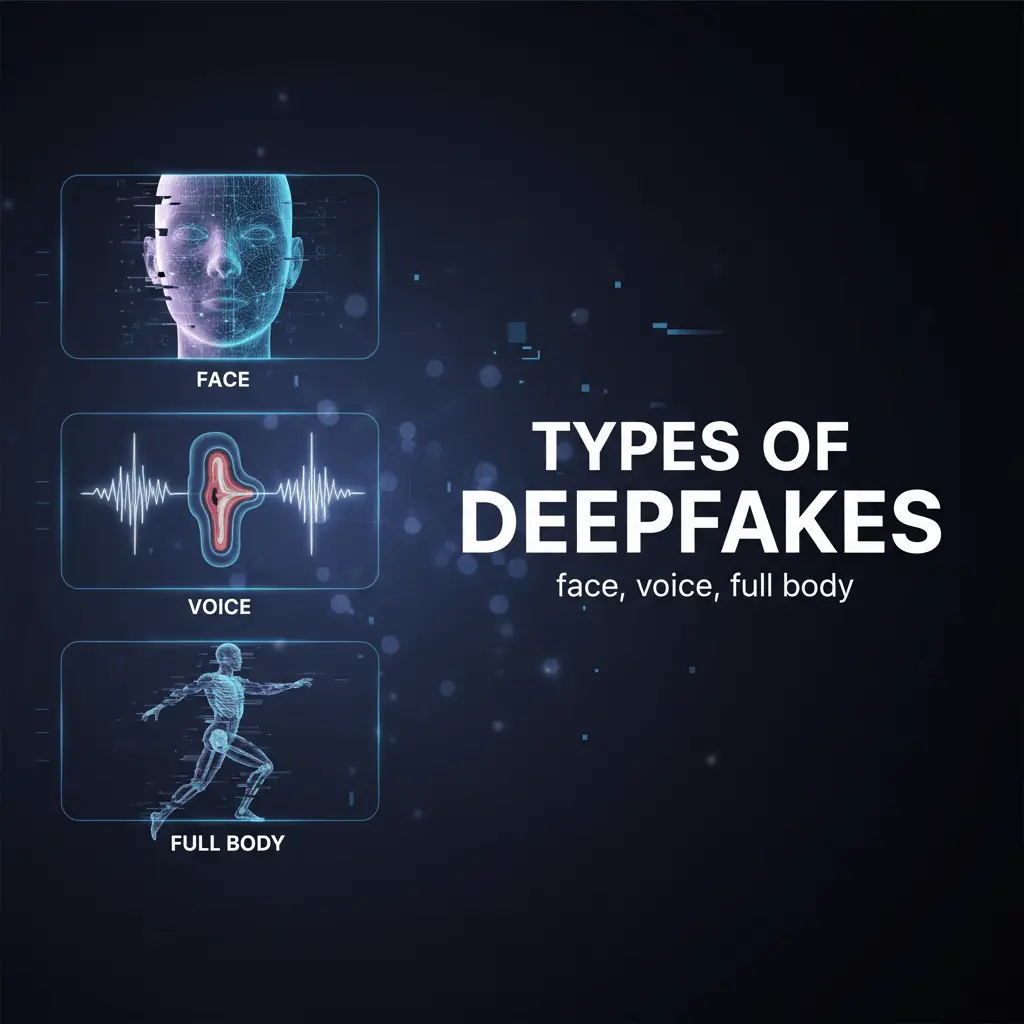
Types of deepfakes: face, voice, full body
Not all deepfakes carry the same risk. The operational threat depends less on how convincing a fake is than on its type, its context and its audience.

Key judgments
- Documented political use of face-swap deepfakes is more limited than public concern suggests; influence actors often prefer cheaper edits and decontextualized authentic material. Voice synthesis is likely the more immediate operational threat: consumer tools are accessible and platforms invest far less in detecting synthetic audio than synthetic video. Full-body deepfakes remain technically demanding and are probably confined to well-resourced actors, but they pose long-term problems for the evidentiary value of video. The liar's dividend operates across all types: actors can cast doubt on authentic evidence without producing any synthetic content.
In March 2022, a deepfake video surfaced showing Ukrainian President Volodymyr Zelensky appearing to surrender to Russian forces—a fabrication so crude that most observers dismissed it immediately. Yet this incident crystallized a strategic reality that defense professionals have grappled with since: the threat posed by synthetic media extends far beyond the quality of any individual fake. The real challenge lies in understanding how types of deepfakes—from facial manipulation to voice synthesis to full-body replacement—create distinct operational risks across the spectrum of cognitive warfare.
The analytical framework for assessing synthetic media threats must account for three critical factors: the technical sophistication required for each type of manipulation, the evidentiary standards needed for detection, and the strategic context in which these tools are deployed. What concerns analysts most is not the existence of sophisticated deepfakes, but rather how even rudimentary synthetic media can exploit existing information vulnerabilities to achieve influence objectives.
The Facial Manipulation Landscape: Beyond Celebrity Swaps
Technical Architecture and Operational Constraints
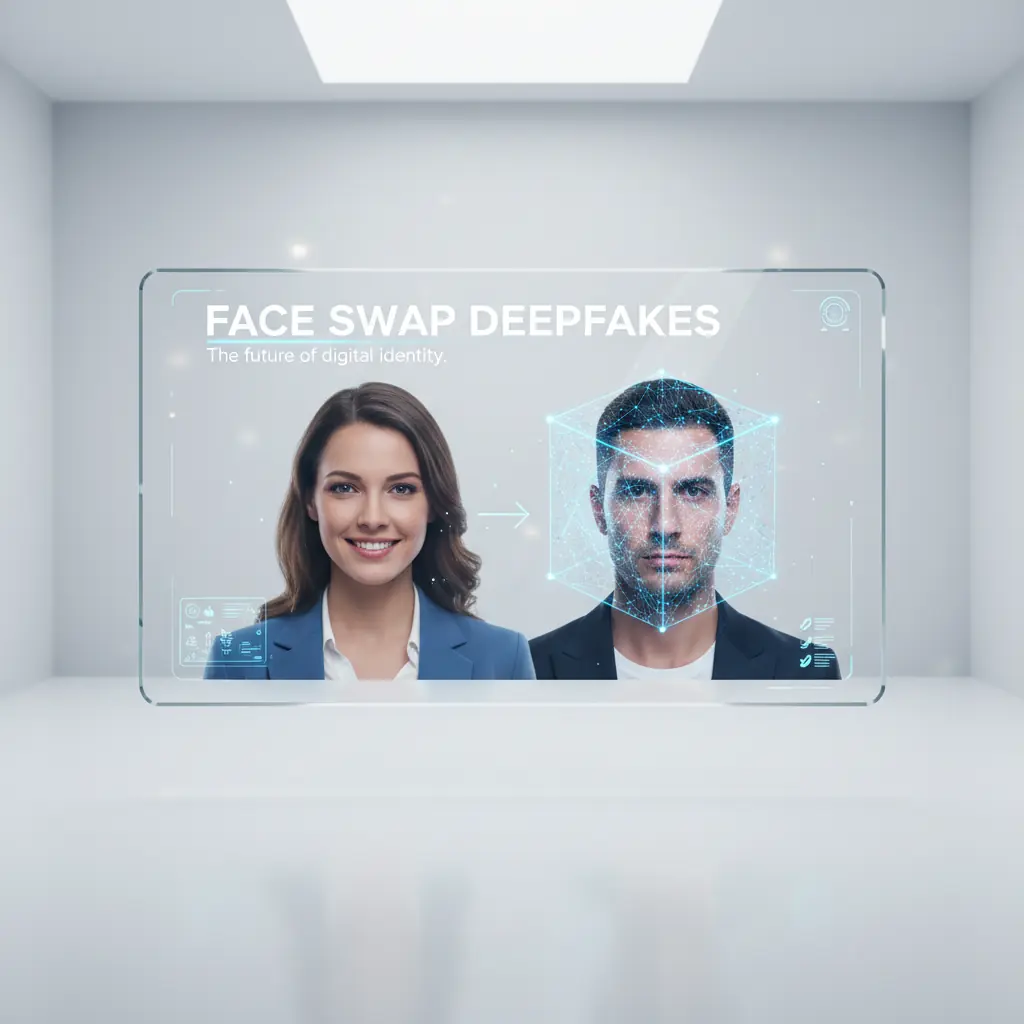
Facial deepfakes represent the most visible category of synthetic media, leveraging generative adversarial networks to replace one person’s face with another’s in existing video content. The operational requirements for effective facial manipulation reveal significant constraints that influence their strategic deployment. High-quality facial deepfakes require substantial training data—typically hundreds of images of the target subject—and considerable computational resources for processing.
According to research by Chesney and Citron, the quality threshold for effective deception depends heavily on context. A facial deepfake intended to fool automated systems requires different technical standards than one designed to influence human audiences through social media distribution. This distinction matters operationally: lower-quality facial manipulations may suffice for influence operations targeting audiences with limited media literacy or strong confirmation bias.
Documented Deployment Patterns
Evidence suggests that facial deepfakes in influence operations follow predictable patterns. Non-consensual intimate imagery represents the most documented use case, with platforms reporting exponential growth in such content. However, documented cases of facial deepfakes in political influence operations remain relatively limited, despite widespread concern about their potential impact.
The operational reality appears more nuanced than early threat assessments suggested. Rather than sophisticated facial replacements, influence actors often favor simpler techniques—selective editing, contextual manipulation, or audio replacement—that achieve similar objectives with lower technical barriers and reduced detection risk.
Detection Challenges and Platform Response
Facial deepfake detection faces fundamental asymmetries that advantage content creators over platforms and fact-checkers. Detection algorithms struggle with compressed video, partial facial views, and content optimized specifically to evade automated detection. Platform policies typically require human review for nuanced cases, creating scalability bottlenecks that influence operations can exploit through volume-based strategies.
Voice Synthesis: The Audio Frontline
Technical Sophistication and Accessibility
Voice synthesis technology has achieved remarkable accessibility, with commercial platforms offering realistic voice cloning from minimal training data. Unlike facial deepfakes, which require video editing expertise, voice synthesis tools have reached consumer-grade usability. This accessibility shift represents a strategic inflection point: voice synthesis no longer requires nation-state resources or specialized technical knowledge.
The operational implications are significant. Voice synthesis can transform text-based disinformation into audio content, leveraging the psychological authority that audiences attribute to spoken communication. Moreover, audio content faces fewer platform detection mechanisms than video, creating an asymmetric opportunity for influence operations.
Documented Applications in Information Operations
Available evidence indicates that voice synthesis has found operational use in several documented influence campaigns. Robocall operations have employed voice synthesis to impersonate political figures, while social engineering attacks increasingly leverage voice cloning to enhance credibility in targeted deception campaigns.
The strategic value of voice synthesis lies not necessarily in perfect replication, but in achieving sufficient credibility for specific operational contexts. A voice clone that might fail forensic analysis could nevertheless succeed in a brief phone call or audio message designed to influence immediate decision-making.
Detection and Verification Challenges
Voice synthesis detection confronts unique technical challenges. Audio compression, background noise, and telecommunications artifacts can mask synthesis indicators that detection algorithms rely upon. Furthermore, voice authentication systems—widely deployed for financial and security applications—face potential vulnerabilities that influence actors could exploit operationally.
Full-Body Deepfakes: The Emerging Frontier
Technical Requirements and Limitations
Full-body deepfakes represent the most technically demanding category of synthetic media, requiring sophisticated motion capture, body modeling, and environmental integration. Current techniques can replace entire human figures in video content, but operational deployment faces significant constraints. The computational requirements, training data needs, and technical expertise necessary for convincing full-body synthesis remain substantial barriers to widespread adoption.
These technical constraints create operational predictability. Full-body deepfakes likely remain within the capabilities of well-resourced actors—nation-states, sophisticated criminal organizations, or technology companies—rather than emerging as broadly accessible tools for influence operations.
Strategic Applications and Threat Scenarios
The strategic value of full-body deepfakes lies in specific operational contexts where complete human replacement offers unique advantages. Scenarios might include creating synthetic testimony from deceased individuals, manufacturing evidence of meetings or interactions that never occurred, or enabling operations requiring physical presence in multiple locations simultaneously.
However, documented deployment of full-body deepfakes in influence operations remains limited. The technical complexity and resource requirements may outweigh operational benefits for most influence objectives, particularly when simpler manipulation techniques can achieve similar strategic effects.
Detection and Response Architecture
Full-body deepfake detection benefits from additional analytical vectors—body movement patterns, environmental consistency, lighting analysis—that provide multiple detection opportunities. However, these same factors increase the complexity of detection algorithms and the expertise required for human verification.
How Do Different Deepfake Types Create Distinct Strategic Risks?
Operational Threat Modeling by Type
Each category of deepfake technology creates distinct operational risks that require tailored analytical approaches. Facial deepfakes pose immediate threats to individual reputation and democratic discourse, particularly in electoral contexts where time-sensitive verification becomes critical. Voice synthesis threatens authentication systems and enables social engineering attacks that can cause immediate operational damage.
Full-body deepfakes, while technically sophisticated, may represent lower immediate risk due to technical barriers and limited documented deployment. However, their potential for creating convincing historical evidence or false testimony poses long-term challenges to legal and investigative institutions.
The Liar’s Dividend Across Media Types
The concept of the “liar’s dividend”—where the mere possibility of synthetic media undermines trust in authentic content—operates differently across deepfake categories. High-profile facial deepfake incidents can cast doubt on authentic video evidence, while voice synthesis concerns may erode trust in audio communications more broadly.
This erosion of evidential trust creates strategic opportunities for influence actors even without deploying sophisticated synthetic media. The mere possibility that content could be synthetic provides plausible deniability for authentic but inconvenient evidence, fundamentally altering the information environment.
Platform and Institutional Response Gaps
Current detection and response architectures show significant variation in effectiveness across deepfake types. Social media platforms have invested heavily in facial deepfake detection but show less capability for voice synthesis identification. Legal and evidentiary frameworks struggle with authentication requirements that vary dramatically between media types.
A Framework for Analyzing Synthetic Media Risk Assessment
Multi-Vector Threat Assessment
Effective synthetic media risk assessment requires analyzing multiple operational vectors simultaneously. Technical sophistication, resource requirements, target audience characteristics, and operational objectives create a matrix of factors that determine both threat likelihood and potential impact.
Key assessment criteria include:
- Technical barrier analysis: Computational requirements, training data needs, and expertise thresholds
- Distribution pathway evaluation: Platform policies, detection capabilities, and viral transmission potential
- Target vulnerability assessment: Audience media literacy, confirmation bias factors, and contextual credibility requirements
- Operational timeline constraints: Production time requirements versus response window availability
Detection Architecture Evaluation
Assessing institutional readiness for synthetic media threats requires evaluating detection capabilities across multiple domains. Technical detection tools provide one layer of analysis, but operational effectiveness depends on integration with human expertise, platform policies, and legal frameworks.
Critical evaluation factors include:
- Automated detection accuracy: False positive rates, processing speed, and evasion resistance
- Human verification capacity: Expert availability, training standards, and scalability constraints
- Legal and evidentiary integration: Admissibility standards, chain of custody requirements, and procedural frameworks
- Response timeline effectiveness: Detection speed versus content distribution velocity
Strategic Impact Assessment
Understanding the strategic impact of different deepfake types requires analyzing both direct operational effects and broader epistemological consequences. Direct effects include immediate influence on target audiences, while broader consequences encompass long-term erosion of institutional trust and evidential standards.
Strategic Implications and Forward Assessment
The evolution of synthetic media capabilities suggests a complex threat landscape where technical sophistication may matter less than operational context and audience targeting. While facial deepfakes capture public attention, voice synthesis may represent a more immediate operational threat due to accessibility and detection challenges. Full-body deepfakes remain technically constrained but could emerge as strategic tools for well-resourced actors.
The analytical priority should focus on operational deployment patterns rather than theoretical capabilities. Evidence indicates that influence actors often prefer simpler, more reliable manipulation techniques over sophisticated synthetic media that carries higher detection risks and resource requirements. This suggests that defensive strategies emphasizing media literacy and verification processes may prove more effective than technological solutions alone.
Looking ahead, the strategic challenge lies not in preventing the development of synthetic media technology—which appears technically inevitable—but in building institutional resilience that can maintain evidential standards and democratic discourse in an environment where authentic and synthetic content coexist.
Sources
- Chesney, R., & Citron, D. (2019). Deep fakes: A looming challenge for privacy, democracy, and national security. California Law Review, 107(6), 1753–1820.
- Paris, B., & Donovan, J. (2019). Deepfakes and Cheap Fakes. Data & Society.
- Vaccari, C., & Chadwick, A. (2020). Deepfakes and disinformation: Exploring the impact of synthetic political video on deception, uncertainty, and trust in news. Social Media + Society, 6(1).
- Mirsky, Y., & Lee, W. (2021). The creation and detection of deepfakes: A survey. ACM Computing Surveys, 54(1).
- Para el caso Zelensky (marzo de 2022), cita una noticia de una agencia como Reuters o AP de esa fecha.