Reflexive control: the Russian theory of decision manipulation
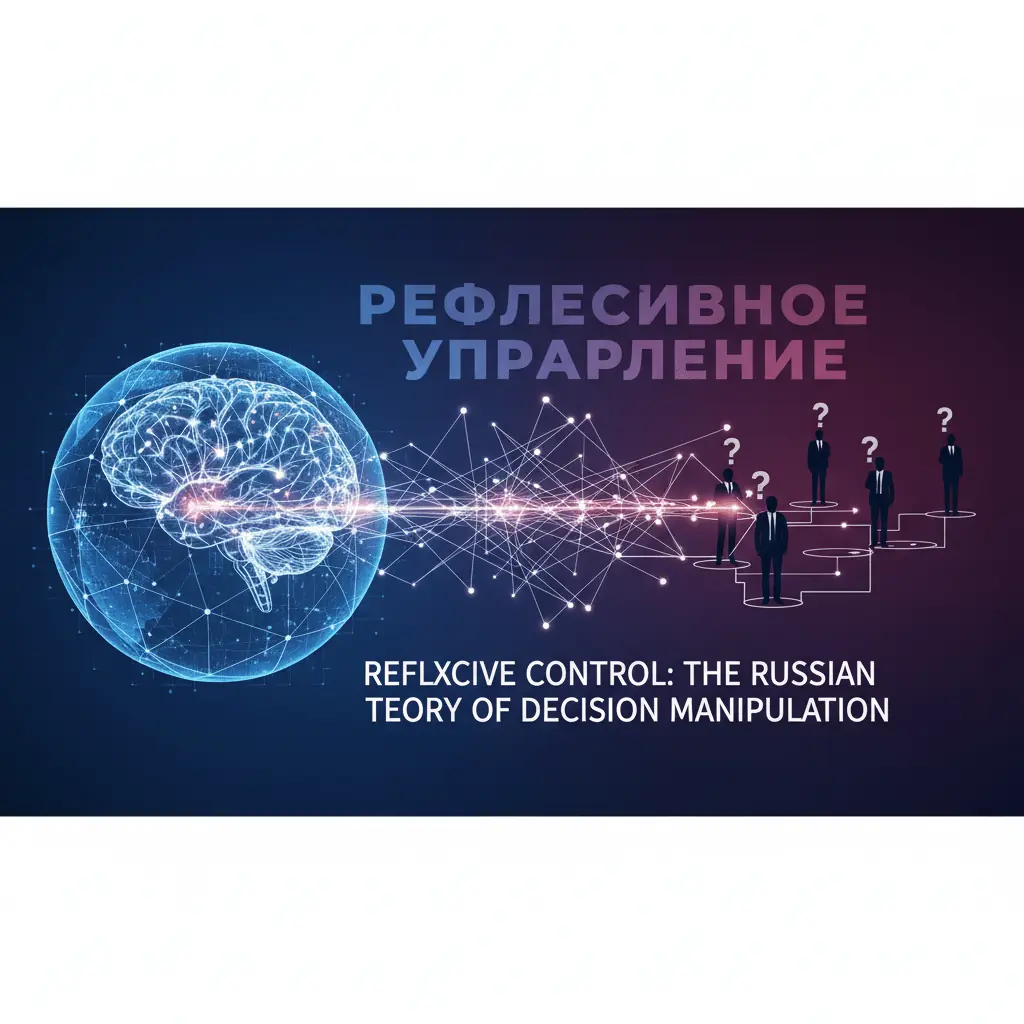
Reflexive control aims not to persuade an adversary but to feed it information that leads it to choose, apparently freely, what its opponent wants. It is a Soviet-era theory that still shapes Russian strategy.

Key judgments
- Reflexive control, developed from Vladimir Lefebvre's work in the 1960s, seeks to make an adversary voluntarily take decisions that serve the initiator, by shaping the information on which those decisions are based. Russian theory treats the adversary's decision-making as a system to be modeled and steered, whereas Western doctrine has focused more on persuading audiences. Deliberate contradiction and "information noise" can paralyze decision-making as effectively as a single convincing false narrative. Fact-checking and source verification alone are insufficient against reflexive control, because its target is the decision process, not the truth of individual claims.
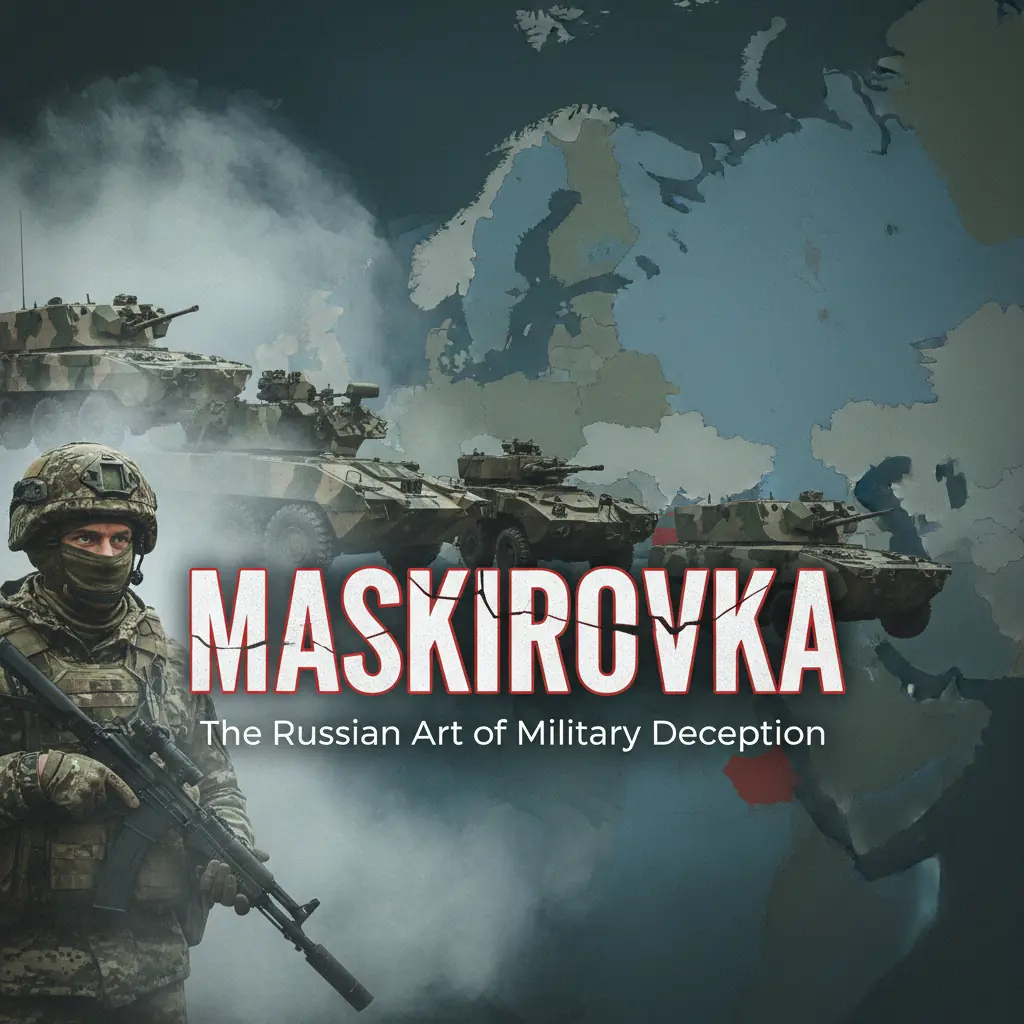
In March 2014, as unmarked Russian forces consolidated control over Crimea, Western intelligence analysts struggled to categorize what they were witnessing. The operation combined conventional military elements with sophisticated information campaigns designed to shape Ukrainian decision-making from within. What many observers didn’t recognize was the systematic application of reflexive control — a uniquely Russian theoretical framework for manipulating adversary decision-making processes that had been developing in Soviet and Russian military thought for over five decades.
Reflexive control represents more than tactical deception or strategic communication. It constitutes a comprehensive approach to warfare that targets the cognitive processes underlying enemy decision-making, seeking to force adversaries into predetermined responses by controlling the information environment in which they operate. Understanding this doctrine is essential for defense professionals and analysts working to counter modern hybrid threats.
Soviet Origins and Theoretical Development
The theoretical foundations of reflexive control emerged from Soviet cybernetics research in the 1960s, particularly the work of Vladimir Lefebvre at the Institute of Psychology. Lefebvre’s mathematical models of reflexive processes proposed that human decision-making could be predicted and influenced by manipulating the information inputs and feedback loops within cognitive systems.
Soviet military theorists, notably Colonel V.A. Lefinkov and later General-Major S.A. Komov, adapted these psychological insights for military applications. Their work appeared in classified military journals throughout the 1970s and 1980s, developing operational concepts that would later influence Russian information warfare doctrine. The theory gained renewed attention following the Soviet Union’s collapse, as Russian military theorists sought asymmetric approaches to counter NATO’s conventional superiority.
Core Principles and Mechanisms
Reflexive control operates through what Russian theorists term “reflexive management” — the systematic transmission of specially prepared information to an opponent to influence their decision-making in a predetermined direction. Unlike traditional deception, which seeks to hide true intentions, reflexive control aims to make the opponent believe they are acting on their own analysis while actually following a script written by their adversary.
The doctrine identifies several key mechanisms for achieving reflexive control. Information pressure involves overwhelming decision-makers with contradictory or ambiguous data, creating cognitive overload that forces reliance on predetermined analytical frameworks. Temporal manipulation exploits time constraints in decision-making cycles, compelling rapid responses based on incomplete information. Algorithmic influence targets the procedural aspects of institutional decision-making, subtly altering the analytical processes that generate policy options.
How Does Reflexive Control Differ from Western Information Operations?
The distinction between Russian reflexive control and Western information operations reflects fundamentally different philosophical approaches to cognition and decision-making. Western doctrine, as exemplified in NATO’s Strategic Communications Policy and U.S. Joint Publication 3-13, generally conceives of information operations as persuasive communication aimed at influencing attitudes and behaviors through rational argument or emotional appeal.
Mechanistic vs. Humanistic Approaches
Russian reflexive control theory adopts a mechanistic view of human cognition, treating decision-making as an algorithmic process that can be reverse-engineered and manipulated. This perspective draws heavily from cybernetics and systems theory, viewing the human mind as an information processing system with predictable inputs and outputs. Soviet and Russian theorists consistently describe reflexive control in engineering terms, using language of “programming” opponent responses and “debugging” cognitive systems.
Western information operations doctrine, by contrast, generally maintains a more humanistic approach that emphasizes persuasion, credibility, and voluntary attitude change. NATO’s Strategic Communications framework explicitly acknowledges the agency and autonomy of target audiences, focusing on narrative coherence and message credibility rather than cognitive manipulation.
Operational Implementation Differences
These philosophical differences manifest in distinct operational approaches. Western information operations typically employ overt communication channels and acknowledge their sources, seeking to build credibility through transparency and consistent messaging. The U.S. Department of Defense’s information operations doctrine emphasizes the importance of truthful communication and long-term relationship building with target audiences.
Russian reflexive control operations, conversely, rely heavily on covert channels and false attribution. The goal is not to convince audiences of particular positions but to manipulate their analytical processes without their awareness. This approach explains the prevalence of false flag operations, proxy organizations, and deliberately contradictory messaging in Russian information campaigns — techniques designed to create cognitive confusion rather than persuasive clarity.
Contemporary Applications and Case Studies
The 2014 Crimean operation demonstrated sophisticated application of reflexive control principles across multiple domains. Russian information operations successfully convinced Ukrainian leadership that resistance would be futile while simultaneously presenting the international community with a fait accompli that appeared to reflect genuine popular sentiment in Crimea.
Multi-Domain Coordination
The operation integrated kinetic and non-kinetic elements to create a comprehensive reflexive control effect. Unmarked military forces created ambiguity about Russian involvement, while social media campaigns amplified narratives of Ukrainian government illegitimacy and Russian-speaking minority persecution. These elements combined to present Ukrainian decision-makers with a pre-structured decision space where all available options led to Russian strategic objectives.
Particularly sophisticated was the temporal manipulation aspect of the operation. By moving quickly while maintaining plausible deniability, Russian forces compressed Ukrainian decision-making cycles and forced reactive rather than proactive responses. The constant stream of contradictory information about Russian involvement created analytical paralysis within Ukrainian institutions, buying time for Russian forces to establish irreversible facts on the ground.
Information Environment Saturation
The reflexive control approach in Crimea involved saturating the information environment with multiple, often contradictory narratives rather than promoting a single coherent message. This technique, described in Russian military literature as “information noise,” serves to overwhelm analytical capacity and force reliance on cognitive shortcuts and preexisting biases.
Analysis of social media activity during the Crimean operation reveals systematic deployment of bot networks and false personas designed not to convince audiences of particular positions but to create the appearance of organic debate and disagreement. This approach exploits psychological tendencies toward confirmation bias and social proof, leading targets to select information that confirms predetermined Russian objectives while believing they are making independent analytical judgments.
A Framework for Analyzing Reflexive Control Operations
Identifying reflexive control operations requires analytical frameworks that distinguish between traditional influence campaigns and systematic cognitive manipulation. Intelligence analysts and defense professionals need specific indicators that reveal the presence of reflexive control techniques.
Key Operational Indicators
Several characteristics consistently appear in reflexive control operations. Deliberate information contradictions represent a primary indicator — the simultaneous promotion of mutually exclusive narratives designed to create analytical confusion rather than persuasive coherence. Traditional influence operations seek narrative consistency; reflexive control operations deliberately undermine analytical coherence.
Temporal manipulation provides another key indicator. Reflexive control operations typically involve carefully timed information releases designed to exploit specific decision-making cycles or create artificial time pressure. This differs from opportunistic messaging that simply responds to current events; reflexive control requires advance planning to manipulate the temporal dimension of decision-making.
- Multi-channel attribution confusion — using multiple, often contradictory sources to obscure operational origin
- Algorithmic targeting of institutional decision-making procedures
- Exploitation of cognitive biases through structured information presentation
- Creation of false decision spaces where all options serve adversary objectives
Analytical Countermeasures
Effective analysis of potential reflexive control operations requires understanding the cognitive biases and institutional procedures that such operations seek to exploit. Analysts should examine whether information campaigns target specific decision-making processes rather than general public opinion, and whether messaging appears designed to manipulate analytical frameworks rather than persuade through rational argument.
Institutional resilience against reflexive control requires procedural safeguards that slow decision-making cycles and create space for reflective analysis. NATO’s recent emphasis on cognitive security reflects growing recognition that traditional information operations defenses — fact-checking, source verification, and counter-messaging — may be insufficient against reflexive control techniques.
Implications for Western Defense Strategy
The sophistication of Russian reflexive control theory poses significant challenges for Western defense institutions designed around different assumptions about information conflict. Traditional approaches to information operations defense focus on message credibility and source verification — techniques that may be inadequate against operations designed to manipulate cognitive processes rather than promote specific content.
Reflexive control represents a fundamental asymmetry in how Russian and Western militaries conceptualize the information domain. While Western doctrine generally treats information as supporting conventional military operations, Russian theory positions reflexive control as potentially decisive in its own right. This conceptual difference has profound implications for resource allocation, training priorities, and strategic planning within NATO institutions.
What concerns me most about reflexive control is not its tactical effectiveness in specific operations, but its potential to fundamentally alter the character of strategic competition. If decision-making processes themselves become primary targets, the very foundations of democratic deliberation and institutional analysis may require new forms of protection that we are only beginning to understand.