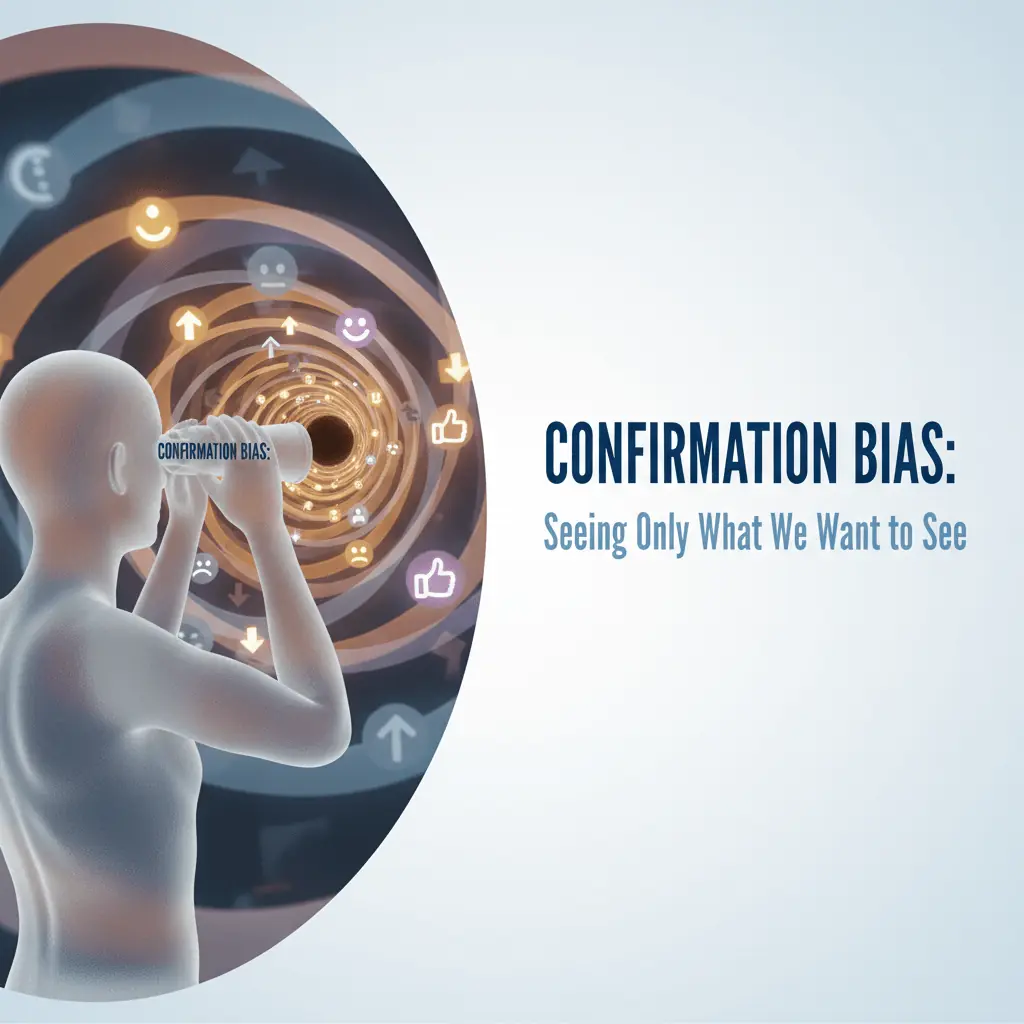
Confirmation bias: seeing only what we want to see
Confirmation bias is not a flaw that education can remove; it is a feature of how we reason. What has changed is that adversaries can now target it precisely, at population scale.

Key judgments
- Confirmation bias serves adaptive functions, so it cannot be eliminated and is difficult to counter through education alone. The strategic danger lies not in the bias itself but in adversaries' ability to target it precisely across large audiences. Echo chamber effects are subtler than often assumed: most people encounter diverse sources but interpret challenging information defensively. The most promising countermeasures change the decision environment, through red teams, structured analytic techniques and platform design, rather than relying on individual training.
In December 2016, a gunman entered Comet Ping Pong pizzeria in Washington D.C., convinced that the restaurant was harboring a child trafficking operation. Edgar Maddison Welch had consumed weeks of social media content that reinforced his pre-existing suspicions about political corruption, filtering information through increasingly narrow channels that confirmed rather than challenged his beliefs. This incident represents more than individual radicalization—it demonstrates how confirmation bias has become a scalable vulnerability in modern information environments, exploited systematically by state and non-state actors to shape public perception and decision-making processes.
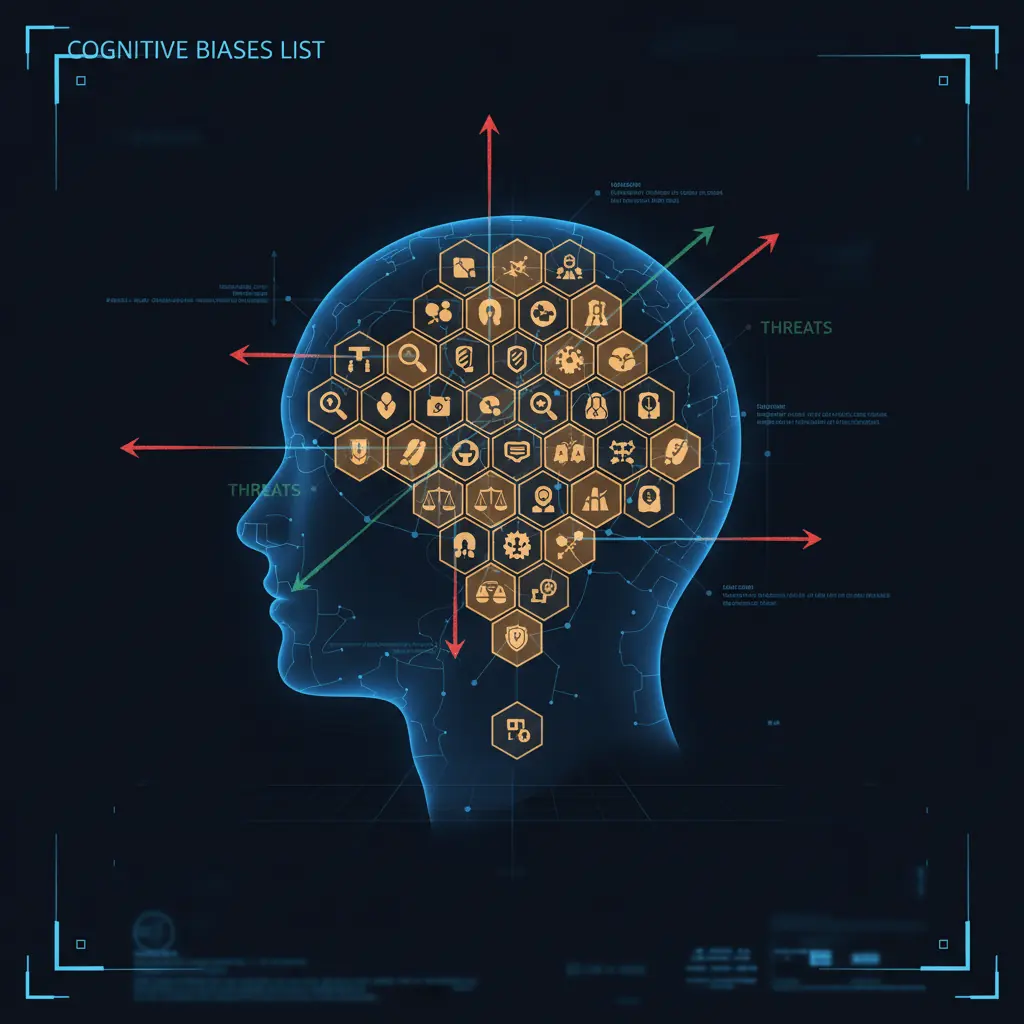
Confirmation bias, the tendency to search for, interpret, and recall information that confirms pre-existing beliefs while giving disproportionately less consideration to alternative possibilities, has evolved from a laboratory curiosity to a strategic concern for national security practitioners. What makes this cognitive tendency particularly dangerous in contemporary threat landscapes is not its existence—humans have always exhibited selective information processing—but rather the precision with which adversaries can now target and amplify these natural tendencies at population scale.
The cognitive architecture of selective reasoning
Confirmation bias operates through multiple interconnected psychological mechanisms that create systematic distortions in how individuals process information. Understanding these underlying processes is essential for security practitioners who must assess how adversaries exploit cognitive vulnerabilities in influence operations.
Dual-process theory and motivated reasoning
According to dual-process theory, human cognition operates through two distinct systems: System 1 (fast, automatic, intuitive) and System 2 (slow, deliberate, analytical). Confirmation bias emerges from the interaction between these systems, particularly when System 1’s rapid judgments become entrenched and System 2’s analytical processes are co-opted to justify rather than examine those initial impressions.
Research by Klayman and Ha (1987) demonstrated that individuals consistently employ positive test strategies, seeking evidence that supports their hypotheses rather than attempting to falsify them. This tendency becomes more pronounced under cognitive load, time pressure, or emotional arousal—conditions that adversaries deliberately create in information operations to overwhelm analytical capacity and promote intuitive processing.
Selective exposure and echo chamber effects
The bias extends beyond information interpretation to information seeking behavior. Leon Festinger’s cognitive dissonance theory explains why individuals actively avoid information that contradicts their beliefs, a phenomenon that digital platforms have amplified through algorithmic content curation.
However, the echo chamber narrative requires nuance. Research by Guess et al. (2018) suggests that while filter bubbles exist, their effects are more subtle than often assumed. Most individuals do encounter diverse information sources, but they process contradictory evidence through heavily biased interpretive frameworks that minimize disconfirming data.
How adversaries weaponize cognitive confirmation
Foreign influence operations have evolved sophisticated methodologies for exploiting confirmation bias, moving beyond simple propaganda to precision-targeted cognitive manipulation campaigns that leverage detailed behavioral data and social media analytics.
Micro-targeting and behavioral segmentation
The Internet Research Agency’s 2016 operations demonstrated how confirmation bias could be exploited through micro-targeted messaging. Rather than attempting to change minds directly, these campaigns identified existing belief clusters within American audiences and amplified content that reinforced pre-existing divisions.
Analysis by the Senate Intelligence Committee revealed that Russian operatives used sophisticated audience segmentation to deliver confirmation-biased content across multiple platforms simultaneously. They created distinct narratives for different demographic groups while maintaining consistent strategic objectives—a technique that exploited both confirmation bias and in-group loyalty mechanisms.
Algorithmic amplification of bias
Social media platforms inadvertently amplify confirmation bias through engagement-driven algorithms that prioritize content likely to generate interaction. Since emotionally charged, belief-confirming content typically produces higher engagement rates, these systems create feedback loops that strengthen existing biases.
Research by Pennycook and Rand (2019) indicates that social media environments reduce deliberative thinking by encouraging rapid sharing behavior. Users spend median times of approximately six seconds evaluating content before sharing, insufficient for meaningful analytical processing and creating optimal conditions for confirmation bias exploitation.
Why does confirmation bias persist despite its obvious costs?
The persistence of confirmation bias presents a puzzle for security practitioners: if selective reasoning leads to poor outcomes, why hasn’t evolution eliminated these tendencies? Understanding the adaptive functions of confirmation bias provides insight into why it remains so difficult to counter through education or awareness campaigns alone.
Evolutionary and social functions
Confirmation bias likely evolved as an adaptive mechanism for rapid decision-making in environments where comprehensive information gathering was costly or dangerous. In small social groups, maintaining belief coherence with in-group members provided survival advantages that outweighed the costs of occasional errors.
Hugo Mercier and Dan Sperber’s argumentative theory suggests that reasoning evolved not for individual truth-seeking but for social argumentation. From this perspective, confirmation bias serves the function of generating compelling arguments to persuade others, making it inherently resistant to approaches that treat it as a cognitive error to be corrected.
Cultural and institutional reinforcement
Modern institutional environments often reinforce rather than counteract confirmation bias. Academic disciplines, intelligence organizations, and policy communities develop shared assumptions that become resistant to challenge through groupthink dynamics and institutional incentive structures.
The intelligence community’s post-9/11 analytical reforms, including the creation of “red team” exercises and structured analytic techniques, represent institutional recognition that confirmation bias poses operational risks. However, implementing these countermeasures requires sustained cultural change that extends beyond procedural modifications.
Population-level vulnerabilities and strategic implications
While individual confirmation bias has always existed, contemporary information environments create new population-level vulnerabilities that adversaries can exploit strategically. The scale and precision of modern confirmation bias exploitation represent qualitative changes in the threat landscape.
Demographic and psychographic targeting
Cambridge Analytica’s operations revealed how confirmation bias could be exploited through psychographic profiling that identified personality traits associated with susceptibility to specific types of biased reasoning. Individuals scoring high on traits like need for cognitive closure or right-wing authoritarianism demonstrated greater vulnerability to confirmation-biased messaging.
This precision targeting capability transforms confirmation bias from a general human tendency into a specific operational vulnerability that can be mapped, measured, and exploited with increasing accuracy. Defense practitioners must consider how adversaries might use similar profiling techniques to target specific demographics within allied populations.
Cascading effects in information ecosystems
Confirmation bias exploitation creates cascading effects throughout information ecosystems. When key influencers or institutional leaders become targets of bias-exploiting operations, their biased reasoning patterns propagate through organizational and social networks, amplifying the original manipulation far beyond its initial scope.
The 2020 election fraud narratives demonstrate this cascading dynamic. Initial false claims gained credibility through selective evidence presentation that exploited confirmation bias among predisposed audiences. These biased interpretations then propagated through media and political networks, creating self-reinforcing belief systems resistant to factual correction.
Indicators of confirmation bias exploitation in information operations
Security practitioners require operational frameworks for identifying when confirmation bias is being systematically exploited in influence campaigns. Recognition of these patterns enables earlier intervention and more effective countermeasures.
Technical indicators
- Audience segmentation patterns: Evidence of micro-targeted messaging that delivers different narratives to different demographic groups while maintaining consistent strategic objectives
- Temporal clustering: Coordinated release of confirmation-biased content timed to exploit ongoing events or emotional states
- Cross-platform synchronization: Similar confirmation-biased narratives appearing simultaneously across multiple platforms with slight variations adapted to each platform’s user base
- Engagement manipulation: Artificial amplification of confirmation-biased content through bot networks or coordinated inauthentic behavior
Content and narrative indicators
- Selective evidence presentation: Systematic exclusion of disconfirming evidence while highlighting supportive data points
- Emotional priming: Content designed to induce emotional states that reduce analytical thinking and increase reliance on intuitive processing
- Authority figure exploitation: Use of trusted sources to deliver biased information that audiences are predisposed to accept
- False dichotomy framing: Presentation of complex issues in binary terms that force audiences into predetermined belief categories
Behavioral indicators
- Reduced information seeking: Declining engagement with diverse information sources among target populations
- Increased polarization: Growing belief divergence between different demographic groups on previously consensus issues
- Resistance to correction: Continued belief in false information despite availability of corrective evidence
- Identity-protective cognition: Evaluation of information based on its consistency with group identity rather than factual accuracy
Institutional countermeasures and analytical frameworks
Developing effective countermeasures to confirmation bias exploitation requires institutional approaches that address both individual cognitive limitations and systemic vulnerabilities in information processing environments.
Structured analytic techniques
The intelligence community has developed structured analytic techniques specifically designed to counteract confirmation bias in analytical processes. These include devil’s advocacy, analysis of competing hypotheses, and pre-mortem analysis that force systematic consideration of alternative explanations.
However, research by Chang et al. (2018) suggests that these techniques work best when implemented as mandatory organizational processes rather than voluntary individual practices. Confirmation bias operates at unconscious levels that resist conscious correction efforts, requiring systematic procedural interventions.
Cognitive security measures
Emerging research in cognitive security focuses on building institutional resilience against bias exploitation rather than attempting to eliminate individual biases. This approach recognizes that confirmation bias serves adaptive functions and cannot be simply educated away.
NATO’s Cognitive Warfare initiative emphasizes the development of “cognitive early warning systems” that can detect systematic bias exploitation before it achieves strategic effects. These systems monitor information flows for patterns consistent with bias-exploiting operations rather than trying to assess the truth value of specific claims.
In my assessment, the most promising countermeasures focus on environmental design rather than individual education. Creating information environments that naturally promote diverse perspective-taking may prove more effective than training individuals to recognize their own biased reasoning.
Confirmation bias represents a persistent vulnerability in human cognitive architecture that adversaries are exploiting with increasing sophistication and precision. While this bias serves adaptive functions that make it impossible to eliminate entirely, understanding its mechanisms enables the development of systematic countermeasures that can reduce operational risks. The strategic challenge lies not in correcting individual biases but in building institutional resilience against their systematic exploitation. As information warfare capabilities continue to evolve, addressing confirmation bias exploitation will require sustained attention from both technical and policy communities working in concert to protect democratic decision-making processes from systematic manipulation.