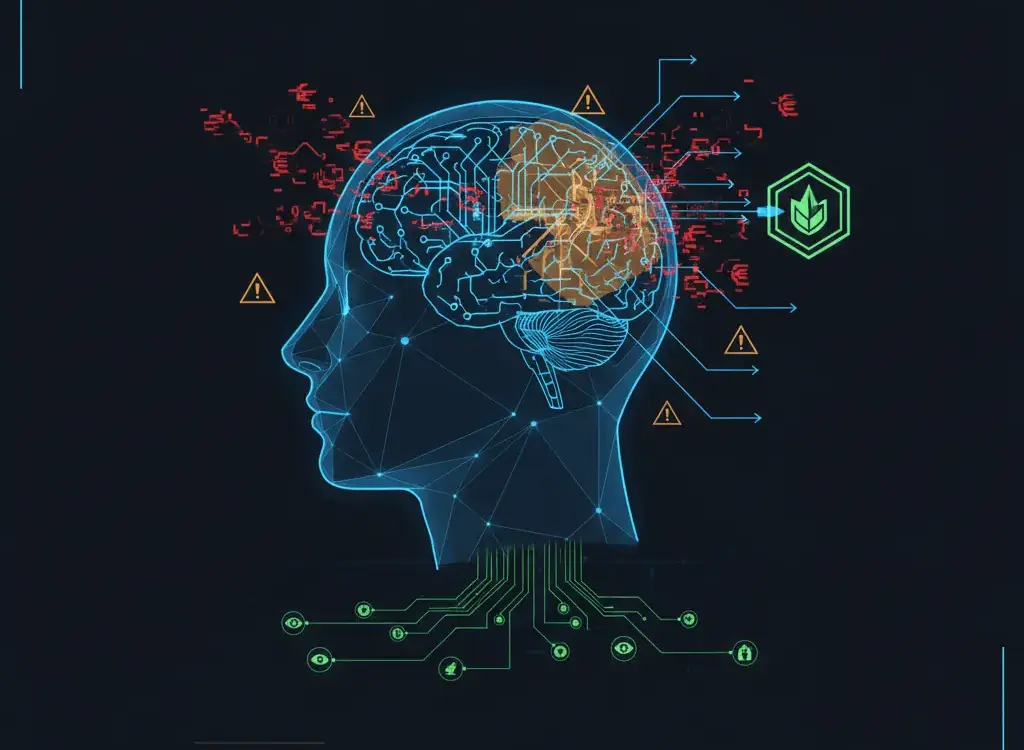
In January 2024, Polish military analysts reviewing Operation Ghostwriter disinformation campaigns discovered a recurring pattern: successful penetration correlated not with sophisticated technical capabilities, but with systematic exploitation of human cognitive vulnerabilities. The psychology of human error had become a strategic vector in contemporary influence operations, transforming individual cognitive limitations into institutional security gaps. This analysis examines how adversarial actors weaponize predictable patterns of human judgment failure to bypass technical defenses and compromise decision-making processes within NATO frameworks.
The strategic implications extend beyond individual susceptibility. When cognitive vulnerabilities aggregate across institutions, they create systemic weaknesses that sophisticated actors can exploit at scale. Understanding these mechanisms is essential for developing effective cognitive resilience protocols within Western defense architectures.
How cognitive biases enable systematic information exploitation
Modern influence operations succeed by converting universal human cognitive limitations into strategic advantages. Unlike traditional psychological operations that relied on emotional manipulation, contemporary campaigns exploit the predictable ways human cognition fails under specific conditions.
Confirmation bias amplification in intelligence assessment
The 2019 Operation Secondary Infektion case demonstrates how adversarial actors exploit confirmation bias within analytical frameworks. Russian-linked disinformation campaigns succeeded by providing intelligence analysts with information that reinforced pre-existing analytical assumptions about regional threats. When analysts encountered data that confirmed their working hypotheses, standard verification protocols were often shortened or bypassed entirely.
NATO StratCom Centre of Excellence analysis reveals that confirmation bias exploitation operates through three distinct mechanisms: selective information presentation, pseudo-corroboration through multiple seemingly independent sources, and timing manipulation to coincide with periods of analytical pressure or deadline constraints.
Authority bias manipulation in institutional contexts
Influence operations increasingly target authority relationships within decision-making hierarchies. The psychology of human error manifests when individuals defer critical thinking to perceived expertise, creating vulnerability windows that sophisticated actors can exploit.
Recent RAND Corporation research indicates that authority bias becomes particularly pronounced in crisis scenarios where rapid decision-making is required. Adversarial actors exploit this by establishing false authority figures or compromising trusted information sources during critical decision windows.
Availability heuristic exploitation through narrative saturation
The availability heuristic—where individuals assess probability based on easily recalled examples—becomes a strategic vulnerability when adversarial actors control information environments. By saturating media ecosystems with specific narratives or examples, influence operations can distort risk assessment and threat perception within target institutions.
Analysis of Baltic information operations from 2020-2023 shows systematic attempts to manipulate availability heuristics among defense planners by amplifying specific threat scenarios while suppressing others through coordinated information campaigns.
Why traditional security frameworks underestimate psychological vulnerabilities
Existing cybersecurity and information security protocols primarily address technical attack vectors while neglecting the human cognitive elements that often determine operational success or failure.
Technical vs. cognitive attack surface assessment
Traditional security assessments focus on technical vulnerabilities: software exploits, network penetration points, and system access controls. However, the psychology of human error creates an entirely separate attack surface that operates through cognitive rather than technical mechanisms.
U.S. Cyber Command doctrine acknowledges this gap but lacks systematic frameworks for assessing cognitive vulnerabilities at institutional scale. The result is security architectures that successfully defend against technical intrusion while remaining vulnerable to cognitive influence operations.
Organizational culture and error propagation
Individual cognitive errors become strategically significant when organizational structures amplify rather than mitigate them. Hierarchical decision-making systems, common in defense institutions, can transform individual judgment failures into institutional-level vulnerabilities.
The 2021 Solar Winds incident revealed how cognitive errors—specifically, misplaced trust in vendor security assurances—propagated through organizational hierarchies to create system-wide compromises. While technical patches addressed the immediate vulnerability, the underlying cognitive error patterns that enabled initial penetration remained largely unaddressed.
Case study analysis: cognitive exploitation in recent influence campaigns
Documented influence operations from 2020-2024 demonstrate systematic evolution in cognitive exploitation techniques, moving beyond simple disinformation to sophisticated cognitive warfare approaches.
Operation Doppelgänger and institutional identity manipulation
The 2023 Operation Doppelgänger campaign exemplifies advanced cognitive exploitation techniques. Rather than producing obviously false information, the operation created near-identical duplicates of legitimate news websites with subtle content modifications designed to exploit specific cognitive biases within target audiences.
The operation succeeded by exploiting the human tendency toward cognitive shortcuts in information processing. When individuals encountered familiar visual and textual cues from trusted sources, critical evaluation protocols were often bypassed, allowing manipulated content to be processed as legitimate information.
Baltic Sea information operations and collective decision-making
Recent Estonian Defense Ministry analysis of Baltic Sea information campaigns reveals sophisticated understanding of group decision-making psychology among adversarial actors. These operations targeted the specific ways groups process threat information, exploiting group think and social proof mechanisms to distort collective risk assessment.
The campaigns succeeded by creating false consensus indicators—fabricated polling data, manufactured social media trends, and pseudo-grassroots movements—that exploited human tendencies to defer to perceived majority opinion during uncertainty.
A framework for assessing cognitive vulnerability in operational contexts
Systematic assessment of cognitive vulnerabilities requires frameworks that translate psychological research into operational security protocols. The following analytical model provides concrete tools for security professionals evaluating institutional cognitive resilience.
Individual-level vulnerability indicators
Cognitive vulnerability assessment begins with identifying individual-level risk factors that create exploitable weaknesses within institutional contexts:
- Decision fatigue patterns: Times and contexts where individuals demonstrate reduced analytical rigor
- Authority dependency indicators: Situations where individuals defer critical thinking to perceived expertise
- Confirmation bias manifestations: Tendency to seek information that supports existing beliefs or analytical frameworks
- Stress response impacts: How pressure affects information processing and decision-making quality
Institutional amplification factors
Individual cognitive errors become strategically significant when institutional structures amplify rather than mitigate them:
- Hierarchical decision flow: How individual errors propagate through organizational command structures
- Information validation protocols: Existing procedures for verifying and cross-checking critical information
- Dissent and contradiction tolerance: Institutional capacity to process disagreement and alternative perspectives
- Crisis decision-making procedures: How time pressure and urgency affect standard analytical protocols
Environmental exploit conditions
The psychology of human error becomes exploitable when specific environmental conditions align with cognitive vulnerabilities. Security assessments must evaluate these contextual factors:
| Environmental Factor | Cognitive Impact | Exploitation Risk |
|---|---|---|
| Information overload | Increased reliance on heuristics | High during crisis periods |
| Time pressure | Reduced verification protocols | Critical in rapid-response scenarios |
| Authority ambiguity | Confusion about information sources | Elevated during leadership transitions |
| Social consensus pressure | Conformity over independent analysis | Significant in group decision contexts |
Developing cognitive resilience protocols within NATO frameworks
Effective cognitive security requires systematic approaches that address both individual and institutional vulnerabilities while maintaining operational effectiveness.
Red team cognitive assessment protocols
NATO Allied Command Transformation has begun developing cognitive red team exercises that specifically target decision-making processes rather than technical systems. These exercises reveal how cognitive vulnerabilities create strategic weaknesses that adversarial actors can exploit.
Effective cognitive red teaming requires understanding both the psychology of human error and the specific operational contexts where these errors become strategically significant. The goal is not to eliminate human cognitive limitations—an impossible task—but to design systems that account for and mitigate their strategic impact.
Institutional cognitive diversity and resilience
Research from the NATO StratCom Centre of Excellence indicates that cognitive diversity within analytical teams provides natural resilience against many common influence operation techniques. When teams include individuals with different analytical backgrounds, cognitive styles, and cultural perspectives, groupthink and collective bias become less likely.
However, cognitive diversity must be actively cultivated and protected. Organizational pressures toward consensus and efficiency often work against the diversity needed for cognitive resilience. Effective protocols must balance operational efficiency with analytical robustness.
My assessment is that NATO institutions have begun recognizing cognitive vulnerabilities as strategic concerns but lack systematic frameworks for addressing them at institutional scale. The gap between understanding individual psychological vulnerabilities and implementing effective institutional protections remains significant across Western defense architectures.
Forward-looking analysis suggests that cognitive warfare capabilities will continue evolving toward more sophisticated exploitation of human judgment failures. The institutions that develop effective cognitive resilience protocols will maintain strategic advantages in increasingly complex information environments. Those that continue focusing exclusively on technical security measures while neglecting cognitive vulnerabilities will face systematic disadvantages against sophisticated adversarial actors.
Security professionals, analysts, and defense planners must integrate cognitive vulnerability assessment into standard operational security protocols. The alternative is continued exposure to influence operations that succeed by exploiting the predictable ways human cognition fails under specific conditions.
Sources
Pomerantsev, P. (2023). Information warfare and cognitive security. NATO StratCom Centre of Excellence.
RAND Corporation. (2022). Cognitive vulnerabilities in defense decision-making processes. RAND Research Reports.
Estonian Defense Ministry. (2024). Baltic Sea information operations: Psychological analysis. Government Defense Publications.
Arquilla, J. & Ronfeldt, D. (2023). Cognitive aspects of information warfare. Naval Postgraduate School.
NATO Allied Command Transformation. (2024). Cognitive resilience in defense institutions. NATO Strategic Communications.
U.S. Cyber Command. (2023). Human factors in information security: Lessons from recent operations. Defense Technical Information Center.