Information literacy: evaluating sources and data
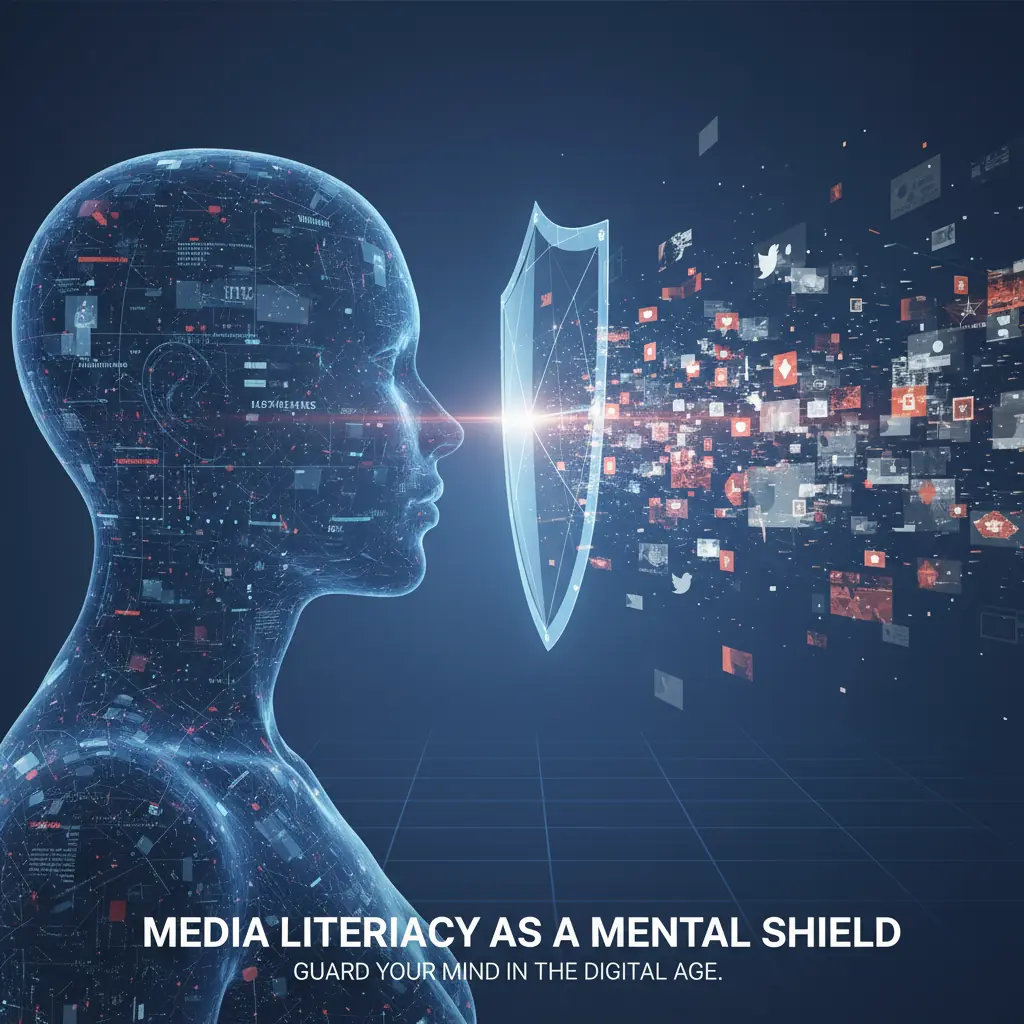
Information literacy is a strategic defense against influence operations, and it is underperforming. The concept is sound; the problem is getting specialist methods into everyday information environments.


Key judgments
- The population-level deficit in evaluating sources is structural and has not narrowed since it was documented in 2016, while adversaries increasingly recontextualize authentic data instead of fabricating it. Prebunking has the strongest evidence base of current interventions, but its effects are modest and their durability at scale is still uncertain. Finland shows that system-wide information literacy is achievable, but only after decades of sustained funding and teacher training that most democracies have not committed to. The central unsolved problem is translating specialist evaluation methods, such as source-reliability grading, to the general public; awareness of the problem is not progress.
In 2016, the Stanford History Education Group published findings that should have functioned as an institutional alarm: more than 80 percent of middle school students could not distinguish between a news article and a sponsored advertisement on a mainstream news platform. The study wasn’t measuring gullibility — it was measuring a structural deficit in information literacy, the capacity to locate, evaluate, and apply information with critical judgment. That deficit has not narrowed in the intervening years. If anything, the operational environment has made it significantly more dangerous. What concerns me here is not the individual’s failure to spot a misleading headline — it is the systematic exploitation of that failure by state and non-state actors conducting influence operations at scale. This article examines the current information literacy landscape not as a motivational exercise in individual empowerment, but as a practitioner’s assessment of where the defense architecture stands, what evidence supports its effectiveness, and where structural gaps remain most exposed.
The threat environment that makes information literacy a strategic asset
From propaganda to data manipulation: the evolution of the information threat
The instrumentalization of information is not new. What has changed is the infrastructure. The shift from broadcast-era propaganda to algorithmically amplified, micro-targeted influence operations represents a qualitative change in threat sophistication that most public-facing literacy programs have not matched. NATO StratCom COE has documented, across multiple published assessments, how adversarial actors no longer need to fabricate entire narratives — they can exploit authentic data points, strip context, and reinsert them into synthetic information ecosystems with statistical plausibility intact. This is the environment in which evaluating sources has become a tradecraft skill, not merely an academic exercise.
Available evidence suggests three dominant manipulation vectors are currently active in the Western information space: fabricated or selectively cropped visual media; citation laundering, in which fringe claims are laundered through secondary and tertiary sources until they acquire apparent credibility; and coordinated inauthentic behavior that artificially elevates low-quality sources in search and social ranking systems. Each vector specifically targets the cognitive shortcuts that information literacy training has historically failed to disrupt.
Cognitive vulnerabilities that adversaries exploit systematically
The research of Sander van der Linden at Cambridge University has documented the role of illusory truth effects — the tendency to rate repeated claims as more accurate regardless of their factual basis — in the propagation of disinformation. This is not a fringe phenomenon. It operates across education levels and professional backgrounds. Defense and intelligence professionals are not immune. The practical implication is that information literacy interventions must address processing-level biases, not merely surface-level factual errors. Knowing that a source may be biased is insufficient if the reader continues to process its claims under cognitive load, time pressure, or emotional arousal — conditions that are deliberately engineered in influence operations.
Existing institutional frameworks for information literacy assessment
NATO StratCom COE and the OSINT evaluation baseline
NATO’s Strategic Communications Centre of Excellence, headquartered in Riga, has developed evaluation frameworks that treat source assessment as an operational competency rather than an educational aspiration. Their published work on Social Media as a Tool of Hybrid Warfare and subsequent assessments integrate information literacy into the broader counter-FIMI (Foreign Information Manipulation and Interference) architecture. The OSINT methodology community — including structured analytic techniques documented by Richards Heuer and Randolph Pherson — provides practitioners with formalized source-rating systems: the admiralty scale, traffic-light protocols, and provenance chains that treat information evaluation as a structured process rather than an intuitive judgment.
These frameworks have real operational value. The problem, in my assessment, is the translation gap between practitioner-grade evaluation methods and the population-level information environment where adversarial content actually circulates. The admiralty scale is not taught in secondary schools. It is not embedded in the content consumption workflows of policy analysts reading social media. The institutional knowledge exists; its distribution remains stratified.
The EU East StratCom Task Force and the EUvsDisinfo model
The European External Action Service’s East StratCom Task Force, established in 2015, operates the EUvsDisinfo database — one of the few institutionalized, longitudinal records of tracked disinformation cases with traceable sourcing. Its methodology involves cross-referencing claims against primary sources, identifying coordinated origin patterns, and publishing debunking content in multiple languages. As a transparency mechanism, the database has genuine value for researchers and analysts. As a population-level information literacy tool, its reach remains limited. The task force has acknowledged in its own reporting that reactive debunking — publishing corrections after false narratives have circulated — consistently underperforms proactive inoculation approaches in measurable attitude change.
Does information literacy training actually work? Examining the evidence
Prebunking versus debunking: what the intervention literature shows
The most rigorous recent evidence on information literacy interventions comes from the prebunking research tradition, associated most prominently with Sander van der Linden and colleagues at the Cambridge Social Decision-Making Lab. Their inoculation theory framework — adapted from psychological research on attitude resistance — posits that exposing individuals to weakened forms of manipulation techniques, with explicit refutation, confers measurable resistance to subsequent influence attempts. A 2022 study published in Science Advances found that short prebunking videos delivered via YouTube reduced susceptibility to manipulation techniques across diverse populations. Google’s Jigsaw unit has piloted this approach at scale.
The results are real but bounded. Effect sizes in experimental settings tend to be modest, and the durability of inoculation effects over time remains an open empirical question. The interventions also tend to target technique-recognition — helping people identify emotional language or false dichotomies — rather than the harder problem of improving source provenance assessment in fast-moving information environments. Prebunking works better than debunking; that is the available consensus. Whether it works well enough, at scale, against sophisticated state-sponsored operations, is a different and still-contested question.
Media literacy curricula: the gap between design and implementation
Finland is frequently cited — correctly — as a model for systemic media literacy integration in public education. The Finnish National Core Curriculum embeds critical thinking and source evaluation across subject areas from primary school onward. Available assessments suggest this has contributed to measurable resilience in Finnish public opinion against Russian disinformation narratives. What is less frequently noted is that Finland’s model required decades of institutional commitment, stable funding, and integration into teacher training — conditions that are absent in most peer democracies. The United Kingdom’s government communication service has developed counter-disinformation guidance frameworks, but their translation into scalable public education programs has been uneven. CISA in the United States has published election security communication resources that include source evaluation guidance, but these operate at the margins of the formal education infrastructure.
What are the structural gaps in the current information literacy defense architecture?
The platform architecture problem
A recurring blind spot in institutional information literacy frameworks is the degree to which source evaluation decisions are structurally shaped — and often preempted — by platform design. Algorithmic ranking systems prioritize engagement over epistemic quality. Interface designs that bury source provenance information below the fold, or that present aggregated content without clear attribution, create environments in which even motivated critical readers operate at a systematic disadvantage. The EU’s Digital Services Act introduces accountability mechanisms for very large platforms, including transparency requirements around algorithmic recommendation systems. Whether these provisions translate into measurable improvements in information quality for end users remains to be evaluated — the implementation timeline is recent and the audit infrastructure is still developing.
Political constraints on institutional response
Governments face a structural tension in information literacy programming that is rarely stated plainly: effective counter-disinformation capacity, if applied without strict institutional constraints, becomes a government information control mechanism. This tension has materially constrained the mandates of the Global Engagement Center at the U.S. State Department, which is statutorily restricted from directing communications at domestic audiences. The UK’s Counter Disinformation Unit operates under similar political sensitivities regarding the boundary between countering foreign manipulation and influencing domestic political discourse. These are legitimate constraints — the concern is real — but they create exploitable gaps that adversarial actors have documented and use.
A framework for evaluating information literacy readiness in institutional contexts
For practitioners conducting assessments of organizational or national-level information literacy posture, the following criteria provide a structured evaluation baseline. This is not a comprehensive audit tool; it is an analytical starting point grounded in current frameworks from NATO StratCom COE, OSINT methodology literature, and the cognitive defense research base.
- Source provenance capacity: Can analysts and communicators trace a claim to its original source, identify intermediary amplification nodes, and assess the credibility of each link in the chain?
- Technique recognition: Is there documented training in manipulation technique identification — emotional amplification, false attribution, cherry-picking of data — as distinct from simple fact-checking?
- Structured analytic process: Are evaluation judgments recorded using formalized protocols (admiralty scale, confidence levels, alternative hypothesis tracking) or left to unstructured individual judgment?
- Temporal awareness: Are evaluators trained to assess the recency and contextual validity of sources, including the risk that accurate historical data is being deployed in misleading contemporary contexts?
- Platform-context literacy: Do practitioners understand how platform algorithmic systems shape content visibility and apparent credibility, independent of actual source quality?
- Cross-domain verification: Is there systematic use of cross-referencing tools — reverse image search, metadata analysis, geolocation verification — as part of standard workflow rather than exceptional procedure?
| Readiness dimension | Strong indicator | Gap indicator |
|---|---|---|
| Source provenance | Formalized provenance chain documentation | Informal, individual-dependent judgment |
| Technique recognition | Regular inoculation-based training | One-time awareness briefings only |
| Structured analytics | Admiralty scale or equivalent embedded in workflow | No standardized confidence notation |
| Platform literacy | Algorithmic awareness integrated into training | Platform interfaces treated as neutral |
Forward assessment: what the realistic trajectory looks like
Information literacy as a population-level defense mechanism is not failing because the concept is flawed — it is underperforming because its institutional implementation has consistently lagged the operational sophistication of the threat. The prebunking literature provides a credible, evidence-supported path forward for technique-based resistance training. Finland’s systemic curriculum model demonstrates that structural integration is achievable. The OSINT and structured analytic communities maintain practitioner-grade evaluation frameworks that are scalable. The translation problem — moving these assets from specialist contexts into the broader information environment — remains the critical unresolved challenge. Political constraints on government-led programming will not disappear; they require institutional design solutions, not wishful thinking. The realistic near-term trajectory involves incremental progress in platform accountability mechanisms, continued growth in prebunking deployment at scale, and persistent gaps at the population level that adversarial actors will continue to exploit. Practitioners in this space should read the evidence honestly and resist both the techno-optimist and defeatist poles — neither serves the analytical mission.
The most dangerous assumption in the current information literacy debate is that awareness of the problem constitutes progress toward solving it.
Sources
- Roozenbeek, J., van der Linden, S., et al. (2022). Prebunking interventions based on inoculation theory reduce susceptibility to misinformation. Science Advances.
- NATO StratCom COE. (2019). Social Media as a Tool of Hybrid Warfare. NATO Strategic Communications Centre of Excellence.
- Wineburg, S., McGrew, S., et al. (2016). Evaluating Information: The Cornerstone of Civic Online Reasoning. Stanford History Education Group.
- Heuer, R., Pherson, R. (2011). Structured Analytic Techniques for Intelligence Analysis. CQ Press.
- European External Action Service. (2023). EEAS Report on Foreign Information Manipulation and Interference. EEAS Task Force East StratCom.
- CISA. (2022). Mis, Dis, and Malinformation: Resources for Election Security. Cybersecurity and Infrastructure Security Agency.