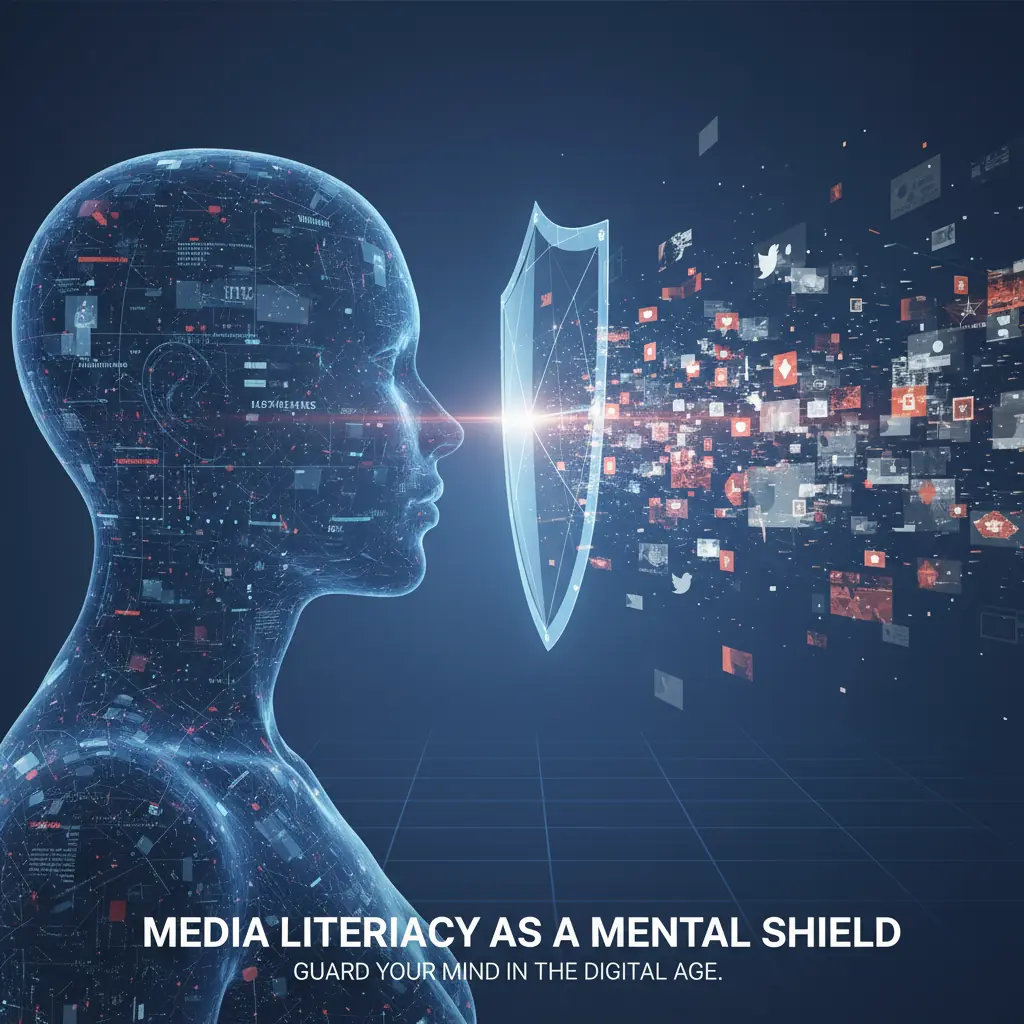
Critical thinking: the foundation of cognitive defense
Technical countermeasures and platform policies are of little use if people cannot evaluate what they see. Yet most programs teach critical thinking as knowledge, when influence operations target automatic reactions.


Key judgments
- Influence operations succeed mainly by exploiting predictable cognitive patterns, not by spreading fabricated content. Knowing about cognitive biases does not reliably prevent them from shaping judgment, which is why many media literacy programs show only modest effects. Warning labels can create an "implied truth" effect, leading users to treat unlabeled content as verified. Cognitive defense should be measured by behavioral outcomes rather than training hours, and systems should be designed so that verifying is easier than taking shortcuts.
In 1938, Orson Welles’ broadcast of “War of the Worlds” demonstrated something profound about human cognition: even educated audiences could mistake fiction for reality when presented through trusted media channels. What made this episode significant wasn’t the panic—which was largely exaggerated—but the revelation that critical thinking skills varied dramatically across populations, even when consuming identical information.
Today’s cognitive battlefield makes that 1938 broadcast look quaint. State actors deploy sophisticated influence operations designed specifically to exploit cognitive vulnerabilities. Synthetic media, deepfakes, and AI-generated content challenge traditional verification methods. Yet most institutional cognitive defense frameworks still rely on approaches developed for analog threats.
Critical thinking represents the foundational layer of cognitive defense—the cognitive immune system that determines whether individuals and institutions can distinguish reliable information from manipulation. Without this foundation, technical countermeasures and platform policies become elaborate security theater. The evidence suggests we’re failing to build this foundation systematically.
The cognitive threat environment requiring systematic defense
Contemporary influence operations exploit predictable cognitive patterns rather than simply spreading false content. Russian information operations documented by NATO’s Strategic Communications Centre of Excellence demonstrate this evolution clearly.
Exploiting cognitive biases at scale
The Internet Research Agency’s 2016 operations didn’t primarily spread fabricated news. Analysis by the Oxford Internet Institute revealed a more sophisticated approach: amplifying existing social tensions through content designed to trigger confirmation bias and emotional reasoning. Posts about divisive social issues received far more engagement than posts containing outright disinformation.
This tactical shift reflects understanding of cognitive science research. Daniel Kahneman’s work on System 1 and System 2 thinking provides the operational framework: fast, intuitive responses (System 1) can be reliably triggered, while deliberate analysis (System 2) requires conscious effort that most people avoid.
Information velocity versus verification capacity
Social media platforms create structural conditions that favor rapid emotional responses over careful evaluation. Research by MIT’s Laboratory for Social Machines found that false information spreads six times faster than accurate information on Twitter, reaching more people and penetrating deeper into social networks.
The velocity problem isn’t purely technological. Cognitive load theory suggests that humans have limited capacity for processing competing information streams simultaneously. When information arrives faster than verification systems can process it, cognitive shortcuts become inevitable—exactly the conditions that influence operations exploit.
Synthetic media and verification challenges
Deepfakes and AI-generated content represent qualitative escalation in the verification challenge. Traditional media literacy approaches taught audiences to check sources and cross-reference claims. These methods become inadequate when the media itself can be synthetically generated with increasing sophistication.
The Department of Defense’s research on synthetic media detection reveals the asymmetry: creating convincing fake content requires modest resources, while detecting it reliably demands significant technical expertise and computational resources. This imbalance favors attackers over defenders across most threat scenarios.
How do existing institutional frameworks address cognitive vulnerabilities?
Government and educational institutions have deployed various cognitive defense approaches, with mixed results that reveal fundamental misconceptions about how critical thinking operates in practice.
Media literacy curricula and their limitations
Traditional media literacy programs focus on teaching students to identify unreliable sources and check facts. The American Library Association’s Information Literacy Framework emphasizes source evaluation and citation verification—skills that assume students will consistently apply effortful cognitive processes.
Research by Stanford’s History Education Group found that even students who performed well on media literacy assessments often failed to apply these skills spontaneously when encountering misleading information online. The gap between taught skills and actual behavior reveals a fundamental problem: knowledge about critical thinking doesn’t automatically translate into critical thinking practice.
Platform-based verification systems
Facebook’s third-party fact-checking program and Twitter’s warning labels represent attempts to provide external cognitive support. The Reuters Institute’s research on fact-checking effectiveness shows modest impacts on belief accuracy but significant gaps in behavior change.
Warning labels can create a false sense of security. Users often assume that unlabeled content has been verified, when most content receives no review at all. This “implied verification” problem may actually reduce critical thinking behavior by offloading cognitive responsibility to automated systems.
Government counter-messaging approaches
The Global Engagement Center’s approach focuses on “counter-messaging” and “strategic communications” to compete with adversary narratives. This framework treats the information environment as contested terrain where truth and falsehood compete for audience attention.
The competitive messaging model has inherent limitations. It assumes audiences will rationally evaluate competing claims, but cognitive science research suggests that exposure to conflicting information often increases rather than decreases belief in false claims—a phenomenon called the “continued influence effect.”
What evidence exists for critical thinking training effectiveness?
The research on critical thinking interventions reveals a complex picture: some approaches show promise under controlled conditions, but real-world effectiveness remains limited and context-dependent.
Inoculation theory and prebunking research
Sander van der Linden’s research at Cambridge demonstrates that “prebunking”—exposing people to weakened forms of misinformation techniques before they encounter full-strength manipulation—can build resistance to influence operations.
The inoculation approach shows measurable effects in laboratory settings and some field studies. Participants who received inoculation training showed reduced belief in false claims and improved ability to identify manipulation techniques. However, the effects tend to be specific to the techniques covered and decay over time without reinforcement.
Cognitive bias awareness training
Intelligence Community training programs increasingly include modules on cognitive biases and analytical failures. The Sherman Kent School’s structured analytic techniques curriculum teaches specific methods for counteracting confirmation bias and group think.
Professional intelligence analysts show improved performance on bias recognition tasks after training, but transfer to real-world analytical tasks remains inconsistent. Research by the Intelligence Advanced Research Projects Activity suggests that awareness of biases doesn’t automatically prevent their influence—a finding with significant implications for civilian cognitive defense training.
Lateral reading and verification techniques
Stanford researchers developed “lateral reading” techniques that teach users to quickly verify sources by checking external references rather than evaluating content in isolation. Professional fact-checkers use these methods effectively.
Students can learn lateral reading techniques relatively quickly and show improved source evaluation performance. However, the approach requires sustained cognitive effort and competes with users’ natural tendency to evaluate information based on how it feels rather than systematic verification.
Why do cognitive defense gaps persist despite institutional investment?
The persistence of cognitive vulnerabilities despite significant investment in countermeasures suggests structural problems rather than simply inadequate funding or attention.
The automaticity problem
Most critical thinking training treats cognitive bias as a skill deficiency that can be corrected through education. Cognitive science research suggests a different model: biased reasoning often represents automatic cognitive processes that served evolutionary purposes but create vulnerabilities in information-rich environments.
System 1 thinking—fast, intuitive, emotional—operates automatically and continuously. System 2 thinking—slow, deliberate, analytical—requires conscious activation and sustained effort. Training programs that focus on System 2 skills without addressing System 1 triggers miss the operational reality of how people process information.
Motivation and cognitive load constraints
Critical thinking requires not just ability but motivation to engage effortful cognitive processes. Research by Klayman and Ha demonstrates that people naturally seek confirming evidence rather than disconfirming evidence, even when they understand the logical value of falsification.
Information abundance exacerbates this problem. When people encounter dozens of competing claims daily, the cognitive cost of thoroughly evaluating each claim becomes prohibitive. Shortcuts become inevitable, creating systematic vulnerabilities that influence operations exploit.
Political and institutional resistance
Effective critical thinking training necessarily challenges existing beliefs and institutional narratives. This creates political resistance in educational and organizational contexts where questioning authority or conventional wisdom conflicts with institutional goals.
The classroom example illustrates this tension clearly: teaching students to critically evaluate government claims supports democratic citizenship but may conflict with institutional pressures to promote civic unity and respect for authority. Similar tensions exist in corporate and military contexts.
Myth versus reality in critical thinking approaches
Myth: More information leads to better decisions
Many cognitive defense frameworks assume that providing people with more accurate information will improve their decision-making. This “information deficit model” treats misinformation as primarily a knowledge problem.
Reality: Research consistently shows that additional information often increases rather than decreases belief in false claims, particularly when the false claims align with prior beliefs or group identity. The “backfire effect” demonstrates that corrective information can actually strengthen misconceptions.
Myth: Teaching logical reasoning prevents manipulation
Traditional critical thinking curricula focus heavily on formal logic, logical fallacies, and rational analysis, assuming that logical reasoning skills transfer to real-world information evaluation.
Reality: Logical reasoning ability shows weak correlation with resistance to misinformation in practice. Highly educated individuals often show sophisticated reasoning abilities when defending false beliefs they want to maintain—a phenomenon researchers call “motivated reasoning.”
Myth: Critical thinking is politically neutral
Educational institutions often present critical thinking as an objective skill set that can be applied equally to any topic or claim, avoiding political controversy by focusing on “thinking processes” rather than content.
Reality: Critical thinking applications necessarily involve judgments about credible sources, legitimate expertise, and reasonable evidence standards. These judgments reflect values and worldviews that connect to political and social positions, making truly neutral critical thinking impossible.
A framework for assessing cognitive defense readiness
Evaluating institutional cognitive defense capability requires moving beyond input metrics (training hours, curriculum standards) toward outcome-based assessment of actual resistance to manipulation.
Individual-level indicators
- Recognition speed: How quickly individuals identify manipulation techniques in realistic scenarios
- Transfer capability: Whether skills learned for one type of misinformation apply to novel manipulation approaches
- Sustained performance: Maintenance of critical evaluation under time pressure and cognitive load
- Motivational resilience: Continued application of verification behaviors when results contradict preferred beliefs
Institutional-level indicators
- Cultural integration: Whether critical thinking behaviors are embedded in organizational decision-making processes
- Authority challenge tolerance: Institutional capacity to handle internal questioning of official positions and narratives
- Update mechanisms: Systems for incorporating new threat intelligence into cognitive defense training
- Cross-functional coordination: Integration between technical security measures and human-centered cognitive defense approaches
Systemic resilience metrics
Measuring societal-level cognitive defense requires longitudinal tracking of population responses to documented influence operations:
- Belief persistence: Duration and intensity of false belief propagation after debunking efforts
- Source credibility maintenance: Public confidence in verification institutions during contested information events
- Polarization resistance: Maintenance of cross-party agreement on basic factual questions
- Information seeking behavior: Population-level patterns of verification and cross-referencing
Forward assessment and realistic trajectories
The evidence suggests that current cognitive defense approaches provide limited protection against sophisticated influence operations. Traditional media literacy and fact-checking initiatives show measurable but modest effects that don’t match the scale and sophistication of contemporary threats.
Promising directions include inoculation-based training that addresses automatic cognitive processes rather than just analytical skills, and institutional design changes that make verification behaviors easier and more rewarding than cognitive shortcuts. However, fundamental tensions between cognitive efficiency and verification thoroughness will likely persist.
In my assessment, building effective cognitive defense requires acknowledging that human cognition evolved for different information environments. Rather than expecting individuals to overcome cognitive biases through education alone, effective approaches must design information systems and institutions that channel automatic cognitive processes toward accurate rather than manipulated conclusions.
Five actionable takeaways for cognitive defense practitioners
- Focus inoculation training on technique recognition rather than content evaluation—teach people to spot manipulation methods across different topics
- Design verification systems that reduce rather than increase cognitive load—make checking sources easier than accepting claims uncritically
- Measure behavioral outcomes, not knowledge acquisition—track whether people actually apply critical thinking skills under realistic conditions
- Address motivation explicitly in training programs—help people understand why verification behaviors serve their own interests
- Build institutional tolerance for productive doubt—create organizational cultures where questioning claims is rewarded rather than punished
Sources
- Kahneman, D. (2011). Thinking, Fast and Slow. Farrar, Straus and Giroux.
- Pennycook, G., Bear, A., Collins, E. T., & Rand, D. G. (2020). The implied truth effect. Management Science, 66(11), 4944–4957.
- Wineburg, S., & McGrew, S. (2019). Lateral reading and the nature of expertise. Teachers College Record, 121(11).
- Roozenbeek, J., & van der Linden, S. (2019). Fake news game confers psychological resistance against online misinformation. Palgrave Communications, 5, 65.
- Morewedge, C. K., et al. (2015). Debiasing decisions: Improved decision making with a single training intervention. Policy Insights from the Behavioral and Brain Sciences, 2(1), 129–140.
- Heuer, R. J. (1999). Psychology of Intelligence Analysis. CIA Center for the Study of Intelligence.