SITUATION ASSESSMENT
In October 2022, security researchers at Stanford Internet Observatory documented a sophisticated cross-platform influence operation targeting U.S. midterm elections. The operation, later designated «Spamouflage Dragon» by Meta’s threat intelligence team, deployed over 7,700 inauthentic accounts across Facebook, Instagram, Twitter, and YouTube. Open-source evidence indicates this network amplified divisive content about election security, COVID-19 policies, and racial tensions using synthetic personas and AI-generated profile images.
This operation exemplifies why cognitive defense in the digital age has evolved from an academic concept to an operational imperative. Unlike traditional information warfare that targeted media gatekeepers, modern cognitive attacks exploit algorithmic amplification and psychological vulnerabilities to bypass institutional filters entirely. The operational pattern suggests adversaries have weaponized the fundamental architecture of digital information systems against democratic discourse itself.
THREAT VECTOR: The Cognitive Warfare Paradigm
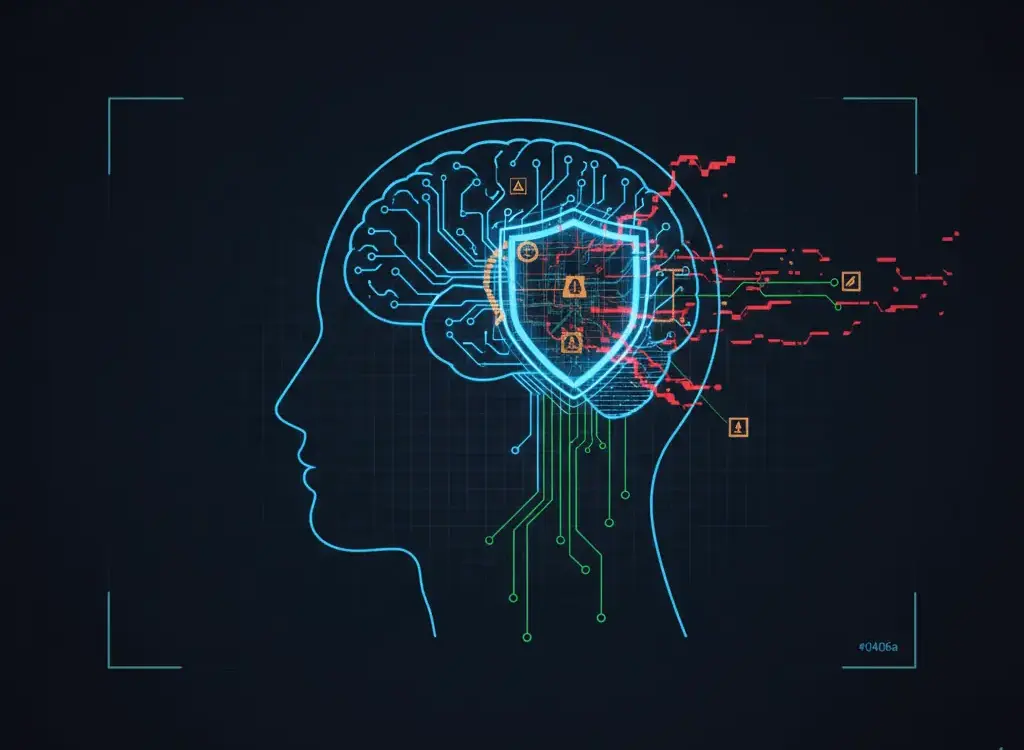
NATO’s 2021 cognitive warfare concept paper defines this domain as operations that «target the human brain to change not only what people think, but also how they think and act.» Unlike traditional propaganda, cognitive warfare exploits dual-process cognition – the interaction between fast, intuitive thinking (System 1) and slower, analytical thinking (System 2) described by Nobel laureate Daniel Kahneman.
The RAND Corporation’s 2016 analysis of Russian information operations introduced the «Firehose of Falsehood» model, identifying four key characteristics: high volume, multi-channel distribution, rapid continuous repetition, and lack of commitment to objective reality. This approach overwhelms cognitive processing capacity, forcing targets to rely on heuristic shortcuts that adversaries can exploit.
Research by Yale’s Laboratory for Social and Decision Sciences demonstrates that repeated exposure increases perceived accuracy of false information by up to 30%, even when individuals initially recognize statements as false – a phenomenon known as the «illusory truth effect.»
Dr. Thomas Rid’s seminal work «Active Measures» (2020) documents how modern cognitive warfare adapts Cold War techniques to digital ecosystems. Contemporary operations leverage Robert Cialdini’s influence principles – reciprocity, commitment, social proof, authority, liking, and scarcity – within algorithmic environments designed to maximize engagement rather than accuracy.
CASE STUDY: Documented Operations
Operation «Secondary Infektion» (2014-2020): The Atlantic Council’s Digital Forensic Research Lab identified this multi-year campaign that seeded fabricated documents across over 300 platforms in seven languages. The operation demonstrated advanced «proof-of-concept» methodology – creating authentic-seeming evidence that mainstream media would unknowingly amplify. Key indicators included systematic use of identical linguistic patterns, coordinated timing across platforms, and strategic targeting of verification-resistant narratives.
«Ghostwriter» Campaign (2017-ongoing): EU DisinfoLab documented this operation targeting Eastern European audiences through compromised media websites and social media amplification. The campaign’s tradecraft included website defacements that inserted false quotes from political figures, followed by coordinated social media campaigns presenting these fabrications as legitimate news. This aligns with documented TTPs for «hack-and-leak» operations adapted for cognitive warfare objectives.
DETECTION PROTOCOL: Behavioral Signatures
A critical indicator is the presence of coordinated inauthentic behavior patterns that security researchers can identify through network analysis:
- Temporal clustering: Multiple accounts posting identical or near-identical content within narrow time windows
- Synthetic amplification: Rapid, disproportionate engagement from accounts with minimal organic activity
- Cross-platform synchronization: Identical narratives appearing simultaneously across multiple platforms with coordinated hashtag campaigns
- Linguistic fingerprints: Consistent grammatical patterns, unusual phrase constructions, or translation artifacts suggesting non-native speakers
- Profile anomalies: AI-generated images, recycled biographical details, or account creation patterns suggesting automated generation
- Emotional polarization: Content designed to trigger strong emotional responses while discouraging analytical thinking
The operational pattern suggests sophisticated adversaries increasingly use «astroturfing» techniques – creating artificial grassroots movements that appear organic but follow centralized directives. Detection requires analyzing network topology rather than individual content.
DEFENSE FRAMEWORK: Multi-Layer Countermeasures
Effective cognitive defense in the digital age requires coordinated responses across three operational levels:
Individual Cognitive Hygiene:
- Source verification protocols: Cross-reference information across multiple independent sources before sharing
- Emotional circuit breakers: Pause and engage analytical thinking (System 2) when content triggers strong emotional responses
- Platform diversification: Consume information from sources with different algorithmic biases and audience demographics
- Lateral reading techniques: Verify claims by opening multiple tabs to check source credibility rather than reading vertically through single articles
Organizational Institutional Protocols:
The Reuters Institute’s 2023 research on newsroom resilience identifies key defensive measures: implementing «prebunking» strategies that inoculate audiences against misinformation before it spreads, establishing rapid response teams for emerging threats, and developing partnerships with fact-checking organizations and platform moderators.
Assessment: Organizations demonstrating highest resilience maintain dedicated threat intelligence capabilities that monitor their digital information environment continuously, not just during crisis periods.
Systemic Policy Integration:
The European Union’s Digital Services Act and the United Kingdom’s Online Safety Bill represent emerging frameworks for platform accountability. These approaches focus on transparency requirements and algorithmic auditing rather than content removal, recognizing that cognitive defense requires understanding information flows, not just controlling them.
ASSESSMENT: Forward Intelligence Estimate
Open-source evidence indicates cognitive warfare capabilities are proliferating beyond state actors to include commercial influence operations, extremist networks, and cybercriminal organizations. The democratization of AI-powered content generation tools suggests the threat landscape will expand significantly over the next 24-36 months.
Critical intelligence gaps remain in understanding how cognitive attacks affect different demographic groups and cultural contexts. However, emerging research from the Oxford Internet Institute suggests that «inoculation theory» – exposing individuals to weakened forms of misinformation along with refutations – shows promise for building cognitive resilience at scale.
KEY TAKEAWAYS
- Cognitive warfare exploits digital architecture: Modern influence operations weaponize algorithmic amplification and psychological vulnerabilities rather than targeting traditional media gatekeepers
- Detection requires network analysis: Identifying coordinated inauthentic behavior patterns provides more reliable indicators than content analysis alone
- Defense demands multi-layer approaches: Effective countermeasures must operate simultaneously at individual, organizational, and systemic levels
- Resilience trumps elimination: The goal is building cognitive immune systems capable of recognizing and neutralizing influence operations, not achieving perfect information environments
- International cooperation is force-multiplying: Cognitive threats cross borders faster than defensive responses; coordinated attribution and countermeasures significantly enhance effectiveness
The strategic imperative for cognitive defense in the digital age stems not from the novelty of influence operations, but from their unprecedented scale, speed, and precision. As adversaries continue adapting their tactics to exploit algorithmic vulnerabilities, building cognitive resilience becomes essential infrastructure for maintaining democratic discourse in digital societies.