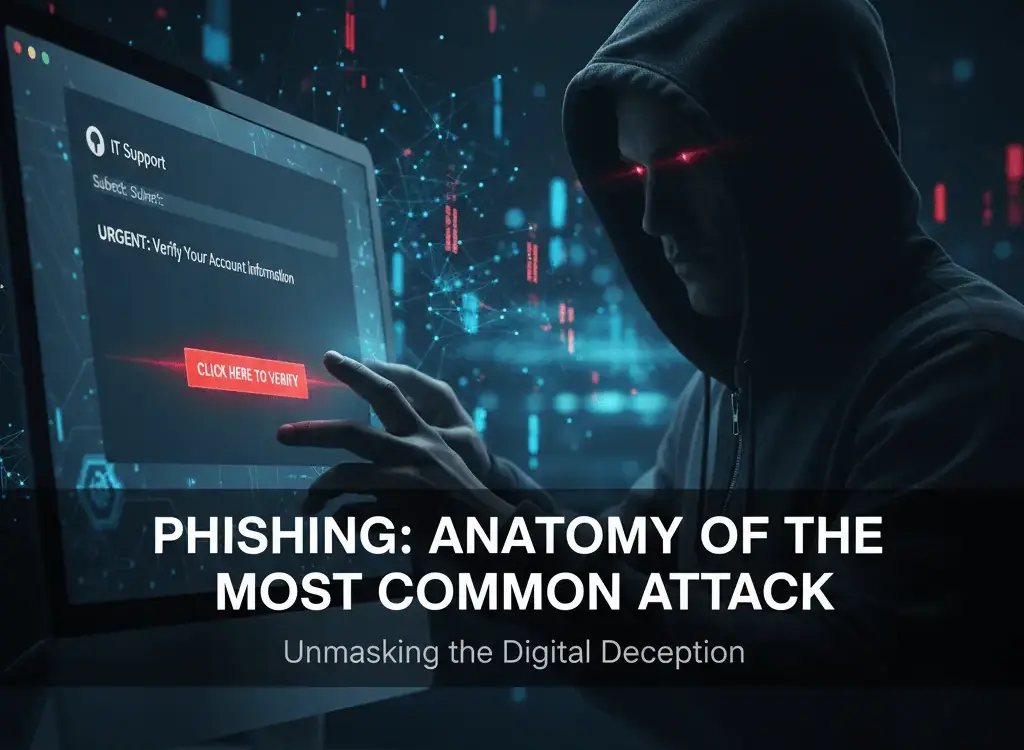
The Human Factor Exploit: Why Organizations Remain Vulnerable to Social Engineering
In October 2019, an employee at a major European energy company received what appeared to be a routine voice call from the CEO’s office, requesting an urgent wire transfer of €220,000 to cover acquisition costs. The voice was unmistakably familiar—the executive’s slight German accent, his characteristic speaking patterns, even his tendency to clear his throat before important statements. Within hours, the funds were transferred. Only later did investigators discover that the «CEO» was an AI-generated voice clone, part of a sophisticated phishing attack that exploited not just technology, but fundamental aspects of human cognition and organizational trust.
This incident illuminates a troubling reality: despite billions invested in cybersecurity infrastructure, the most reliable attack vector remains the human element. Phishing attacks succeed not because of technological sophistication alone, but because they exploit predictable cognitive vulnerabilities that exist at the intersection of psychology and organizational behavior. Understanding why these attacks work—and why traditional defenses often fail—requires examining phishing through the lens of adversarial tradecraft rather than simple security awareness.
What makes phishing the dominant initial access method for both criminal organizations and state-sponsored actors is its reliability. Unlike zero-day exploits that require significant resources and risk discovery, phishing attacks leverage cognitive architecture that cannot be patched. The question facing security professionals is not whether these attacks will continue, but how organizations can build defensive frameworks that account for human cognitive limitations rather than ignore them.
The Social Engineering Kill Chain: From Research to Exploitation
Understanding phishing attacks requires recognizing them as part of a structured social engineering process that mirrors traditional cyber kill chains. This methodology transforms random opportunistic attempts into precisely targeted operations with dramatically higher success rates.
Intelligence Gathering and Target Profiling
Modern phishing campaigns begin with extensive Open-Source Intelligence (OSINT) collection that would be familiar to any intelligence analyst. Attackers systematically harvest information from corporate websites, social media platforms, professional networking sites, and public records to build detailed psychological and organizational profiles. This phase often consumes 60-80% of campaign preparation time, according to analysis of documented Business Email Compromise (BEC) investigations by the FBI’s Internet Crime Complaint Center.
The sophistication of this intelligence gathering has evolved considerably. Criminal organizations now employ dedicated research teams who map organizational hierarchies, identify communication patterns, and catalog personal details that can be weaponized in pretexting scenarios. State-sponsored groups like APT29 and APT28 have demonstrated particular expertise in combining technical surveillance with human intelligence collection to enable highly targeted spear-phishing operations.
Pretext Development and Psychological Positioning
The intelligence phase feeds directly into pretext development—the creation of convincing scenarios that justify the target’s compliance with the attacker’s request. Effective pretexts exploit what Robert Cialdini identified as fundamental influence principles: authority, urgency, social proof, and reciprocity. However, in adversarial contexts, these principles function differently than in legitimate persuasion scenarios.
Criminal actors have developed sophisticated pretext libraries that account for organizational roles, seasonal business cycles, and even cultural factors. A finance department employee might receive a «year-end audit compliance» request in December, while IT staff might face «critical security updates» during known vulnerability disclosure periods. The key insight is that effective pretexts don’t just mimic legitimate communications—they exploit the target’s existing anxieties and responsibilities.
Delivery Mechanisms and Technical Sophistication
The delivery phase has evolved far beyond simple email phishing. Modern campaigns employ multiple vectors simultaneously: email, voice calls (vishing), SMS messages (smishing), and even physical mail or USB drops. This multi-channel approach serves both operational and psychological purposes. Multiple touchpoints increase the perceived legitimacy of the request while providing redundancy if one vector is detected or blocked.
Technical sophistication in delivery mechanisms has reached remarkable levels. Domain spoofing techniques now include internationalized domain names that are visually indistinguishable from legitimate domains. Email header manipulation can bypass most standard authentication protocols. More concerning, the integration of artificial intelligence in voice synthesis—as demonstrated in the energy company incident—has eliminated many traditional indicators that recipients previously relied upon to identify fraudulent communications.
Why Do Intelligent Professionals Fall for These Attacks?
The persistent effectiveness of phishing attacks against educated, security-aware professionals reveals fundamental limitations in how organizations conceptualize human decision-making under pressure. The problem is not individual gullibility but systematic exploitation of cognitive architecture.
Cognitive Load and Decision-Making Under Pressure
Organizational environments create perfect conditions for social engineering exploitation through what psychologists term «cognitive load.» Employees operating under deadline pressure, managing multiple priorities, or dealing with novel situations experience measurably reduced capacity for critical evaluation of communications. This degradation affects even highly trained professionals.
Research conducted by the CERT Coordination Center at Carnegie Mellon University demonstrates that phishing susceptibility increases significantly during periods of high workplace stress. The mechanism is straightforward: cognitive resources required for skeptical evaluation are diverted to immediate task completion. Attackers exploit this by timing their approaches to coincide with known stress periods—end of fiscal quarters, product launches, or regulatory deadlines.
Authority Gradients and Organizational Hierarchy
Perhaps more problematic is the exploitation of organizational authority structures. Effective phishing attacks don’t just impersonate authority figures—they weaponize the psychological dynamics that make hierarchical organizations function. When an email appears to come from senior leadership requesting urgent action, the social and professional costs of questioning that request often exceed the perceived risks of compliance.
This dynamic is particularly pronounced in cultures with high power distance, where questioning authority is socially or professionally costly. State-sponsored groups have demonstrated sophisticated understanding of these cultural variables, tailoring their authority-based pretexts to specific organizational and national contexts. The result is that the very social structures that enable organizational effectiveness become attack surfaces.
Trust Establishment and Social Proof
Modern phishing attacks succeed by manipulating trust formation processes rather than simply requesting trust. Attackers establish credibility through demonstrated knowledge of internal processes, recent organizational events, or personal details that suggest legitimate insider status. This approach bypasses conscious skepticism by triggering automatic trust responses.
The use of social proof—references to colleagues, shared experiences, or common connections—further reinforces perceived legitimacy. When a phishing email mentions recent conversations or references mutual contacts, recipients experience cognitive shortcuts that encourage compliance. These mechanisms work because they mirror legitimate relationship-building processes that professionals use daily.
State-Sponsored Phishing: Strategic Intelligence Operations
While criminal phishing focuses primarily on financial gain, state-sponsored operations treat phishing as a strategic intelligence collection method with geopolitical implications. This distinction shapes both the sophistication of attacks and their defensive implications.
APT Integration and Long-Term Access
Advanced Persistent Threat (APT) groups employ phishing not as an end goal but as initial access for sustained intelligence operations. Groups like APT1 (Comment Crew), attributed to China’s PLA Unit 61398, have demonstrated the use of spear-phishing to establish persistent presence in target networks for months or years. The phishing attack is merely the entry point for comprehensive intelligence collection operations.
This strategic approach fundamentally changes the calculus of phishing defense. While criminal attacks typically seek immediate financial return, state-sponsored phishing aims to establish durable access that can be activated for future intelligence requirements. The implications for defensive strategy are significant: detecting the initial phishing attack becomes less important than detecting subsequent lateral movement and data exfiltration activities.
Target Selection and Strategic Priorities
State-sponsored phishing campaigns reveal strategic intelligence priorities through their target selection patterns. Analysis of documented campaigns shows systematic targeting of defense contractors, energy infrastructure, telecommunications providers, and government agencies involved in policy formulation. The targeting patterns often align with broader geopolitical tensions and strategic competition dynamics.
The sophistication of target research in state-sponsored campaigns far exceeds criminal operations. Intelligence services employ dedicated analysts to map target organizations, identify key personnel with access to strategic information, and develop detailed psychological profiles that inform pretext development. This level of preparation enables success rates that are dramatically higher than opportunistic criminal campaigns.
The Business Email Compromise Industrial Complex
Business Email Compromise represents the most financially damaging application of phishing techniques, with the FBI’s Internet Crime Complaint Center reporting losses exceeding $43 billion between 2016 and 2021. Understanding BEC requires recognizing it as a mature criminal industry with specialized roles, established methodologies, and sophisticated operational security practices.
Criminal Specialization and Division of Labor
Modern BEC operations function as criminal enterprises with clearly defined roles and responsibilities. Initial access specialists focus on email account compromise through phishing and credential harvesting. Social engineering specialists develop pretexts and conduct the actual fraud conversations. Money mules handle the financial movement and laundering processes. Technical specialists provide infrastructure support and operational security.
This specialization enables criminal organizations to achieve remarkable scale and sophistication. A single BEC group might simultaneously operate dozens of campaigns targeting different industries and geographic regions. The division of labor also provides operational security benefits: compromise of one specialist doesn’t necessarily expose the entire operation.
Financial Institution Targeting and Process Exploitation
BEC attackers have developed sophisticated understanding of corporate financial processes and banking relationships. Rather than simply requesting wire transfers, advanced BEC operations manipulate legitimate business processes to create plausible scenarios for large financial transactions. Invoice fraud, payroll redirection, and vendor payment hijacking represent evolved techniques that exploit normal business operations.
The success of these operations reveals systematic weaknesses in corporate financial controls. Many organizations lack effective verification procedures for financial requests, particularly when they appear to come from trusted sources. The result is that legitimate business processes become attack vectors when manipulated by skilled social engineers.
Defensive Limitations: Why Security Awareness Training Often Fails
Despite massive investment in security awareness training programs, empirical evidence suggests limited effectiveness in reducing phishing susceptibility. Understanding why requires examining both the training methodologies and the cognitive mechanisms they attempt to address.
The Simulation Training Paradox
Simulated phishing training—sending fake phishing emails to employees and providing feedback on their responses—has become standard practice in most organizations. However, research conducted by the SANS Institute and other cybersecurity training organizations shows mixed results at best. While some studies report short-term improvement in identification rates, longitudinal studies suggest that susceptibility returns to baseline levels within months of training completion.
The fundamental problem is that simulated training cannot replicate the psychological conditions present during actual attacks. Real phishing attempts occur during periods of stress, distraction, or high cognitive load, when the careful evaluation encouraged by training programs is least likely to occur. Additionally, simulation training often uses obvious indicators that don’t reflect the sophistication of actual threats.
Cognitive Biases and Training Design
Most security awareness training programs fail to account for the cognitive biases that make phishing attacks effective. Training that emphasizes «think before you click» assumes that suspicious communications will trigger conscious evaluation processes. In reality, effective phishing attacks are designed to bypass conscious evaluation through emotional manipulation, time pressure, and authority invocation.
More concerning, poorly designed training programs can actually increase vulnerability by creating false confidence. Employees who have successfully identified obvious phishing simulations may become overconfident in their ability to recognize sophisticated attacks. This phenomenon, known as the Dunning-Kruger effect in cognitive psychology, suggests that incomplete knowledge can be more dangerous than acknowledged ignorance.
A Framework for Analyzing Organizational Social Engineering Exposure
Effective defense against social engineering requires systematic analysis of organizational vulnerabilities that extends beyond individual training to encompass process design, cultural factors, and systemic risk assessment.
Attack Surface Mapping and Process Analysis
Organizations must systematically identify the business processes and communication patterns that create social engineering opportunities. This analysis should map critical functions—financial transactions, system administration, customer service interactions—and identify the human decision points that could be manipulated by attackers. The goal is to understand how legitimate authority relationships and communication patterns could be exploited in adversarial contexts.
Key indicators include: single points of failure in approval processes, reliance on email for financial authorization, lack of verification procedures for unusual requests, and inadequate documentation of authority relationships. Organizations with high social engineering exposure typically exhibit multiple single-person authorization points and limited procedural controls on financial or system access decisions.
Cultural and Behavioral Risk Factors
Cultural assessment must examine both formal organizational structures and informal social dynamics. High-power-distance cultures, where questioning authority is discouraged, present elevated social engineering risks. Similarly, organizations that prioritize rapid response and customer service may inadvertently create conditions favorable to social engineering attacks.
| Risk Factor Category | High-Risk Indicators | Mitigation Approaches |
|---|---|---|
| Authority Structure | Rigid hierarchy, limited questioning of senior requests, fear-based compliance culture | Dual-control procedures, anonymous verification channels, authority verification protocols |
| Communication Patterns | Heavy reliance on email for authorization, informal verification processes, assumption of internal communication authenticity | Out-of-band verification requirements, digital signatures for financial requests, communication authenticity protocols |
| Operational Tempo | Constant urgency, deadline-driven decision making, limited time for verification procedures | Built-in verification delays for high-value transactions, stress testing of procedures under time pressure |
| Information Sharing | Excessive public disclosure of organizational structure, detailed personnel information readily available, social media oversharing by employees | Information classification policies, social media guidelines, regular OSINT vulnerability assessments |
Technology Integration and Human Factors
Effective social engineering defense requires technology solutions that account for human cognitive limitations rather than attempting to eliminate human involvement entirely. Multi-factor authentication, behavioral analytics, and automated verification systems can reduce reliance on human judgment for critical security decisions.
However, technology integration must avoid creating new vulnerabilities through complexity or user frustration. Security controls that are difficult to use or understand often get bypassed during high-pressure situations, creating exactly the conditions that social engineers exploit. The optimal approach integrates seamless technological controls with simplified human decision-making processes.
Forward Assessment: The Evolution of Social Engineering Threats
The trajectory of social engineering attacks suggests continued sophistication in both technical capabilities and psychological manipulation techniques. Artificial intelligence integration—demonstrated by the voice cloning incident that opened this analysis—represents a fundamental shift in attack capabilities that traditional defenses are not equipped to address.
What concerns security professionals most is not the current state of social engineering capabilities, but the rate of advancement. Deepfake technology, AI-powered social media analysis, and automated pretext generation are democratizing sophisticated social engineering techniques that were previously available only to well-resourced state actors. The implications for organizational defense are significant: static training programs and procedural controls designed for human attackers may prove inadequate against AI-augmented social engineering.
Organizations that succeed in this environment will be those that acknowledge the fundamental reality of human cognitive limitations and design defensive systems accordingly. This requires moving beyond awareness training toward systemic approaches that reduce reliance on human judgment for critical security decisions while preserving the trust relationships essential to organizational effectiveness.
Sources
- Federal Bureau of Investigation. (2022). Internet Crime Report 2021. Internet Crime Complaint Center.
- Cialdini, R. (2006). Influence: The Psychology of Persuasion. Harper Business.
- Hadnagy, C. (2018). Social Engineering: The Science of Human Hacking. Wiley.
- SANS Institute. (2021). Security Awareness Report: Managing Human Cyber Risk. SANS Institute.
- Carnegie Mellon University. (2020). Insider Threat Mitigation: Lessons Learned. CERT Coordination Center.
- Verizon. (2023). Data Breach Investigations Report. Verizon Business.