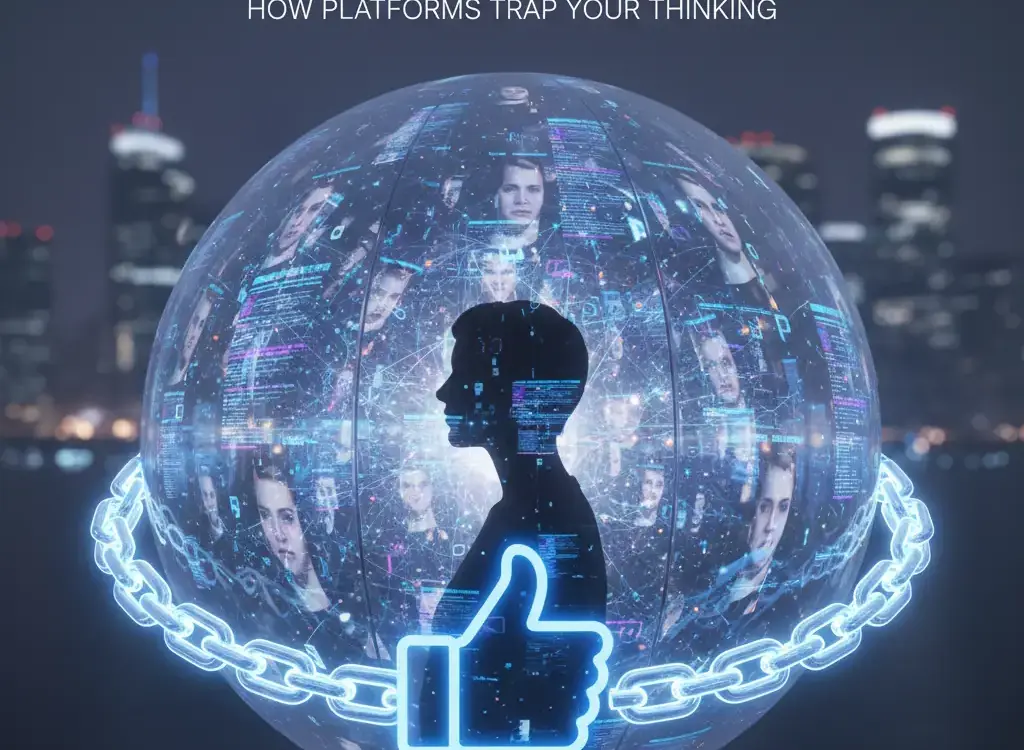
In October 2020, researchers at the Stanford Internet Observatory documented a troubling pattern across Facebook’s network in Myanmar. Users who followed mainstream news sources were systematically shown content from fringe political groups through algorithmic recommendations, creating what the researchers termed «induced polarization pathways.» This wasn’t organic political mobilization or foreign interference—it was the platform’s engagement optimization system actively constructing echo chambers to maximize user retention.
The Myanmar case illustrates a critical shift in how we must understand social media manipulation. While much attention focuses on coordinated inauthentic behavior and foreign influence operations, the more pervasive threat lies in how platforms’ core architecture creates cognitive isolation by design. These digital echo chambers don’t just amplify existing beliefs—they systematically narrow the information environment to trap users in increasingly extreme feedback loops.
The architecture of algorithmic isolation
Modern social media platforms operate on what computational social scientists call «homophily optimization»—the tendency for recommendation algorithms to surface content similar to what users have previously engaged with. While this seems intuitive from a user experience perspective, it creates profound structural conditions for cognitive manipulation.
Engagement metrics as manipulation levers
Platform algorithms prioritize content that generates high engagement, typically measured through likes, shares, comments, and time spent viewing. Research from the Oxford Internet Institute’s Computational Propaganda Project demonstrates that emotionally charged and divisive content consistently outperforms balanced information in these metrics. This creates what researchers term «algorithmic amplification bias»—extreme viewpoints receive systematic preference over moderate perspectives.
The manipulation potential becomes clear when considering how coordinated inauthentic behavior exploits this system. Rather than simply posting false information, sophisticated influence operations now focus on engagement inflation—artificially boosting metrics to trigger algorithmic amplification of targeted content. Meta’s Coordinated Inauthentic Behavior (CIB) reports document dozens of networks using this approach, from Russian operations targeting European elections to domestic astroturfing campaigns around policy issues.
Filter bubble construction
The concept of filter bubbles—information environments tailored to confirm existing beliefs—has evolved beyond simple content curation. Contemporary platforms construct what researchers call «dynamic echo chambers» that adapt in real-time to user behavior. Each click, scroll, and pause provides data points that further narrow the information aperture.
This creates a compound isolation effect. Users don’t just see content that confirms their beliefs; they’re systematically shielded from information that might challenge their worldview. The Digital Forensic Research Lab’s analysis of COVID-19 misinformation networks found that users in anti-vaccine echo chambers were exposed to 85% fewer mainstream health sources than the platform average.
Why do platforms enable cognitive manipulation?
Understanding platform incentives is crucial for analyzing how echo chambers form and persist. The advertising-based business model requires sustained user attention, making engagement optimization a financial imperative rather than a neutral design choice.
Commercial manipulation infrastructure
Platforms have built sophisticated systems for behavioral prediction and modification—technologies originally designed for advertising effectiveness that become tools for cognitive manipulation. Facebook’s internal research, revealed in the 2021 Facebook Papers, showed company executives were aware that their algorithms promoted divisive content but decided that engagement benefits outweighed social costs.
This commercial manipulation infrastructure operates independently of foreign influence operations or coordinated inauthentic behavior. Even without external adversaries, the platform’s core functioning creates conditions for echo chamber formation. Users are sorted into increasingly narrow cognitive segments, making them more susceptible to targeted influence campaigns.
The verification gap problem
Platform verification systems create a two-tiered information environment where verified accounts receive algorithmic advantages while unverified content faces systematic suppression. This seems reasonable until considering how verification criteria often favor institutional sources over grassroots voices, effectively privileging establishment perspectives in algorithmic distribution.
Sophisticated influence operations exploit this gap by obtaining verification for inauthentic accounts or by coordinating networks that include both verified and unverified personas. The DFRLab’s investigation of the 2020 US election found multiple networks using verified accounts to amplify unverified content, circumventing platform moderation systems.
Network analysis reveals hidden manipulation patterns
Traditional approaches to identifying social media manipulation focus on individual accounts or specific pieces of content. However, sophisticated influence operations operate as networks that become visible only through systematic analysis of connection patterns and coordinated behavior.
Hybrid human-automated clusters
Modern influence networks combine automated accounts (bots) with human operators in ways that evade simple detection methods. The Stanford Internet Observatory’s analysis of the 2022 midterm elections found networks where humans provided strategic direction and emotional content while automated accounts handled amplification and timing coordination.
These hybrid networks are particularly effective at echo chamber manipulation because human elements provide authenticity signals that fool both algorithmic and human detection, while automated elements provide the scale necessary for significant impact. The networks adapt their behavior based on platform responses, making them moving targets for detection systems.
Cross-platform coordination
Echo chamber manipulation increasingly operates across multiple platforms simultaneously, exploiting different algorithmic systems and user bases. Research from the Centre for Information Resilience documents how influence operations use Twitter for narrative development, Facebook for broad amplification, and Telegram for coordination—creating integrated manipulation ecosystems.
This cross-platform approach complicates both detection and response efforts. Platform transparency reports typically focus on behavior within their own systems, missing the broader coordination patterns that make network-level manipulation possible.
A framework for analyzing echo chamber manipulation
Effective analysis of social media manipulation requires moving beyond individual accounts or posts to examine structural patterns. The following framework synthesizes methodologies from leading research institutions and platform trust and safety teams.
Multi-layer analysis indicators
Comprehensive assessment requires examining manipulation at four distinct levels:
- Account-level indicators: Creation patterns, engagement ratios, profile authenticity signals, behavioral timing
- Content-level indicators: Narrative consistency, emotional targeting, factual accuracy, source diversity
- Network-level indicators: Coordination patterns, amplification timing, cross-platform consistency, hub-and-spoke structures
- Platform-level indicators: Algorithmic bias patterns, moderation gaps, verification system exploitation, transparency report analysis
Echo chamber assessment methodology
Measuring echo chamber effects requires longitudinal analysis of information diet changes over time. Key metrics include:
- Source diversity index: Measuring the range of information sources in user feeds over time
- Ideological distance metrics: Tracking exposure to opposing viewpoints using political science frameworks
- Engagement pattern analysis: Examining how user interaction changes as echo chambers develop
- Network closure coefficients: Measuring how isolated user networks become from broader information environments
Platform accountability assessment
Evaluating platform responses to manipulation requires examining both public commitments and operational reality. Critical indicators include transparency report completeness, takedown response times, recidivism rates for removed networks, and cross-platform coordination effectiveness.
The gap between platform policy statements and implementation reveals structural limitations in current accountability architecture. Most platforms excel at removing individual violating accounts but struggle with network-level manipulation that operates within policy boundaries while achieving coordinated effects.
The structural inadequacy of current responses
Existing approaches to social media manipulation focus primarily on content moderation and account removals—a whack-a-mole strategy that addresses symptoms while leaving underlying structural conditions intact. This reactive approach fails to address how platform architecture itself creates conditions for manipulation.
The fundamental challenge lies in how engagement optimization systems reward divisive content regardless of its source or accuracy. Even perfect detection and removal of inauthentic accounts cannot solve manipulation that operates through authentic accounts exploiting algorithmic biases. Current platform responses effectively address coordinated inauthentic behavior while ignoring coordinated authentic behavior that achieves similar manipulative effects.
In my assessment, the most concerning aspect of contemporary echo chamber manipulation is how it exploits legitimate platform features for illegitimate influence. This makes detection extremely difficult and intervention politically fraught, as responses can appear to target authentic political expression rather than manipulation infrastructure.
Moving forward, effective approaches will require fundamental changes to how platforms prioritize and distribute content, moving beyond engagement optimization toward information diversity and democratic discourse protection. This represents a shift from treating manipulation as an external threat to recognizing it as an inherent risk in current platform architecture.
Sources
DiResta, R. (2020). The Long Fuse: Misinformation and the 2020 Election. Stanford Internet Observatory.
Howard, P. & Bradshaw, S. (2021). Social Media Manipulation and Political Interference. Oxford Internet Institute.
Nimmo, B. & Tornes, A. (2022). Cross-Platform Information Operations Analysis. Digital Forensic Research Lab.
Rosen, G. (2021). Coordinated Inauthentic Behavior Report, Q3 2021. Meta Threat Intelligence.
Woolley, S. & Howard, P. (2019). Computational Propaganda: Political Parties, Politicians, and Political Manipulation on Social Media. Oxford University Press.
Zakharov, E. (2022). Information Resilience in Hybrid Threat Environments. Centre for Information Resilience.