Project Lakhta: the Russian campaign against the West

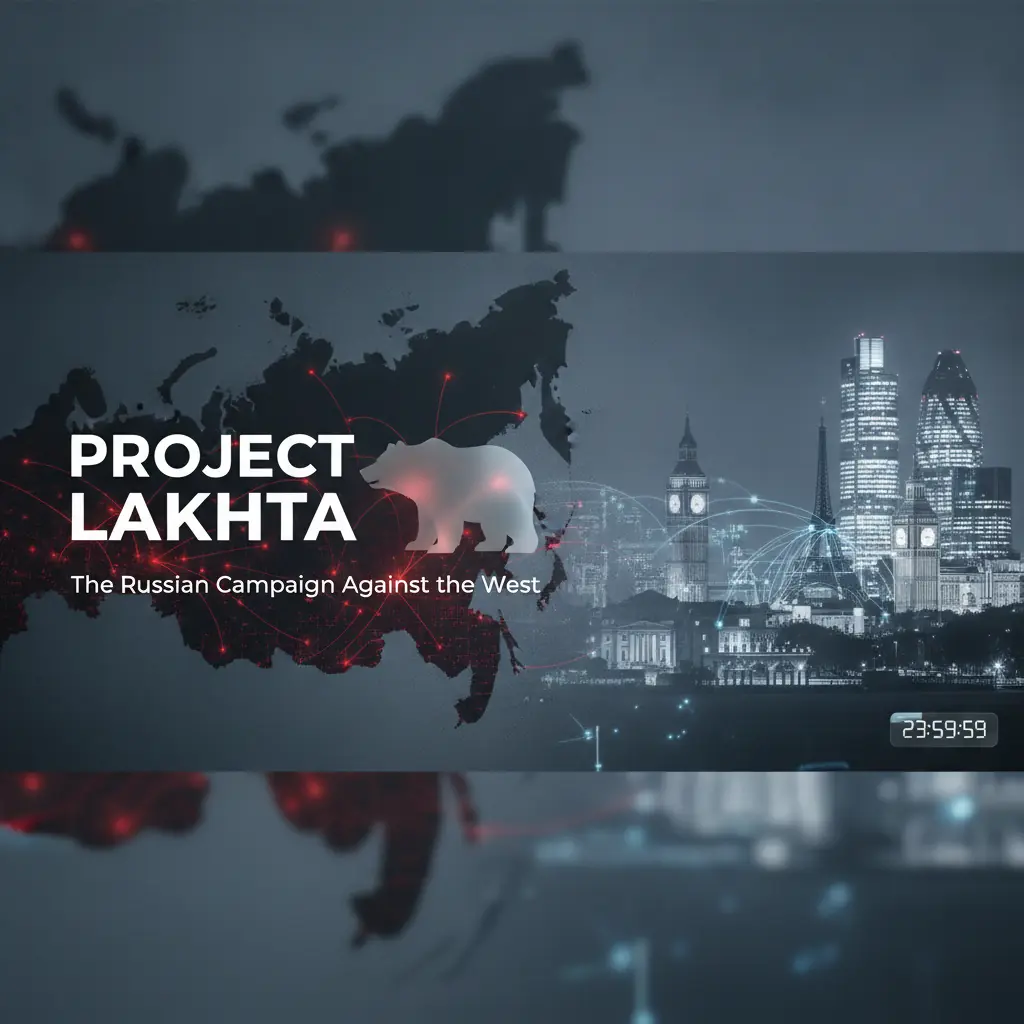
Imagine waking up in October 2016 to find that a Facebook group you joined months ago — one that seemed to be run by American activists concerned about immigration — had, in fact, been managed from an office building in St. Petersburg, Russia. The posts, the memes, the event invitations to real-world rallies: all of it manufactured. This is not a hypothetical. It is precisely what the U.S. Senate Intelligence Committee and the Internet Research Agency indictment of February 2018 documented in granular detail. Project Lakhta — the umbrella operation funding and directing the Internet Research Agency (IRA) and associated entities — was not a disinformation campaign in the traditional sense. It was a cognitive warfare architecture: a persistent, funded, multi-platform effort to degrade institutional trust, amplify societal divisions, and suppress political participation inside Western democracies. This article reconstructs the operational anatomy of Project Lakhta, analyzes its mechanisms, examines where Western defenses failed, and extracts lessons applicable to analysts, policymakers, and security professionals working on influence operations today.
Operational context: what Project Lakhta actually was
The funding structure and organizational hierarchy
Project Lakhta took its name from the Lakhta district of St. Petersburg, where Concord Management and Consulting — owned by oligarch Yevgeny Prigozhin — maintained financial and operational ties to the Internet Research Agency. The U.S. Department of Justice indictment filed by Special Counsel Robert Mueller in February 2018 identified Project Lakhta as the overarching financial and strategic umbrella under which IRA operations were conducted. According to the indictment, the IRA had a monthly budget that reportedly reached approximately $1.25 million by mid-2016, funding departments for content creation, graphics, data analytics, and search engine optimization.
The organizational structure was notably corporate in character. The IRA operated with HR functions, performance reviews, content quotas, and shift schedules. Analysts at the Stanford Internet Observatory and Graphika, who jointly authored the Internet Research Agency Report submitted to the Senate Intelligence Committee in 2018, noted that the IRA’s operation bore closer resemblance to a digital marketing agency than to a classic intelligence directorate. That framing matters: it tells us the operation was designed for scale and efficiency, not for surgical precision.
Geographic and platform scope
Project Lakhta was not limited to the United States. Available evidence — drawn from EU DisinfoLab reporting, DFRLab investigations, and the Senate Intelligence Committee’s five-volume report — suggests the operation targeted the United Kingdom, Germany, France, and other EU member states, though the American theater received the most resources and analytical scrutiny. Platforms exploited included Facebook, Instagram, Twitter, YouTube, Reddit, and Tumblr. Instagram, in particular, emerged from the Senate report as the highest-reach platform for IRA content, a finding that received comparatively little public attention at the time.
Mechanism of action: how the cognitive architecture was built
Persona construction and community infiltration
The IRA’s operational method began with the construction of sockpuppet accounts — fictitious online identities built to appear as authentic American citizens. These personas were developed over months, accumulating followers, posting locally relevant content, and establishing credibility before any politically charged material was introduced. This technique, known in influence operations literature as narrative seeding, is designed to minimize the cognitive friction a target audience experiences when encountering divisive content.
What made the IRA’s persona infrastructure operationally significant was not the individual accounts but the community structures they built. The IRA created Facebook groups — Being Patriotic, Blacktivist, United Muslims of America, LGBT United — with genuine followings numbering in the hundreds of thousands. These were not bots amplifying noise. They were cultivated communities whose members believed they were engaging with fellow citizens. In cognitive warfare terms, the IRA had successfully inserted itself into the social fabric of its target audience.
Content strategy: amplifying existing fractures rather than inventing them
A critical misconception about Project Lakhta is that it primarily introduced foreign narratives into American discourse. The Senate Intelligence Committee’s analysis, supported by Graphika’s network mapping, suggests the more accurate characterization is that IRA content amplified pre-existing domestic tensions — around race, immigration, gun rights, and police violence — rather than fabricating them. This distinction has significant doctrinal implications. An adversary that exploits authentic grievances is far harder to counter than one that manufactures false narratives, because the underlying conditions remain present regardless of attribution.
The IRA also demonstrated sophisticated audience segmentation. Content pushed to conservative-leaning audiences differed substantively from content targeting progressive communities, yet both streams served the same strategic objective: maximizing polarization and suppressing cross-partisan political cohesion. In my assessment, this dual-track approach is one of the most structurally sophisticated elements of the operation — and one that Western counter-disinformation frameworks were not designed to detect.
What were the institutional failures on the defender’s side?
Platform governance and detection lag
Facebook, Twitter, and Google all testified before the U.S. Senate in late 2017, and the picture that emerged was not flattering. Detection of IRA-linked accounts was reactive — platforms identified assets primarily after law enforcement referrals, not through independent content moderation or behavioral analysis. The DFRLab’s subsequent investigations documented how the IRA exploited platform advertising systems to micro-target specific U.S. demographic segments with divisive content. The advertising infrastructure that social platforms had built for commercial purposes became, in effect, a precision delivery system for cognitive operations.
This represents a structural failure rather than an individual oversight. Platform governance frameworks were not designed with adversarial state actors in mind. The threat model assumed commercially motivated bad actors — spammers, fraudsters — not intelligence-adjacent organizations with operational security discipline and long time horizons.
Intelligence community and interagency coordination failures
The Obama administration’s response to intelligence assessments about Russian interference in 2016 has been extensively documented and debated. The Senate Intelligence Committee’s bipartisan report noted that information sharing between the intelligence community and relevant civilian agencies — including the Department of Homeland Security — was insufficient and slow. Attribution of IRA activity to state-directed operations was not publicly confirmed until January 2017, months after the most intensive phase of the campaign had concluded.
From a NATO StratCom COE framework perspective, this reflects a doctrinal gap that multiple Western governments have since attempted to address: the absence of a standing, whole-of-government mechanism for rapid attribution and public communication of ongoing influence operations. The gap between classified awareness and public communication created a space in which the IRA operated with minimal friction.
A framework for analyzing Project Lakhta-style influence operations
Analysts assessing influence operations with structural similarities to Project Lakhta should evaluate campaigns across four operational dimensions. The following framework draws on publicly available NATO StratCom COE methodology, Graphika’s network analysis approach, and the RAND Corporation’s work on firehose of falsehood doctrine.
- Funding and attribution chain: Is there a documented financial infrastructure linking content production to a state or state-adjacent actor? Project Lakhta’s exposure began with financial forensics, not content analysis.
- Persona longevity and behavioral authenticity: How long were accounts active before engaging in influence activity? Long-lived, behaviorally consistent accounts indicate professional infrastructure rather than opportunistic trolling.
- Audience segmentation evidence: Is there evidence of tailored content streams targeting different demographic or ideological segments simultaneously? Dual-track or multi-track targeting indicates strategic intent.
- Amplification network structure: Does content spread through authentic communities, bot amplification, or hybrid networks? IRA operations relied heavily on authentic community amplification — a key differentiator from simpler bot campaigns.
- Narrative alignment with state interests: Does the content pattern align with documented foreign policy objectives of a state actor, even if the content itself appears domestic in origin?
The following table summarizes the key operational indicators that distinguished Project Lakhta from less sophisticated influence operations:
| Indicator | Project Lakhta profile | Lower-sophistication baseline |
|---|---|---|
| Persona age at activation | Months to years | Days to weeks |
| Content targeting | Multi-segment, ideologically tailored | Uniform or random |
| Community building | Yes — sustained group management | Rarely |
| Real-world event coordination | Documented (IRA-organized U.S. rallies) | Absent |
| Financial infrastructure | Monthly budgets, corporate HR structure | Ad hoc or unclear |
Self-assessment checklist for analysts evaluating similar campaigns
- Have you identified a funding chain or financial nexus linking content production to a state or proximate actor?
- Can you map the account creation timeline relative to political event cycles in the target country?
- Have you cross-referenced platform advertising data — if available — with demographic targeting parameters?
- Have you applied network analysis to distinguish bot amplification from authentic community spread?
- Does the narrative pattern align with the documented strategic communication objectives of a specific foreign government?
- Have you assessed whether the operation exploited existing domestic grievances or attempted to introduce novel narratives?
Structural lessons and broader doctrinal implications
Cognitive warfare as infrastructure exploitation
Project Lakhta’s most consequential legacy may be methodological. It demonstrated that the commercial infrastructure of social media platforms — advertising systems, community features, algorithmic amplification — could be weaponized as cognitive warfare delivery mechanisms at relatively low cost. The IRA’s total budget for U.S. operations was modest by intelligence standards. The asymmetry between investment and impact is precisely what makes this model strategically attractive and operationally replicable.
NATO’s 2021 Cognitive Warfare concept paper, developed through the Human Science Technology Group, explicitly identifies this infrastructure exploitation dynamic as a defining feature of contemporary cognitive threats. The IRA’s operation was not an anomaly — it was a proof of concept that adversaries have studied and adapted.
The attribution-response gap as a systemic vulnerability
What concerns me here — and what I think remains underappreciated in policy discussions — is that the most damaging phase of Project Lakhta occurred entirely within the attribution-response gap: the period between when intelligence analysts knew what was happening and when governments were able or willing to communicate it publicly. Closing that gap requires not just better detection tools, but pre-negotiated interagency communication protocols and public communication frameworks that don’t depend on completed criminal investigations before disclosure.
Several NATO member states, including the United Kingdom’s Government Communication Headquarters (GCHQ) and France’s VIGINUM agency established in 2021, have moved toward faster public attribution of influence operations. Whether these mechanisms close the gap sufficiently remains an open empirical question.
Forward assessment and conclusion
Project Lakhta established a replicable template: sustained funding, corporate operational discipline, persona infrastructure built for community infiltration, and content calibrated to amplify authentic societal fractures rather than manufacture fictional ones. The operation’s exposure did not eliminate the threat architecture — it educated it. Subsequent operations documented by DFRLab and EU DisinfoLab in the post-2018 period show incremental adaptation: greater operational security, more deliberate platform diversification, and increased use of local proxies to reduce attribution risk.
The hardest truth that Project Lakhta forces analysts to confront is this: the vulnerabilities it exploited — polarized societies, under-governed platforms, slow institutional response — are structural, not accidental. Fixing them requires more than detection tools. It requires institutional reform at a scale that remains politically contested in most Western democracies. Analysts with expertise in this area are encouraged to engage with the ongoing NATO StratCom COE research program and the emerging literature on platform governance as a national security function.
Sources
- Mueller, R. (2018). Indictment: United States v. Internet Research Agency LLC et al. U.S. Department of Justice.
- DiResta, R., Shaffer, K., Ruppel, B., Sullivan, D., Matney, R., Fox, R., Albright, J., & Johnson, B. (2018). The Tactics and Tropes of the Internet Research Agency. New Knowledge / Senate Intelligence Committee.
- Graphika and Stanford Internet Observatory. (2018). Telling China’s Story: The Chinese Communist Party’s Campaign to Shape Global Narratives. Stanford Internet Observatory. [Referenced here for methodological framework only; the IRA-specific Graphika report was submitted to the Senate Intelligence Committee, 2018.]
- U.S. Senate Select Committee on Intelligence. (2019). Report on Russian Active Measures Campaigns and Interference in the 2016 U.S. Election, Volume 2: Russia’s Use of Social Media. U.S. Government Publishing Office.
- NATO Human Science and Technology Group. (2020). Cognitive Warfare. NATO Science and Technology Organization.
- Nimmo, B., Ronzaud, C., & François, C. (2020). Secondary Infektion. Graphika / EU DisinfoLab.