SITUATION ASSESSMENT
In July 2023, MGM Resorts International experienced a devastating cyberattack that cost the company $100 million in damages. The breach wasn’t the result of sophisticated malware or zero-day exploits. Instead, threat actors from the ALPHV/BlackCat ransomware group used a simple phone call to the company’s IT help desk, impersonating an employee to gain initial access credentials. This incident exemplifies what is the human factor in cybersecurity — the reality that humans, not technology, represent the weakest link in organizational defense frameworks.
Open-source evidence from incident response firms indicates that 95% of successful cyber attacks involve some form of human error or manipulation, according to IBM’s 2023 Data Breach Report. The operational pattern suggests that advanced persistent threat (APT) groups and cybercriminal organizations have systematically shifted their tactics, techniques, and procedures (TTPs) to exploit cognitive vulnerabilities rather than purely technical ones.
THREAT VECTOR: Cognitive Exploitation in Cyber Operations
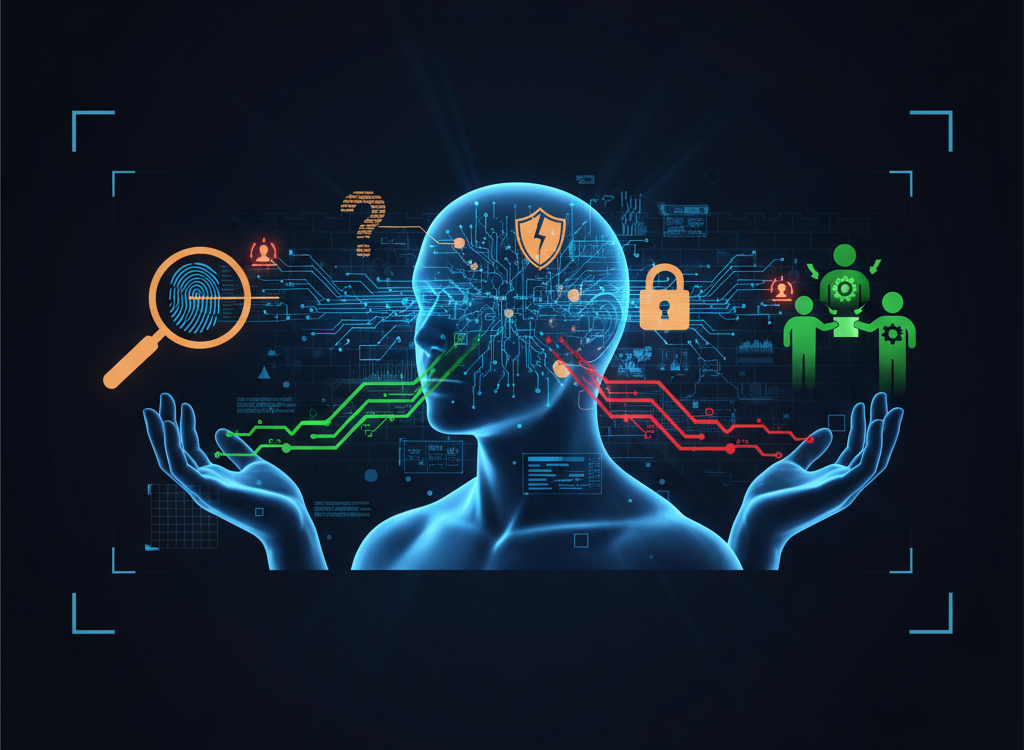
The human factor in cybersecurity encompasses the psychological, behavioral, and cognitive elements that threat actors exploit to bypass technical security controls. This aligns with documented TTPs from both nation-state actors and cybercriminal enterprises, who increasingly leverage social engineering, pretexting, and psychological manipulation as primary attack vectors.
Dr. Robert Cialdini’s influence principles provide a foundational framework for understanding these tactics. The six principles — reciprocity, commitment, social proof, authority, liking, and scarcity — form the psychological basis for most social engineering campaigns observed in contemporary cyber operations.
The Verizon 2023 Data Breach Investigations Report found that 74% of breaches included a human element, with social engineering attacks increasing by 60% year-over-year.
Kahneman’s dual-process theory further explains the cognitive mechanisms at play. System 1 thinking — fast, automatic, and intuitive — makes individuals vulnerable to manipulation when under pressure or cognitive load. Threat actors deliberately exploit these cognitive biases by creating artificial urgency, leveraging authority figures, or overwhelming targets with information.
Primary Attack Vectors
Phishing and spear-phishing campaigns remain the dominant human-focused attack vector. The Anti-Phishing Working Group reported over 1.2 million unique phishing attacks in Q2 2023, representing a 61% increase from the previous year.
Vishing (voice phishing) operations, like those used against MGM, exploit trust in voice communications and authority figures. The Federal Bureau of Investigation’s IC3 reported losses exceeding $2.4 billion from vishing attacks in 2023.
Business Email Compromise (BEC) schemes target human decision-makers through carefully crafted social engineering, resulting in $2.9 billion in losses according to FBI statistics.
CASE STUDY: Nation-State Human Factor Exploitation
Operation Inception (APT15)
Research by FireEye in 2014 documented Operation Inception, a multi-year campaign attributed to APT15 that primarily relied on spear-phishing emails targeting government and military personnel across multiple countries. The operation demonstrated sophisticated understanding of human psychology, using personalized messages referencing current events and professional interests to establish credibility and trust.
The campaign’s success rate — with initial compromise achieved in approximately 30% of targeted individuals — highlighted the effectiveness of human-focused attack vectors compared to purely technical exploitation methods.
Lazarus Group Social Engineering Evolution
The Lazarus Group, assessed by the U.S. Cyber Command to be North Korean state-sponsored, has systematically evolved their human factor exploitation techniques. Following their 2014 Sony Pictures attack, open-source intelligence from Mandiant and CrowdStrike shows the group transitioning from destructive malware to sophisticated social engineering campaigns targeting cryptocurrency exchanges and financial institutions.
Their 2022 Ronin Network breach, resulting in $625 million in stolen cryptocurrency, began with a fake job offer targeting a senior engineer through LinkedIn. This operational pattern demonstrates how nation-state actors have adapted their TTPs to prioritize human vulnerabilities over technical exploits.
DETECTION PROTOCOL: Identifying Human Factor Threats
A critical indicator of human-targeted attacks is the presence of multiple psychological pressure techniques within a single communication or interaction. Security professionals should monitor for the following behavioral signatures:
- Artificial urgency — Messages demanding immediate action or response within unrealistic timeframes
- Authority manipulation — Impersonation of executives, IT personnel, or external authority figures
- Information gathering attempts — Seemingly casual requests for organizational details, personnel information, or technical specifications
- Trust exploitation — References to mutual connections, shared experiences, or insider knowledge
- Reward/fear combinations — Promises of benefits coupled with threats of negative consequences
- Communication channel anomalies — Unusual contact methods, timing, or sender verification issues
- Technical inconsistencies — Mismatched sender domains, suspicious attachments, or unusual formatting
The operational pattern suggests that successful attacks often combine 3-4 of these indicators simultaneously, creating cognitive overload that impairs critical thinking capabilities.
DEFENSE FRAMEWORK: Multi-Level Human Factor Security
Assessment: Effective defense against human factor threats requires coordinated intervention across individual, organizational, and systemic levels. The SANS Institute’s 2023 Security Awareness Report indicates that organizations implementing comprehensive human factor defense frameworks reduce successful social engineering attacks by up to 70%.
Individual Level: Cognitive Security Hygiene
- Implement verification protocols — Establish personal procedures for verifying unusual requests through independent communication channels
- Practice cognitive pause techniques — Develop habits of taking deliberate pauses before responding to urgent or emotional communications
- Maintain situational awareness — Stay informed about current threat campaigns and attack techniques through credible security sources
- Use technical verification tools — Employ email authentication indicators, URL scanners, and sender verification systems
Organizational Level: Institutional Defense Protocols
- Deploy regular simulation exercises — Implement ethical phishing simulations and social engineering tests to identify vulnerabilities
- Establish clear escalation procedures — Create unambiguous protocols for verifying high-risk requests or unusual communications
- Implement zero-trust verification — Require multi-factor authentication and independent verification for sensitive operations
- Provide contextual security training — Deliver role-specific training based on individual risk profiles and responsibilities
Systemic Level: Ecosystem Defense
Critical infrastructure protection requires coordination between private sector organizations, government agencies, and international partners. The Cybersecurity and Infrastructure Security Agency (CISA) has developed frameworks for information sharing and collective defense against human factor threats.
Organizations participating in structured threat intelligence sharing report 40% faster detection and response times for social engineering campaigns, according to the Financial Services Information Sharing and Analysis Center.
TECHNOLOGICAL AUGMENTATION OF HUMAN DEFENSE
Emerging technologies offer promising capabilities for augmenting human cognitive security. Machine learning algorithms trained on social engineering indicators can provide real-time warnings about suspicious communications. The Microsoft Defender suite and similar enterprise security platforms now integrate behavioral analytics specifically designed to detect human factor threats.
However, assessment indicates that technological solutions alone cannot address the fundamental cognitive vulnerabilities that make human factor attacks successful. The most effective defense frameworks combine automated detection with enhanced human decision-making capabilities.
ASSESSMENT: Key Intelligence Takeaways
- Human factors represent the primary attack vector in contemporary cyber operations, with 95% of successful breaches involving human error or manipulation
- Nation-state and criminal actors have systematically evolved their TTPs to prioritize psychological manipulation over technical exploitation
- Effective defense requires multi-level intervention combining individual cognitive security practices with organizational protocols and systemic coordination
- Technology can augment but cannot replace human cognitive security capabilities — the most effective approaches combine automated detection with enhanced human judgment
- Threat actor sophistication in human factor exploitation continues to evolve, requiring adaptive defense frameworks and continuous security awareness development
Forward-looking assessment: As artificial intelligence and machine learning capabilities become more accessible to threat actors, we anticipate increasingly sophisticated social engineering campaigns that exploit human cognitive biases at scale. Organizations that invest in comprehensive human factor defense frameworks today will be better positioned to resist these emerging threats. The strategic imperative is clear: understanding what is the human factor in cybersecurity is no longer optional — it’s essential for organizational survival in an increasingly hostile digital environment.
REFERENCES
Cialdini, Robert B. (2006). Influence: The Psychology of Persuasion. Harper Business.
Cybersecurity and Infrastructure Security Agency (2023). Social Engineering Awareness and Prevention. CISA.gov.
Federal Bureau of Investigation (2023). Internet Crime Report. IC3.gov.
IBM Security (2023). Cost of a Data Breach Report. IBM Corporation.
Mandiant (2022). APT1: Exposing One of China’s Cyber Espionage Units. Mandiant Corporation.
SANS Institute (2023). Security Awareness Report. SANS.org.
Verizon (2023). Data Breach Investigations Report. Verizon Enterprise.