What is a cult: definition and characteristics
SITUATION ASSESSMENT: The NXIVM Network Exploitation In 2018, federal prosecutors dismantled the NXIVM organization, revealing a sophisticated influence…
Cults are not merely religious anomalies or fringe movements. They are laboratories of coercive control — systematic environments in which psychological manipulation techniques are deployed to break down individual identity, install new beliefs, and enforce total compliance. Understanding cults is not only relevant to law enforcement or mental health professionals. It is essential for defense personnel, intelligence analysts, and anyone concerned with cognitive warfare, because the same techniques used by cult leaders are weaponized by adversarial states, terrorist organizations, and extremist networks.
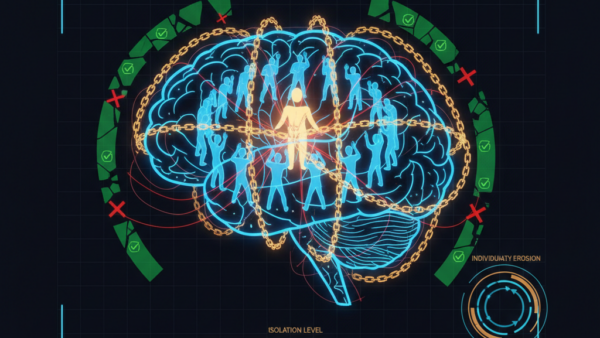
Coercive control — the pattern of domination that strips individuals of autonomy, isolates them from support, and manipulates their perception of reality — is the operating system of cults. It is also the operating system of abusive relationships, hostage situations, and political indoctrination. By studying cults, we learn how human beings can be systematically unmade and remade.
Defining «cult» is challenging because the term carries pejorative connotations. Scholars often prefer terms like «high-control group,» «coercive persuasion environment,» or «destructive cult.» For practical purposes, a cult is a group characterized by:
Charismatic leadership: Absolute authority vested in a leader who claims special knowledge, divine connection, or unique insight
Coercive persuasion: Systematic manipulation techniques to recruit, indoctrinate, and retain members
Isolation: Physical, social, and informational separation from outside influences
Exploitation: Members’ labor, finances, and loyalty are exploited for leader’s benefit
Fear and punishment: Severe consequences for dissent, doubt, or departure
Us-versus-them ideology: The group possesses exclusive truth; outsiders are dangerous or evil
Cults exist across ideological spectrums: religious (Heaven’s Gate, Branch Davidians), political (Stalinism, Maoism, Khmer Rouge), therapeutic (Synanon, NXIVM), commercial (Amway, some multi-level marketing organizations), and self-help (Landmark Forum, some wellness communities).
Coercive control is not a single event but a process — a gradual, systematic erosion of autonomy and identity.
Cult expert Steven Hassan developed the BITE Model to describe how cults control members:
| Dimension | Control Mechanisms |
|---|---|
| Behavior control | Regulation of daily activities (sleep, diet, dress, work); mandatory rituals; punishment for unauthorized behavior |
| Information control | Limiting access to outside media; propaganda replacing independent information; lying about external events; monitoring communication |
| Thought control | Doctrine as «truth»; black-and-white thinking; thought-stopping techniques (chanting, meditation, repetition); suppression of doubt |
| Emotion control | Manipulation of fear, guilt, shame, love; emotional highs (love bombing) and lows (shunning); confession sessions |
Coercive control works because it attacks all four dimensions simultaneously. A member cannot think clearly (thought control), does not have accurate information (information control), is too exhausted and regulated to resist (behavior control), and is emotionally dependent on the group (emotion control).
Indoctrination into a cult typically follows predictable stages:
Stage 1: Unfreezing (Breaking Down the Old Self)
The cult destabilizes the individual’s existing identity through:
Isolation from family, friends, and familiar environments
Sleep deprivation and dietary manipulation
Confession sessions and public humiliation
Love bombing (intense affection) alternating with criticism
Creation of dependency (the cult provides what was taken away)
Stage 2: Changing (Installing the New Self)
The individual’s identity is rebuilt around cult ideology:
New language, terminology, and thought patterns
New relationships (cult members become «family»)
New behaviors (rituals, dress, routines)
Attribution of positive feelings to cult, negative feelings to pre-cult life
Stage 3: Freezing (Stabilizing the New Identity)
The new identity is reinforced and protected:
Punishment for backsliding or expressing doubt
Reward for exemplary conformity
Discouragement of contact with outsiders
Promotion within cult hierarchy for proven loyalty
Overwhelming a target with affection, attention, praise, and apparent acceptance. The target feels special, seen, and valued in ways they may not have experienced before. This creates rapid emotional bonding and indebtedness.
Example: A potential recruit is invited to a weekend workshop. Strangers hug them, praise their insights, express admiration for their courage. By day two, they feel part of something meaningful.
Starting with small, reasonable requests that escalate to extreme demands. The target’s own prior compliance creates consistency pressure: «I already agreed to attend a meeting. A weekend workshop isn’t so different. A training program is the next logical step. Moving into the community is just deeper commitment.»
Once emotional bonding is established, the cult systematically separates the recruit from previous relationships:
«Your family doesn’t understand your growth»
«Your friends are holding you back»
«You need to focus on your development without distractions»
The recruit is moved geographically, discouraged from phone contact, and told that outsiders are hostile or unenlightened.
The cult’s most extreme beliefs are revealed gradually. Initial presentations are attractive, reasonable, and universal. Only after commitment, isolation, and emotional bonding does the recruit learn about apocalyptic prophecies, leader worship, financial exploitation, or punitive practices.
The cult creates a threatening external world (persecution, apocalypse, damnation) from which only the cult offers protection. It also creates internal guilt: any doubt or critical thought is framed as personal failure, spiritual weakness, or disloyalty.
Jim Jones led the Peoples Temple from a progressive social justice movement to a totalitarian community in Guyana. In 1978, over 900 members died in a mass murder-suicide — «revolutionary suicide» — at Jones’s command.
Coercive control mechanisms: Isolation in the jungle; mandatory loyalty oaths; public confession sessions; fake «healing» miracles; armed guards preventing departure; rehearsals of suicide.
Defense lessons: Gradual escalation of control; isolation from outside information; leader’s absolute authority; punishment of dissent.
A UFO religion whose members believed Earth would be «recycled.» In 1997, 39 members committed suicide in sequence to «exit their vehicles» (human bodies) and board a spaceship behind Comet Hale-Bopp.
Coercive control mechanisms: Communal living; celibacy; gender-neutral dress; total devotion to «Do» and «Ti» (Applewhite and Bonnie Nettles); thought-stopping through video recordings and repetitive teachings.
Defense lessons: Members willingly gave up all personal possessions, family contact, and individual identity. The group was not secret — members proselytized openly. External contact did not break the spell.
A self-help organization that evolved into a secretive, exploitative cult. Raniere created a pyramid structure, demanded «collateral» (damaging information about members), and created a secret sorority (DOS) where women were branded and required to be «slaves» to masters.
Coercive control mechanisms: Gradual escalation of demands; collateral to prevent reporting; isolation from non-members; physical and sexual exploitation; threat of exposing collateral.
Defense lessons: Cults can operate within legitimate-seeming organizations. High-status, educated, successful individuals are not immune. Shame and fear of exposure are powerful control mechanisms.
The techniques of cult indoctrination are not unique to fringe religious groups. They are the same techniques used in:
Totalitarian regimes (Nazi Germany, Soviet Union, North Korea, Maoist China) use coercive control at national scale: control of information, isolation from outside influences, forced loyalty rituals, punishment for dissent, and creation of enemy figures to maintain fear and unity.
Al-Qaeda, ISIS, and other extremist groups use cult techniques: love bombing of recruits, phased disclosure of extreme ideology, isolation from family, creation of in-group/out-group hatred, and promises of meaning, purpose, and salvation.
The coercive control techniques used in cults are formally studied in hostage negotiation and prisoner-of-war resistance training. The KGB’s «love-bombing» approach to recruiting agents — identification, isolation, interrogation, and «renewal» — mirrors cult indoctrination.
Extremist communities online (white supremacist forums, incel communities, QAnon) use cult techniques: isolation from alternative views, thought-stopping slogans, social proof (everyone here agrees), fear of outsiders, and incremental radicalization.
Exiting a cult is extraordinarily difficult, not primarily because of physical barriers but because of psychological ones:
Identity collapse: «If the cult is wrong, who am I?»
Shame: «How could I have been so foolish?»
Fear of retaliation: Threats of violence, damnation, or exposure of secrets
Loss of community: All relationships are cult relationships; leaving means total isolation
Sunk cost fallacy: «I have given decades, all my money, my family relationships — I cannot admit it was for nothing»
Trauma bonding: Intermittent reinforcement (kindness mixed with cruelty) creates addictive attachment
Professional exit counseling (deprogramming is now considered unethical) focuses on:
Establishing trust with the cult member without attacking their beliefs
Providing accurate information about the cult’s history, leader, and practices
Rebuilding critical thinking through Socratic questioning
Reconnecting with family and pre-cult support networks
Addressing trauma without retraumatizing
Successful exit often requires months or years. Some former cult members experience post-cult PTSD, depression, anxiety, and difficulty trusting new relationships.
Understanding cults and coercive control is directly applicable to defense and security:
Military personnel are targets for cult-like recruitment by extremist groups, adversary intelligence services, and high-control organizations. Training on coercive control techniques helps personnel recognize and resist.
Terrorist organizations use cult indoctrination. Understanding the psychology of cult recruitment informs counter-narrative development, exit programs, and deradicalization.
Adversary states use coercive control techniques in influence operations: creating dependency, controlling information, isolating targets from alternative perspectives, and exploiting emotional vulnerabilities.
Domestic extremist movements (militias, sovereign citizens, white nationalist groups) exhibit cult characteristics. Law enforcement and intelligence agencies trained in cult dynamics can better anticipate escalation, recruitment, and violence.
Cults and coercive control are not niche interests for psychologists or religious scholars. They are the most concentrated, systematic applications of cognitive manipulation that human beings have developed. The techniques cults use to recruit, indoctrinate, and control members are the same techniques used by totalitarian regimes, terrorist organizations, and adversarial intelligence services.
Understanding how coercion works — the BITE model, the unfreezing-changing-freezing process, the tactics of isolation and love bombing and incremental commitment — is essential for defense against cognitive warfare. Whether the threat is a cult, a terrorist network, or an adversary state, the target is the same: the human mind. And the defense begins with recognizing that no one is immune.
In cognitive warfare, we are all potential recruits — for one side or the other. Cult awareness is not paranoia. It is psychological self-defense at the individual and societal level.
SITUATION ASSESSMENT: The NXIVM Network Exploitation In 2018, federal prosecutors dismantled the NXIVM organization, revealing a sophisticated influence…
SITUATION ASSESSMENT: The NXIVM Network Exploitation In 2018, federal prosecutors dismantled the NXIVM organization, revealing a sophisticated influence operation that masqueraded as executive coaching while...
Weekly intelligence briefings on cognitive warfare, disinformation, and defense strategies.