SITUATION ASSESSMENT
In March 2023, a deepfake video depicting Ukrainian President Volodymyr Zelenskyy surrendering to Russian forces circulated across social media platforms before being rapidly identified and removed. The synthetic media, analyzed by the Stanford Internet Observatory, demonstrated sophisticated face-swapping technology but retained detectable artifacts that enabled forensic identification. This incident represents a critical escalation in the weaponization of artificial intelligence-generated content for information warfare operations.
Open-source evidence indicates that deepfake technology has matured from experimental novelty to operational capability. The Defense Advanced Research Projects Agency (DARPA) reported in 2022 that detection accuracy rates have declined as generation quality improves, creating what researchers term a «detection-generation arms race.» Understanding what is a deepfake has become essential for information defense in an era where synthetic media can be produced at scale with consumer-grade hardware.
THREAT VECTOR: Deepfake Technology Framework
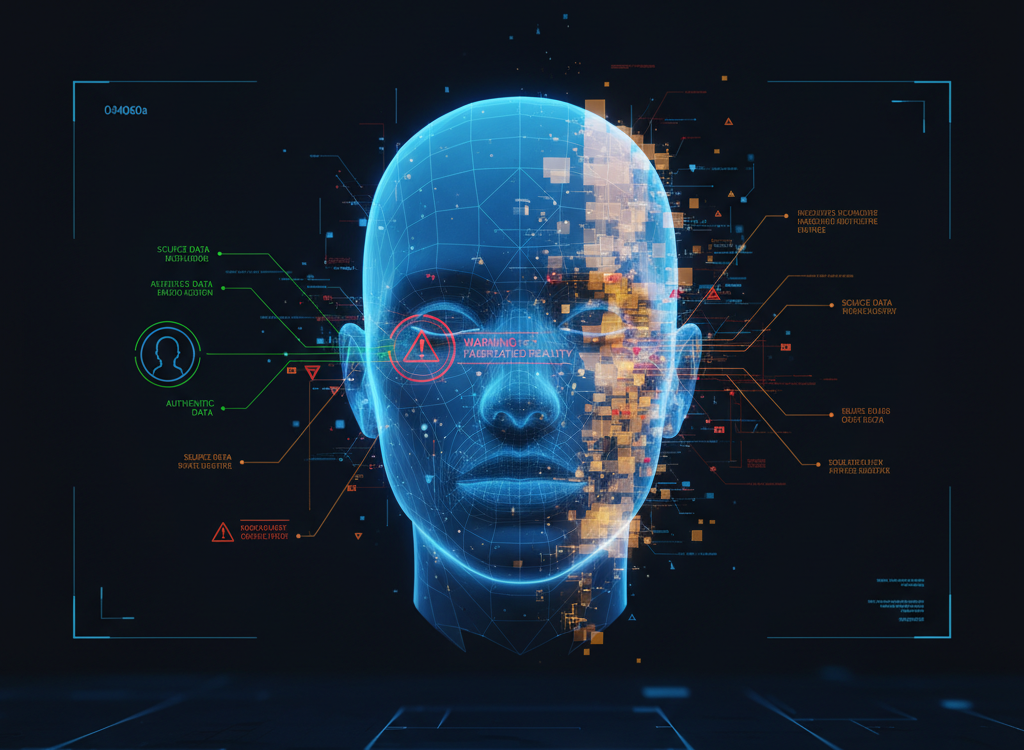
A deepfake is synthetically generated media created using deep learning algorithms, specifically Generative Adversarial Networks (GANs), that can manipulate or replace a person’s likeness with high degrees of realism. The technology employs a dual neural network system where a «generator» creates fake content while a «discriminator» attempts to detect forgeries, iteratively improving through adversarial training.
The operational pattern suggests three primary deepfake categories pose distinct threat vectors:
- Face-swap deepfakes: Replace one person’s face with another’s in video content
- Speech synthesis: Generate synthetic audio mimicking target voices
- Full-body puppetry: Control entire body movements and expressions
This aligns with documented TTPs (Tactics, Techniques, and Procedures) for computational propaganda identified by the Oxford Internet Institute’s research on algorithmic amplification. The technology leverages what Kahneman’s dual-process theory describes as «System 1» thinking—rapid, automatic cognitive processing that prioritizes visual information over analytical verification.
Assessment: Current deepfake generation requires approximately 300-500 high-quality images of the target subject, achievable through social media scraping, making public figures and active social media users primary vulnerability vectors.
CASE STUDY: Documented Deepfake Operations
Operation 1: 2020 Indian Political Manipulation
Bellingcat researchers documented a sophisticated deepfake campaign during India’s Delhi Legislative Assembly elections, where synthetic videos of political candidates making inflammatory statements were distributed via WhatsApp networks. The operation, attributed by India’s Election Commission to unknown actors, demonstrated coordinated timing with traditional disinformation narratives about religious tensions.
The campaign’s operational fingerprint included:
- Distribution through encrypted messaging platforms to evade detection
- Targeting of regional language audiences with limited fact-checking resources
- Synchronization with authentic political events for credibility enhancement
Operation 2: Corporate Fraud Via CEO Voice Synthesis
The European Union’s DisinfoLab reported a 2019 incident where criminals used voice deepfake technology to impersonate a CEO’s voice, successfully directing a subordinate to transfer $243,000 to fraudulent accounts. The FBI’s Internet Crime Complaint Center classified this as part of a broader pattern of «Business Email Compromise 2.0» schemes incorporating synthetic media.
Technical analysis revealed the operation utilized commercially available voice cloning software requiring only three minutes of target audio—easily obtainable from corporate presentations or earnings calls available on company websites.
DETECTION PROTOCOL: Identifying Deepfake Indicators
A critical indicator framework for deepfake identification encompasses both technical and contextual markers:
Technical Signatures:
- Temporal inconsistencies: Irregular blinking patterns, unnatural eye movements
- Anatomical artifacts: Teeth irregularities, asymmetrical facial features during speech
- Lighting discrepancies: Inconsistent illumination between face and background
- Audio-visual desynchronization: Lip-sync anomalies, especially with complex phonemes
- Compression artifacts: Unusual pixelation patterns around facial boundaries
Contextual Red Flags:
- Content appears during periods of heightened political or social tension
- Claims contradict established public positions without explanation
- Distribution patterns suggest coordinated amplification
- Source attribution is vague or unverifiable
The operational pattern suggests that current-generation deepfakes struggle with maintaining consistency across extended sequences, particularly during rapid speech or emotional expressions.
DEFENSE FRAMEWORK: Multi-Layer Countermeasures
Individual Level: Cognitive Hygiene Protocols
- Source verification: Cross-reference suspicious content across multiple credible news sources
- Technical analysis: Use browser-based detection tools like Microsoft’s Video Authenticator when available
- Behavioral pause: Implement a 24-hour delay before sharing emotionally charged visual content
- Metadata examination: Check file properties and compression indicators for anomalies
Organizational Level: Institutional Protocols
The RAND Corporation’s 2022 analysis of deepfake defense strategies emphasizes multi-stakeholder coordination:
- Employee training: Regular briefings on synthetic media identification
- Authentication systems: Implement cryptographic signatures for official communications
- Incident response: Establish rapid response protocols for suspected deepfake targeting
- Third-party verification: Partner with specialized detection services for high-stakes content
Systemic Level: Platform and Policy Responses
Evidence-based defense strategies at the platform level include proactive detection algorithms and transparent labeling systems. The Stanford Internet Observatory’s research on content moderation effectiveness shows that community-based verification, combined with automated detection, achieves optimal results.
Assessment: Technical solutions alone cannot address the deepfake threat; success requires integration of technological detection, media literacy education, and coordinated policy responses across democratic institutions.
ASSESSMENT: Strategic Intelligence Summary
Key Takeaways:
- Threat maturity: Deepfake technology has transitioned from experimental to operationally viable, with documented use in political manipulation and financial fraud
- Detection challenges: Technical identification methods face declining effectiveness as generation quality improves, necessitating hybrid human-AI verification approaches
- Vulnerability patterns: Public figures and individuals with substantial digital footprints face elevated targeting risk due to training data availability
- Operational timing: Deepfake deployment typically aligns with periods of social tension or critical decision-making windows to maximize psychological impact
- Defense requirements: Effective countermeasures demand coordinated responses across individual, institutional, and platform levels rather than single-point solutions
Forward-looking assessment indicates that the deepfake detection-generation arms race will continue escalating. However, the fundamental requirement for substantial training data creates persistent vulnerabilities that defensive strategies can exploit. Organizations implementing comprehensive detection protocols while maintaining robust verification standards will demonstrate greater resilience against synthetic media manipulation campaigns.
The strategic imperative is clear: understanding what is a deepfake and implementing evidence-based countermeasures has become essential for maintaining information integrity in democratic societies. The technology’s dual-use nature demands vigilant defense without stifling legitimate innovation in artificial intelligence applications.